Costs & Booking
Should You Clean or Replace Your Curtains?
Whether to clean or replace curtains comes down to one question: is the problem sitting on the fabric, or is it the fabric itself? Dust, grime, smells, most stains and early mould sit on the surface and usually come out with the right curtain cleaning. Sun rot, cracked blockout coating, deep fading and torn seams are damage to the material, and no clean will reverse them.
Most people lean towards replacing because the curtains look grey and tired. In our experience, that tired look is very often just years of dust and window grime. Before you start pricing new ones, run through the checks below. They take ten minutes and need nothing more than your hands and some daylight.
Four quick tests before you decide to clean or replace curtains
1. The fade check
Turn back the side hem or the return (the bit that wraps around to the wall) and compare that hidden fabric with the face. If the hidden strip is the same colour once you allow for dust, the curtain is dirty. If it's noticeably richer or darker, the face has faded. Cleaning removes grime, but it can't put dye back, and a clean can even make fading look more obvious because the colour underneath is now clearly paler. Our guide on whether sun-faded curtains can be restored goes into this in more detail.
2. The thumb test for sun rot
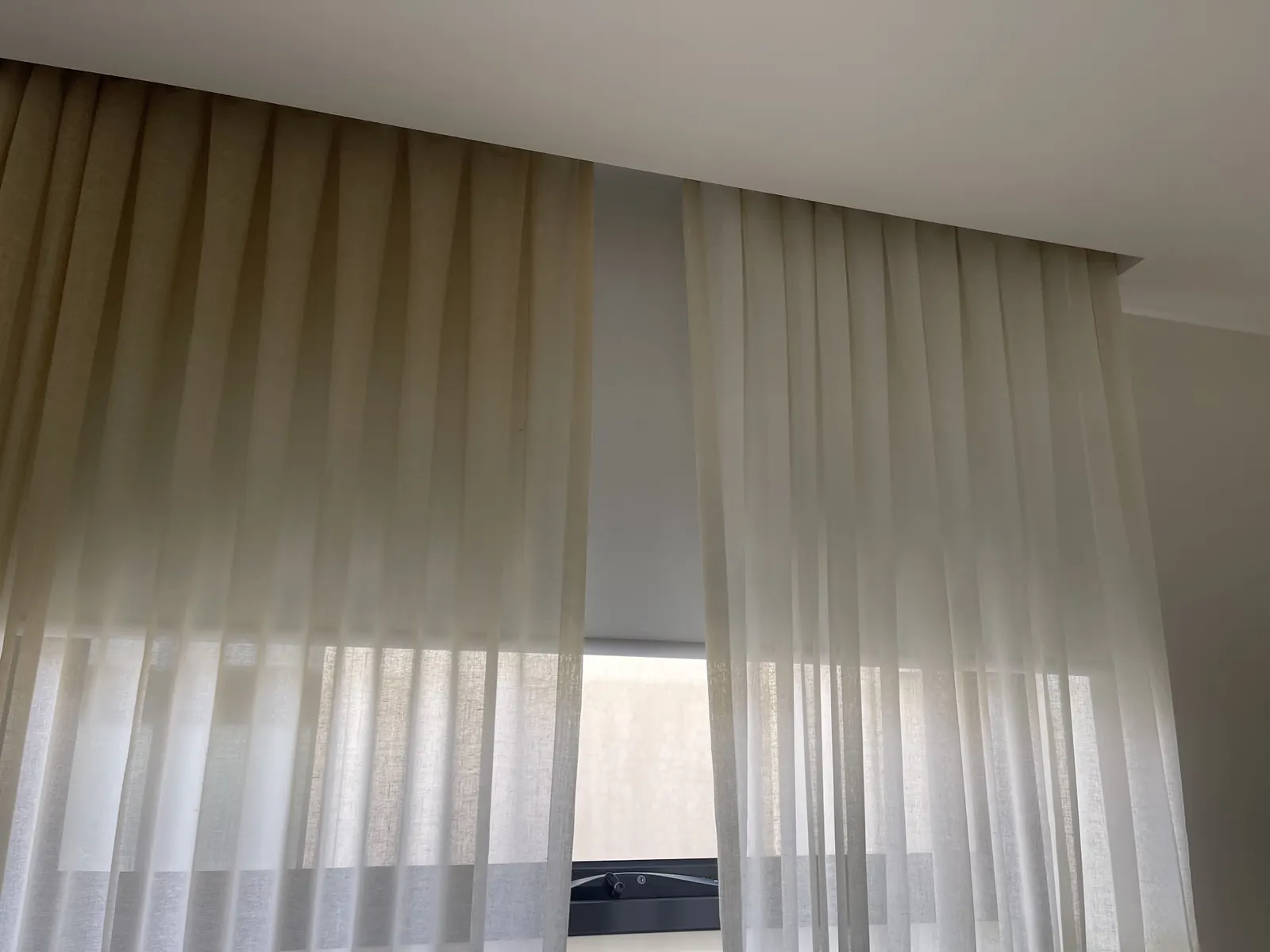
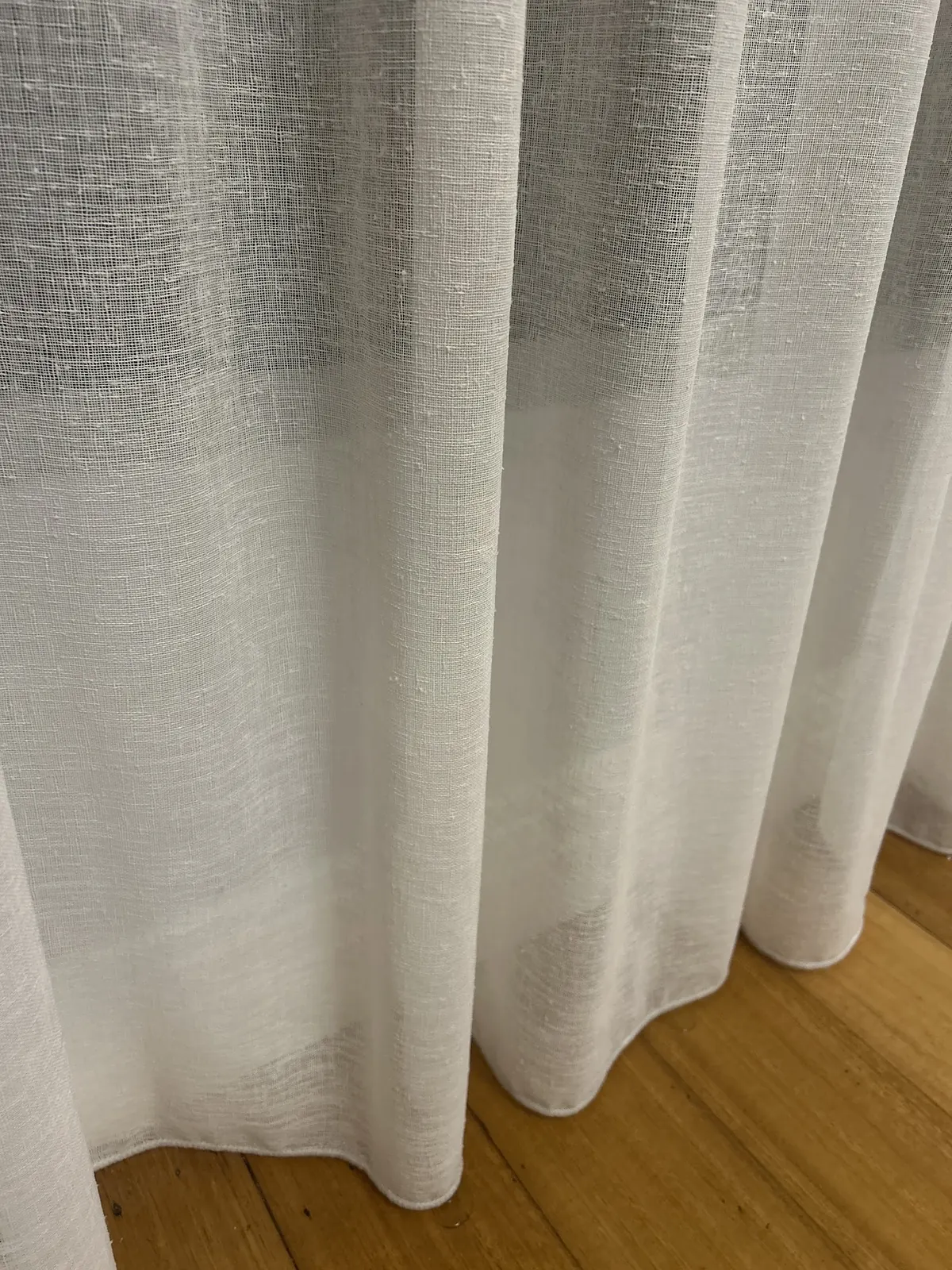
Pick a spot on the leading edge of a sheer, close to the glass and roughly at sill height, where it's had the most sun. Hold a small section between your thumbs and press outwards very gently, as if testing a tissue. Healthy fabric feels springy. Sun-rotted fabric feels papery, makes a faint crackle, or opens up into tiny holes. If it fails here, the whole panel is likely to split during cleaning or soon after, whoever cleans it.
3. The crease test on blockout backing
On a blockout or thermal curtain, find a corner of the back and fold it loosely, without pressing a sharp crease. If the coating flexes and springs back, it's sound. If it shows fine cracks like old paint, sheds flakes, or feels sticky, the backing is breaking down and cleaning will speed that up rather than fix it.
4. The seam and heading check
Look along the heading tape, pleats and hooks. Rotted stitching, torn hook pockets and hems that have dropped can often be repaired by a curtain workroom, so they're not automatically a reason to replace. A worn heading on an otherwise good lined drape is usually worth fixing.
Clean or replace: a decision table
| What you're seeing | Usually | Why |
|---|---|---|
| Overall grey or dingy look | Clean | Dust and airborne grime; it lifts out |
| Musty, smoke or pet smell | Clean | Odour lives in the soil and residue in the fibres |
| Small black mould spots on the hem | Clean | Early mould often treats well, though some staining may remain |
| Mould staining across large areas of cotton or linen | Depends | It may lighten rather than disappear; ask for an honest assessment |
| Water tide line | Clean | Tide lines are often removable, especially when treated early |
| Papery, crackling sheer | Replace | Sun rot weakens the fibres permanently |
| Flaking or cracked blockout coating | Replace (or reline) | The coating has reached the end of its life |
| Deep fading on the face | Replace, or accept it | Lost dye can't be restored |
If mould is the issue, read how to remove mould from curtains first. It explains what's realistic, and why the mould will come back unless the condensation behind it is dealt with.
Why "just buy new ones" isn't always the cheap option
Ready-made curtains from a homewares store look inexpensive until you need them to fit. Many Melbourne homes, particularly Victorian and Edwardian houses with tall sash windows and bay windows, need curtains far longer and wider than standard sizes. Made-to-measure lined drapes take time to be made, may need new tracks or hooks, and often have to be ordered as a full set so the rooms still match.
There's also the waste. A good lined curtain that is simply dirty has years of life left in it. Cleaning it costs far less than replacing it, and you keep a fabric you chose for a reason. For a clearer idea of how cleaning is priced, see how curtain cleaning cost is worked out.
When old curtains surprise people
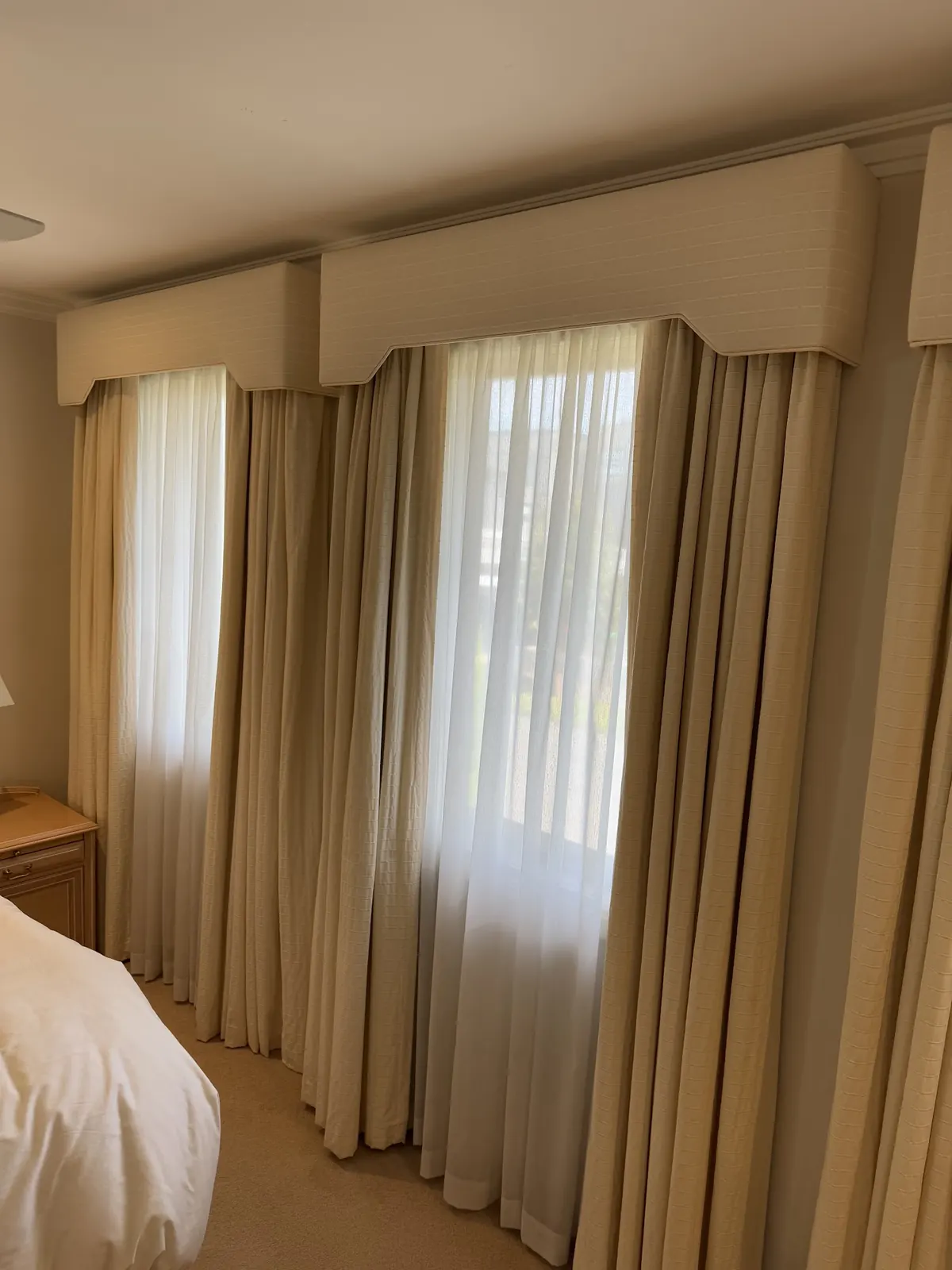
Age alone isn't a reason to replace. A customer with elderly sheers had been warned elsewhere that they would probably rip. Danny checked them, cleaned them on the spot without damage, and did the pelmets while he was there. The difference was assessing the fabric first, rather than assuming.
That works the other way too. Sometimes a curtain that looks fine from across the room fails the thumb test, and the honest advice is not to spend money cleaning it. A good cleaner will tell you that before starting, not after.
If the curtains belong to your landlord
Renters shouldn't replace curtains without asking, even if they look past saving. They belong to the owner, and swapping them can cause problems at the final inspection. Clean what can be cleaned, take dated photos of any damage such as sun rot or cracked backing, and compare against your entry condition report. Sun damage over years of use is often treated as fair wear and tear, but check your lease and Consumer Affairs Victoria guidance rather than assuming. Our article on who's responsible for cleaning curtains in a rental covers the common questions.
When to call a professional for an opinion
If your curtains pass all four tests and are washable polyester, a careful cold wash at home may be all they need. Get a professional to look when:
- they're lined, velvet, silk or linen, or labelled dry clean only;
- you can't tell if the greyness is dirt or fading;
- there's mould, water staining or a smell you can't shift;
- the sheers are old and you're not sure they'll survive a wash;
- you're about to spend serious money on replacements.
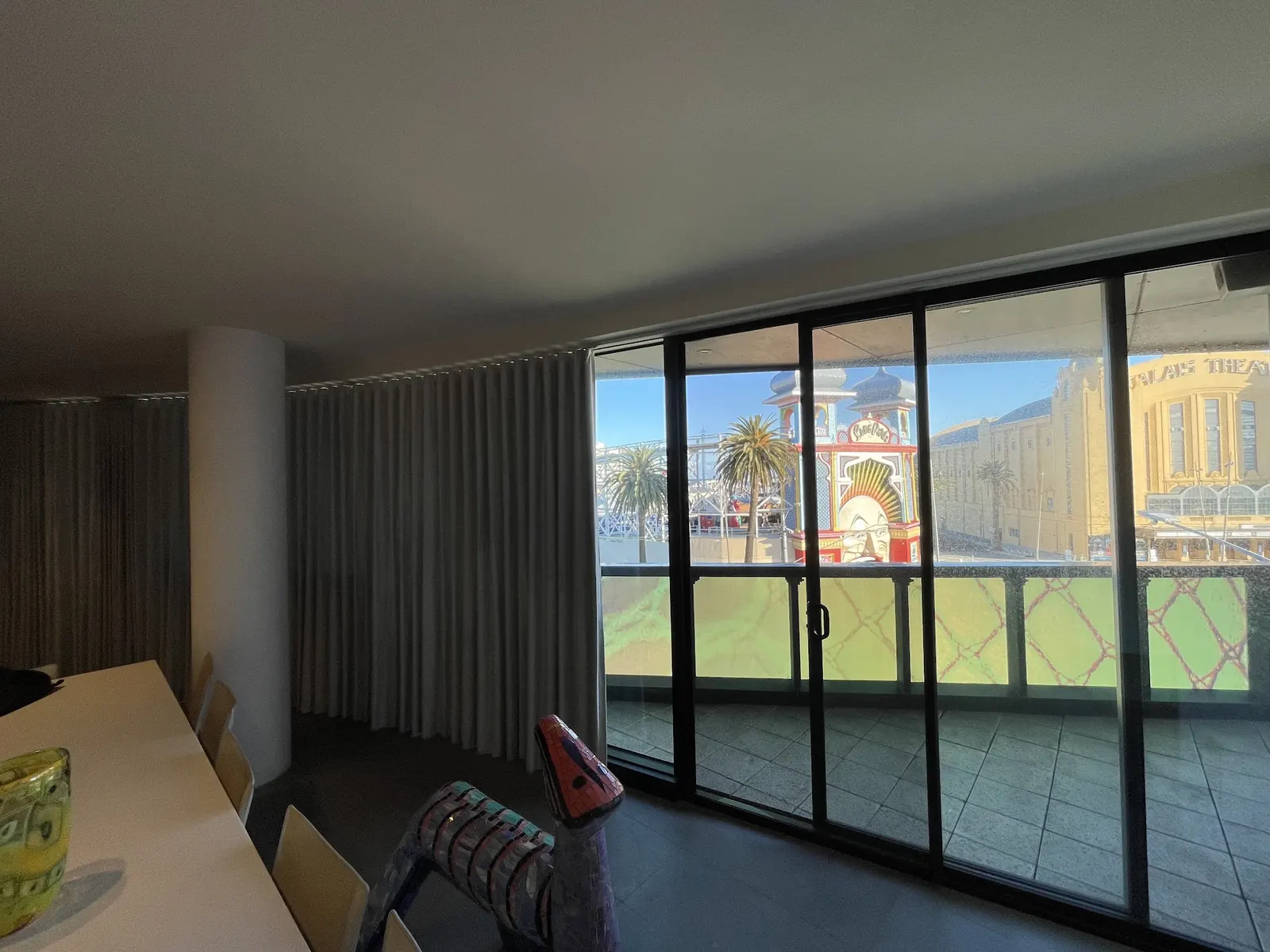
We see curtains in apartments from St Kilda to the outer suburbs that owners were ready to throw out, and plenty of them only needed cleaning. Some genuinely were finished. Either way, it's better to know before you order new ones.
Not sure if yours are worth saving? Call (03) 7066 4644 or send us photos for a free quote, including a close-up of the worst spot, and we'll give you a straight answer on cleaning versus replacing.