Sheers & Fabrics
Curtain Steam Cleaning vs Dry Cleaning: Which Is Right for Yours?
In the curtain steam cleaning vs dry cleaning choice, the fabric decides. Steam cleaning suits most synthetic and blended curtains and sheers, and it's done on the track in your home with no take-down. Dry cleaning suits natural fibres, delicate or heavily lined drapes and anything labelled "dry clean only", because it cleans with solvent instead of moisture and the curtains are taken away, pressed and rehung.
Both methods are good at what they're designed for. The mistakes happen when a curtain gets the wrong one. Here's how each works, where each falls short, and how to tell which your curtains need.
How on-site curtain steam cleaning works
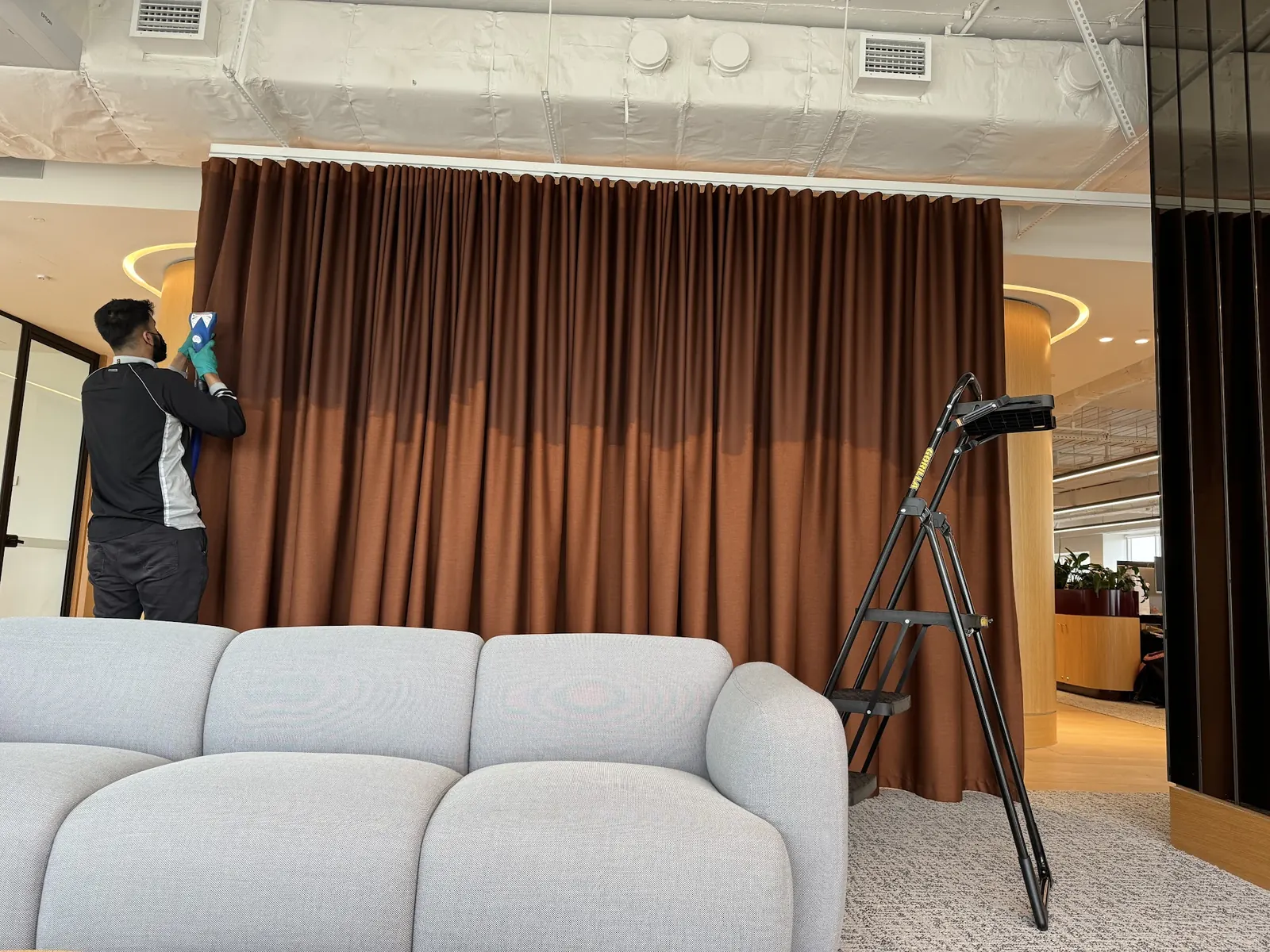
With on-site curtain steam cleaning, the curtains stay on their track. A technician works the fabric with a hand tool that applies heated moisture and cleaning solution, and the machine's vacuum draws the moisture and loosened soil straight back out.
When we steam clean sheers on the track, we start at the top and work down in overlapping strips, so dirty water doesn't run onto a section that's already been done. Hems get extra attention, because that's where dust, condensation and mould collect. Because the moisture is extracted as we go, the curtains are usually only lightly damp afterwards and dry where they hang.
Where steam cleaning shines
- Polyester and poly-blend sheers, including very long ones
- Synthetic drapes and wave-fold curtains on fixed tracks
- Curtains that are difficult or risky to take down, such as high stairwell windows
- Offices and businesses that want the work done in one visit with minimal disruption
If you've ever wondered whether this really works without taking the curtains down, our guide on whether curtains can be cleaned while hanging goes into detail.
How curtain dry cleaning works
With curtain dry cleaning, the curtains are taken down, hooks and hardware are removed, and they're cleaned away from your home in a solvent rather than water. Because the fibres aren't soaked, there's less risk of shrinkage, watermarks or layers pulling against each other. The curtains are then pressed, the pleats are set and everything is rehung.
Where dry cleaning shines
- Linen, silk, wool and many cotton curtains
- Lined and interlined pinch-pleat drapes
- Curtains labelled "dry clean only"
- Fabrics with dyes that may run in water
Curtain steam cleaning vs dry cleaning, side by side
| Steam cleaning (on-site) | Dry cleaning (off-site) | |
|---|---|---|
| Curtains come down? | No, cleaned on the track | Yes, taken down and rehung |
| Cleaning agent | Heated moisture and solution, extracted | Solvent, minimal water |
| Best fabrics | Polyester, synthetic blends, most sheers | Linen, silk, wool, lined drapes, "dry clean only" |
| Shrinkage risk | Low on synthetics; higher on natural fibres | Generally lower on natural fibres |
| Time without curtains | None | While they're away being cleaned |
| Pleats pressed? | Fabric relaxes and drops as it dries | Pressed and set before rehanging |

Which method suits your fabric?
Check the care label first, then use this rough guide.
- Synthetic sheers: steam cleaning on the track is usually ideal. See how to clean sheer curtains if you'd like to try it yourself first.
- Velvet: it depends on the fibre and backing. Cotton velvet and silk velvet usually point to dry cleaning; some synthetic velvets steam well. Our guide on how to clean velvet curtains covers the pile.
- Linen and linen blends: lean towards dry cleaning, because linen can shrink with moisture.
- Lined pinch-pleat drapes: dry cleaning keeps the layers and pleats in shape. Synthetic lined drapes can sometimes be steamed on the track if the lining and face fabric are compatible.
- Blockout with a coated back: needs checking. Cracking coatings don't love solvents, heat or heavy moisture, so we assess before choosing.
- Mouldy curtains: the method depends on the fabric, but mould usually needs targeted treatment either way. Read how to remove mould from curtains for what's realistic.
Is a handheld garment steamer the same thing?
Not really, and it's a common mix-up. A handheld garment steamer puts heat and moisture into the fabric but takes nothing out. It's useful for relaxing creases and freshening a curtain that's already clean, but it won't remove the dust, grime or odour sitting in the weave. Used heavily on a dirty hem, it can even push moisture into soil and leave a tide mark.
Professional on-site cleaning is different because extraction is the point: the dirt leaves with the moisture. If you do use a garment steamer at home, test it on a hidden corner, keep it moving, hold it slightly away from the fabric, and keep it well clear of velvet pile and coated backings.
Timing it around Melbourne weather
Whichever method you choose, a dry, breezy day helps. On-site cleaning dries faster with windows open, and in a cold, damp July week a heater or fan in the room speeds things up. For off-site cleaning, plan for the windows being bare while the curtains are away, which matters more in a bedroom than a formal lounge.
What neither method can fix
Being upfront here saves disappointment. No cleaning method restores sun-rotted fabric; sheers that have weakened in a west-facing window can split however gently they're handled. Coated blockout can crack with age. Old stains and deep mould staining often lighten a long way without vanishing completely.
That said, fragile isn't always hopeless. One customer was told by other cleaners that their old sheers would probably tear. Danny assessed them, cleaned them on the spot without damage, and cleaned the pelmets while he was there. The right technique and a careful hand make a real difference.
When to call a professional, and when DIY will do
If your curtains are washable synthetic sheers that fit in your machine, a cold, gentle wash in a laundry bag and rehanging them damp is often all they need. Regular vacuuming with a brush head keeps dust down between cleans.
Bring in a professional when the curtains are big, lined, natural-fibre, velvet or "dry clean only"; when they're mouldy, smoky or smell of pets; or when getting them down would mean a tall ladder and a lot of hooks. If you'd like to know what the visit involves, here's what happens at an on-site curtain cleaning appointment.
Steam or dry clean? Let us look at the fabric and tell you. Phone (03) 7066 4644 or ask for a free quote, and we'll recommend the method that suits your curtains rather than the one that's quickest for us.