Sheers & Fabrics
Can Dry Cleaners Clean Curtains? What to Know Before You Drop Them Off
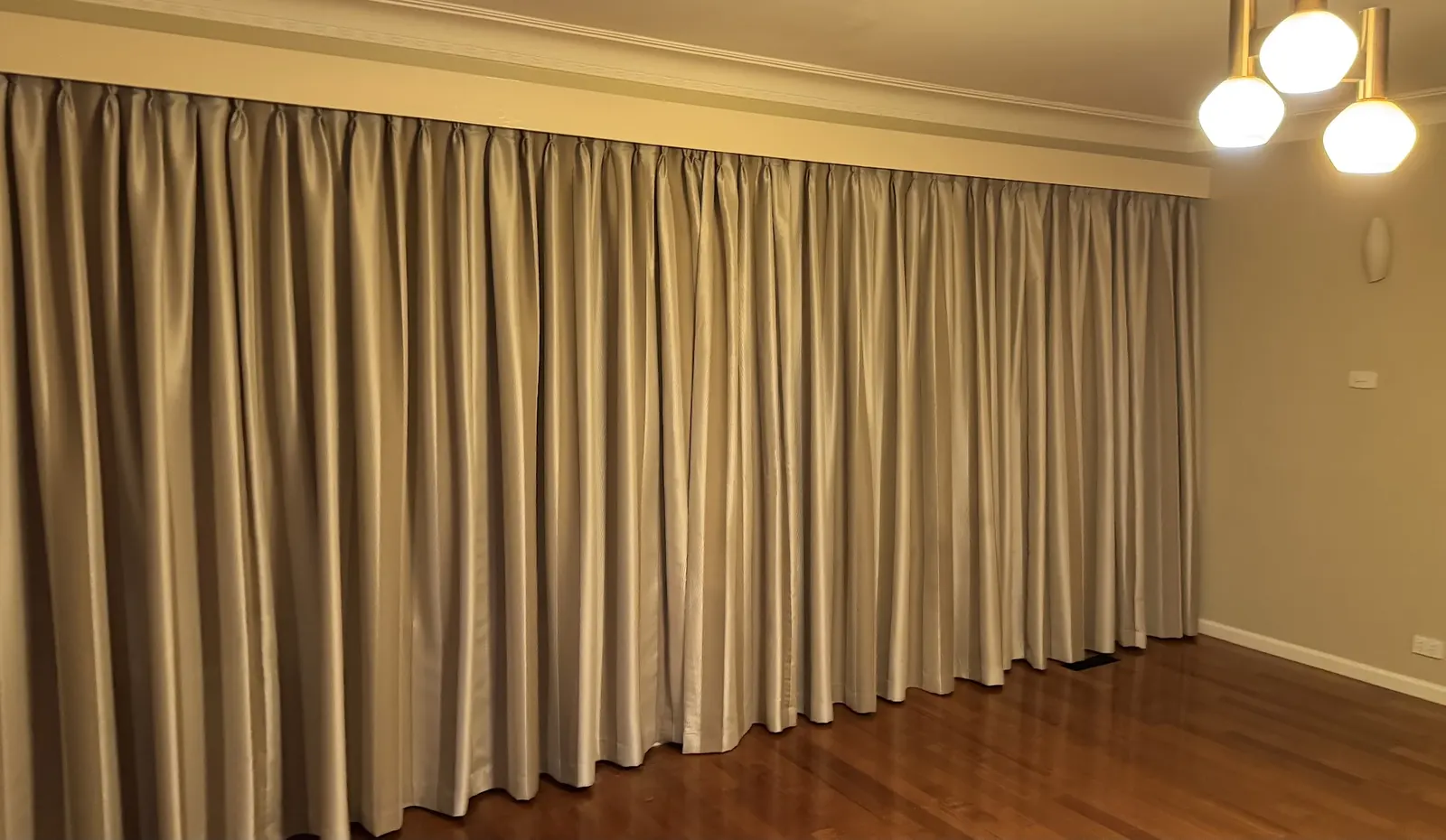
Yes, dry cleaners can clean curtains, and many suburban dry cleaners accept them. But curtains aren't big shirts. Their size, linings, heading tapes, pleat stiffeners and coated backings all change how they behave, so before you drop curtains off it's worth asking whether that dry cleaner handles curtains regularly, and whether you or they will be taking them down and rehanging them.
This guide covers what a general dry cleaner can and can't handle, how to prepare your curtains, and when a specialist curtain dry cleaning service in Melbourne is the better choice.
Can dry cleaners clean curtains of every type?
Most can clean simple, unlined curtains without much fuss. The trouble starts with the curtains people most want cleaned: the heavy lined drapes in the lounge, the velvet in the front room of a Victorian terrace, the blockout curtains in the main bedroom.
A general dry cleaner may still accept these, but some will ask you to sign a waiver, some will decline anything with a coated back, and some will clean them perfectly well. The point is to ask before you leave them on the counter, not after you collect them.
Why curtains are harder to dry clean than clothes
Size and weight
A pair of floor-to-ceiling lined drapes can weigh more than a full load of clothing. They need machines with enough capacity and room to tumble, plus space to press long lengths without new creases.
Linings and interlinings
Many curtains have a face fabric, a lining and sometimes a soft interlining in between. Each can react differently, so a hem that hung straight before can come back rippled if one layer tightens more than another. Our guide on whether curtains shrink when cleaned explains why.
Headings and hardware
Pinch pleats usually have a stiffened tape inside. Hooks, gliders, lead weights and wave-track carriers all need to come out first, and the curtain needs to be pleated and pressed back into shape afterwards.
Coated blockout
Blockout backings are often a foam or acrylic coating. With age, they can crack or peel, and some don't tolerate certain solvents or heat. If yours are blockout, read how to clean blockout curtains before choosing a method.
Sun damage you can't see
Curtains facing north or west in Melbourne take a lot of sun over the years. The fabric can look fine on the wall and still be weak enough to split in a machine. No cleaner can reverse that, which is why a quick pinch-and-pull test on a hidden edge is worth doing before cleaning.
Before you drop curtains off: a checklist
- Read the care label. Photograph it on your phone so you have it if the label gets lost.
- Measure each curtain. Write down the height from heading to hem and the width across the hem. If something comes back shorter, you'll know.
- Photograph the curtains hanging. Note any existing marks, fading, sun damage or small tears.
- Remove every hook, glider and weight you can. Count them into a labelled bag per curtain. Our guide on how to take down and rehang curtains covers hooks, gliders and wave tracks.
- Label each curtain by room and side. A safety pin and a scrap of paper is enough.
- Point out any stains. Say what they are if you know (wine, water, mould, pet), because different stains need different treatment.
- Ask about the turnaround and pressing. Check whether pleats will be set or whether they'll come back folded flat.
Take care on the ladder. Lined drapes are heavier than they look once they're off the track, and it's easy to overbalance holding a long curtain above your head. Get a second person to take the weight.
Questions to ask the dry cleaner
- Do you clean curtains often, or mostly clothing?
- Can you handle lined, velvet or blockout curtains, and will you check the backing first?
- Will the pleats be pressed and set, or folded?
- Do you need me to remove all the hardware?
- What happens if a curtain shrinks or a coating cracks?
Good answers are specific. "We do curtains all the time, but we'd want to see the backing first" is far more reassuring than "Yeah, no worries."
What to check when you collect them
Don't just grab the bag and go. Open it at the counter, or at least before you start rehanging, and check a few things while it's still easy to raise a problem.
- Length. Compare a curtain against your notes. A centimetre either way is normal for pressing; noticeably more is worth mentioning.
- Hems and linings. Hold the curtain up by the heading and look for ripples where the lining has pulled.
- The backing. On blockout, run a hand over the coating and look for new cracking or stickiness.
- Stains. Check the marks you pointed out. Some old stains lighten rather than vanish, so ask what was tried.
If the label on your curtains was confusing in the first place, our guide to what "dry clean only" means for curtains will help next time.
A general dry cleaner vs a curtain specialist
| General dry cleaner | Curtain cleaning specialist | |
|---|---|---|
| Take-down and rehang | Usually you do it | Usually done for you |
| Measuring before cleaning | Not always | Part of quoting |
| Pleat pressing | Varies | Expected |
| On-site option | No | Often, for fabrics that suit steam cleaning |
| Best for | Small, simple, unlined curtains | Lined, heavy, delicate or large curtains |
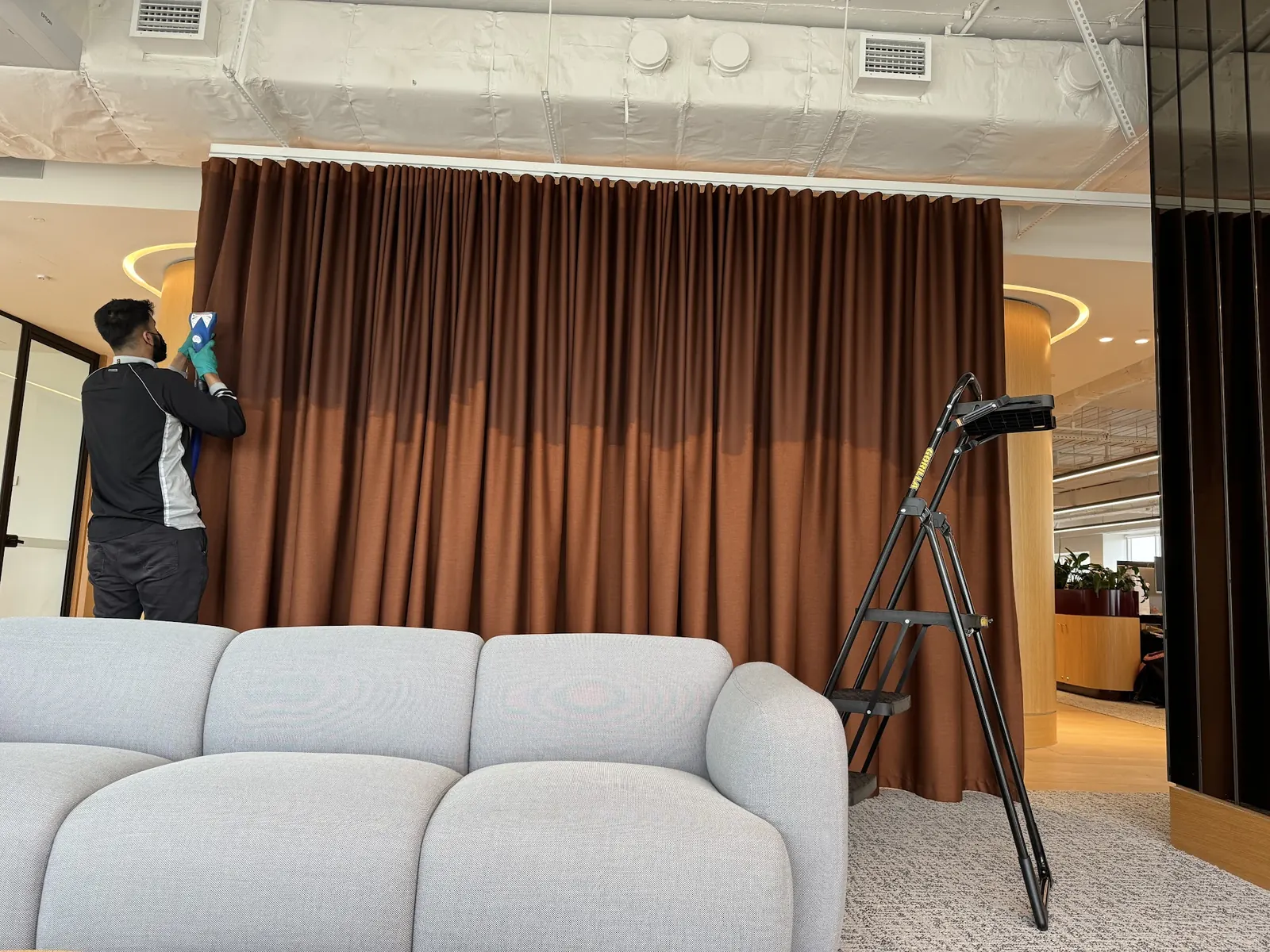
With our off-site curtain cleaning, we take the curtains down, clean them away from your home and rehang them. One customer handed their curtains over one day and had them delivered back cleaned the next. If your curtains only need a press after cleaning or a move, our guide on getting wrinkles out of curtains may save you a trip.
When to call a professional, and when the local dry cleaner is fine
Your local dry cleaner is a reasonable choice for small, unlined curtains, a café curtain or a single panel, especially if you're comfortable taking them down and rehanging them yourself.
Call a curtain specialist when the curtains are large, lined, pleated, velvet or blockout; when they're high or awkward to reach; when there's mould, smoke or pet odour; or when the fabric is old and you want someone to assess it before it goes anywhere near a machine. Ask too if you'd rather the curtains stayed up: many synthetic curtains can be steam cleaned on the track without coming down.
Would you rather not wrestle the curtains off the track yourself? Call (03) 7066 4644 or book a free measure and quote, and we'll take them down, clean them and hang them back up.