Sheers & Fabrics
How to Clean Velvet Curtains Without Crushing the Pile
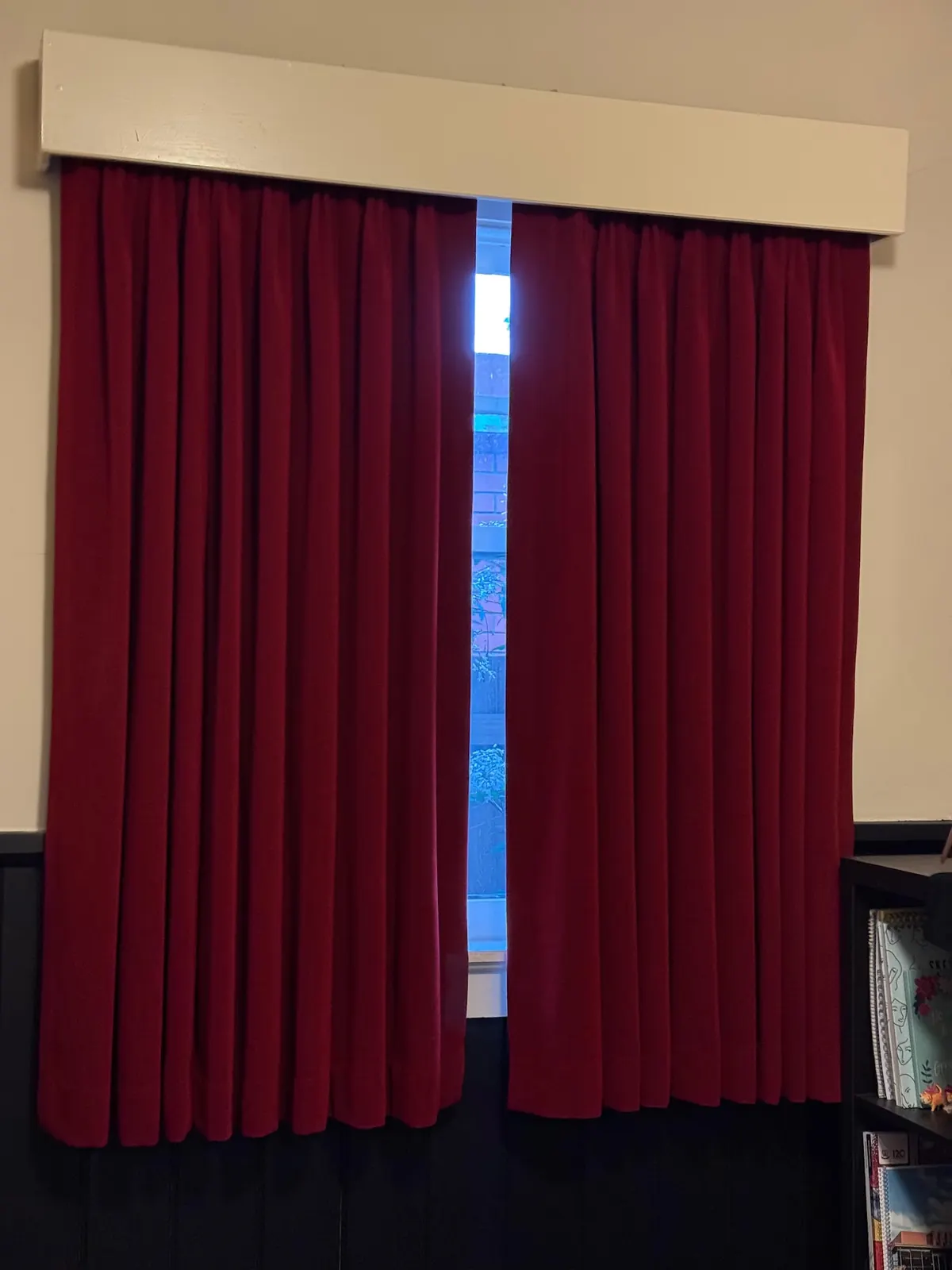
The safest way to clean velvet curtains is to vacuum them where they hang with a soft upholstery brush, working in the direction of the pile, then lift any flattened areas with a hand steamer held a few centimetres off the fabric. Don't soak velvet, rub it or press it flat.
For a deeper clean, especially if your velvet drapes are lined, very heavy or labelled dry clean only, professional velvet and drape cleaning protects the pile far better than a washing machine. Below is exactly how to clean velvet curtains at home, and where the limits are.
Know your velvet before you clean it
Velvet is beautiful because of its pile: short, upright fibres that catch the light. Almost every cleaning mistake comes down to crushing, matting or water-marking that pile, and different velvets react very differently.
Check the care label first. It's usually sewn into a side hem or the lining near the heading tape.
| Velvet type | Safer approach | Avoid |
|---|---|---|
| Cotton velvet | Vacuuming, steam from a distance, professional cleaning | Machine washing, which can shrink it and flatten the pile |
| Polyester or crushed velvet | Vacuuming, careful spot cleaning, low-moisture steam cleaning | Hot irons and dryer heat, which can melt or shine the pile |
| Silk or viscose velvet | Vacuuming only at home; leave deep cleaning to a specialist | Any water at home, as it marks easily and permanently |
| Lined or interlined velvet drapes | Cleaning as one piece, on the track or by a curtain specialist | Washing face and lining together in a machine |
If there's no label, treat the fabric as the most delicate option. Older drapes in Melbourne's Victorian and Edwardian homes are often cotton velvet with a heavy sateen lining, and the two can shrink at different rates. That's how a home wash ends with a puckered, uneven hem.
How to clean velvet curtains at home, step by step
- Close the curtains fully. You want the fabric spread across the window so you can see every fold and work from top to bottom.
- Find the direction of the pile. Run your palm down the fabric. One direction feels smooth, the other slightly rough. Always clean in the smooth direction, which is usually downward.
- Vacuum on low suction. Use the upholstery brush and work in overlapping strips. Spend extra time on the top pleats and the hem, where dust settles most.
- Groom out lint and hair. A soft clothes brush or a lint roller used lightly picks up what the vacuum leaves behind. You're grooming the pile, not scrubbing it.
- Spot clean only what needs it. Test on a hidden area first, such as the inside of a return. Blot with a barely damp white cloth and a drop of mild wool wash, then blot dry with a clean towel. Never rub.
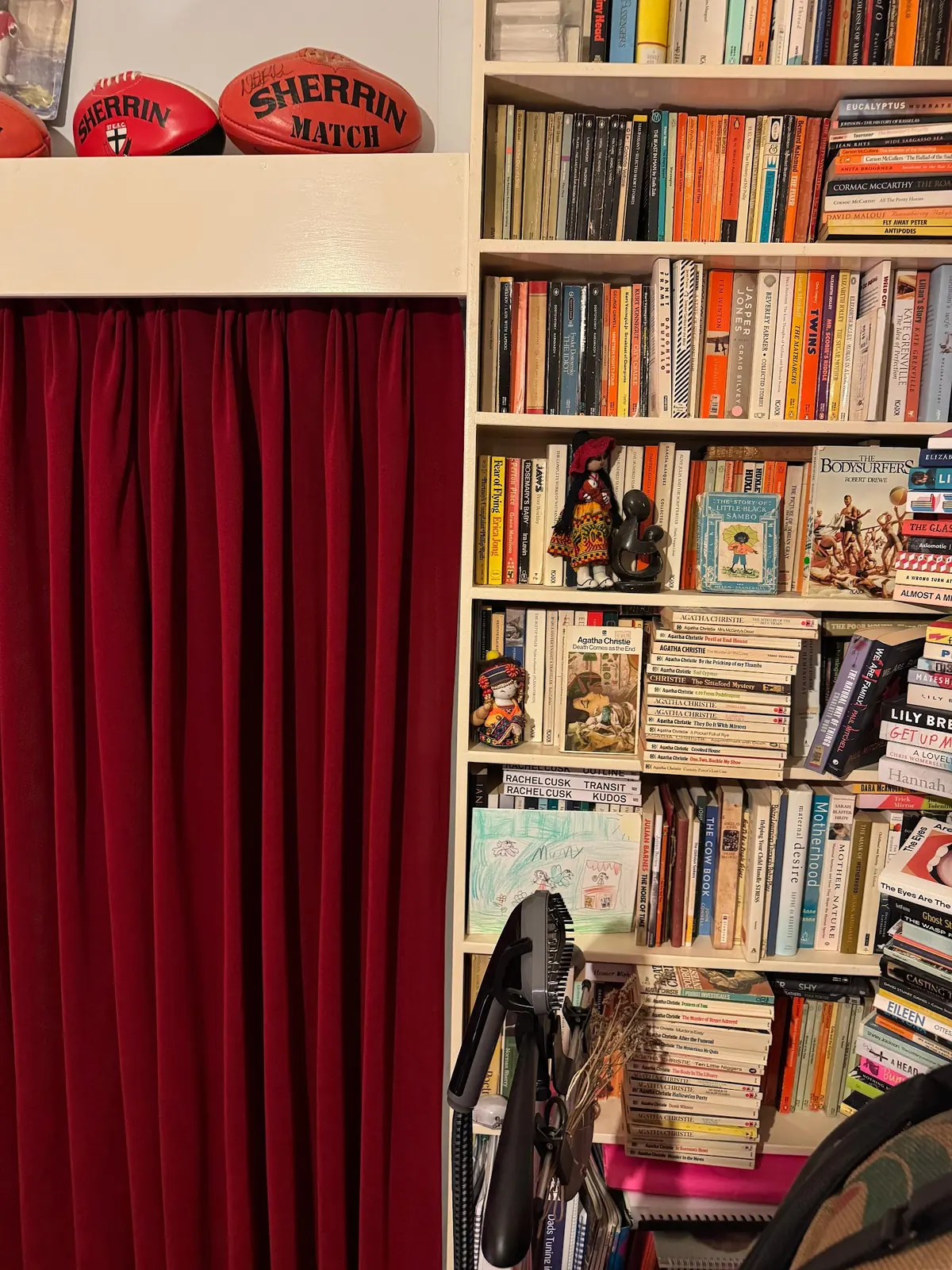
- Lift the pile with steam. Hold a garment steamer 3 to 5 cm from the fabric and keep it moving. Let the velvet dry completely, then brush lightly with the pile.
Velvet drapes are heavy. Use a stable step ladder for the top section and don't reach sideways off it to grab a pleat.
Fixing crushed pile, water marks and musty smells
Flattened patches
Where curtains have been tied back for years, or a couch has pressed against them, the pile lies flat. Gentle steam and a soft brush usually bring most of it back. Pile that's been crushed for a very long time, or scorched near a heater, may never fully recover.
Water rings
Velvet water-marks easily, silk and viscose blends most of all. A splash from a leaking window or a pot plant can dry into an obvious ring, and adding more water to "blend it in" usually makes the ring bigger. Our guide to getting water stains out of curtains explains what helps and what spreads the mark.
Dust and smoke odour
The dense pile traps dust deeply, and in homes with an open fireplace or wood heater it holds smoke smell too. Regular vacuuming helps a lot. If the smell has settled in, see how to get smoke smell out of curtains.
Can you wash velvet curtains in a machine?
Usually not. Some polyester velvets are labelled machine washable. If yours genuinely are, wash one panel at a time on a cold, gentle cycle, skip the dryer entirely, and rehang while slightly damp so the weight pulls the creases out.
For cotton, silk or viscose velvet, or anything lined, a home wash risks shrinkage, a lining that no longer matches the face, and permanent crushing from the drum. That label is there for a reason; our explainer on what dry clean only means for curtains covers why.
How we clean velvet drapes on the track
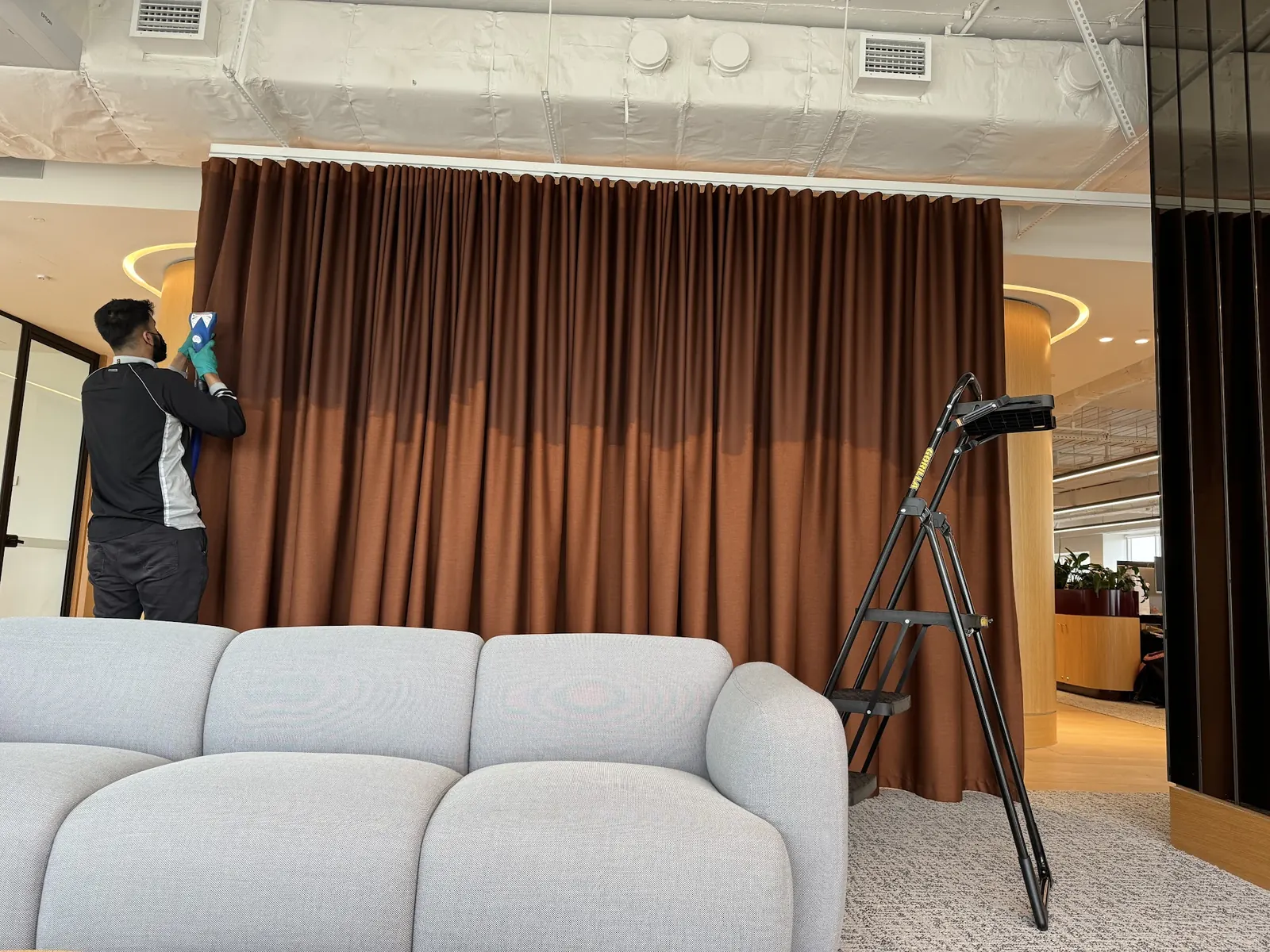
Most velvet curtains we see are cleaned where they hang, as part of our drape, velvet and pelmet service. We check the label, lining and condition first, and test a hidden spot. Then we work from the top down with a low-moisture steam and extraction method, following the pile, so the fabric is never soaked and the pile isn't pushed against its grain.
Leaving drapes on the track means heavy panels aren't dragged across the floor, and they dry hanging straight. If a particular set is better suited to dry cleaning, we'll tell you; the trade-offs are laid out in curtain steam cleaning vs dry cleaning.
Don't forget what's above the curtains. One customer had been told by other cleaners that their old sheers would probably tear; Danny cleaned them on the spot without damage and did the pelmets as well. If yours are dusty, here's how to clean pelmets and valances.
When to call a professional
Regular vacuuming and the odd careful spot clean are enough for most velvet curtains between deep cleans. It's worth calling a curtain cleaner when:
- the label says dry clean only, or the fabric is silk or viscose velvet
- the drapes are lined, interlined or too heavy to take down safely
- there's a water ring, a large stain or any mould spotting
- the pile has flattened across large areas
- they haven't been properly cleaned in years and smell musty
Be realistic about very old velvet. Sun-faded panels on a north-facing window stay faded after cleaning, and fabric weakened by years of UV can split no matter who cleans it. A good cleaner checks for this first and tells you honestly what to expect. Price depends on size, fabric and condition; see how curtain cleaning is priced.
Velvet drapes needing more than a vacuum? Call (03) 7066 4644 or ask for a free quote. We'll measure, check the fabric and explain what's realistic before any cleaning starts.