Linen Curtain Cleaning Melbourne
Linen moves with moisture: it swells when wet, tightens as it dries and creases at the slightest excuse. We choose the method by fibre content, clean the whole panel evenly so no tide lines form, and measure before and after.
- Free measure & quote
- Cleaned on the track
- Fabric tested first
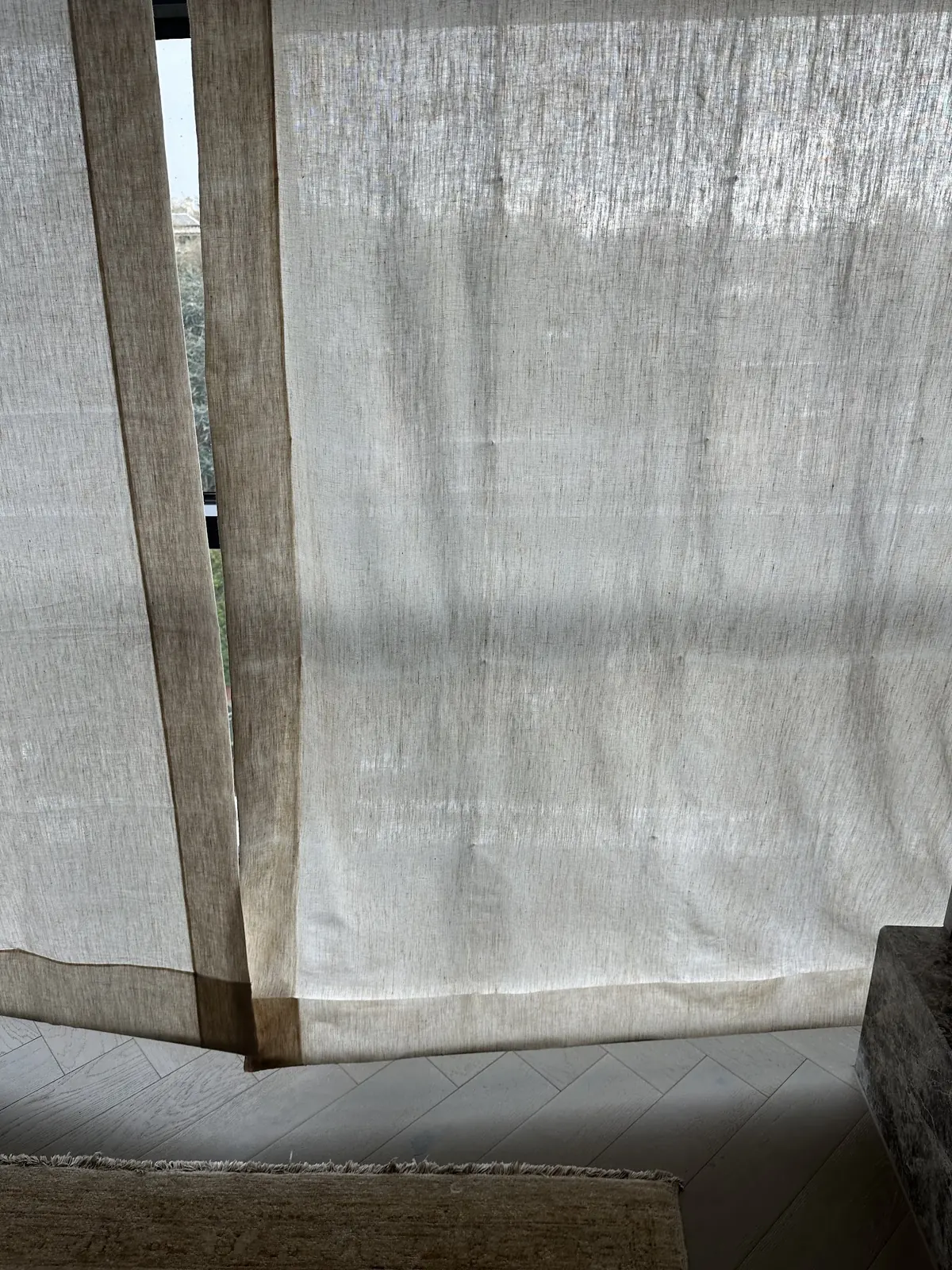
Linen Curtain Cleaning: how it works
Linen curtain cleaning in Melbourne starts with the label, because 'linen' on a curtain can mean three things. Pure linen is woven from flax and is the most sensitive to water. Linen blends mix flax with cotton or polyester and are steadier. Linen-look fabrics are usually all polyester with a slubby texture and clean much like any synthetic sheer. Pure linen curtains are often the ones that come back from a home wash several centimetres shorter.
Water causes linen's two biggest headaches. Flax fibres absorb it, swell and then pull tighter as they dry, which is where shrinkage comes from, especially in loose-woven curtain linen. And when only part of a linen curtain gets wet, from a leaking window, condensation or a well-meant spot clean, dissolved dirt travels to the edge of the damp patch and dries as a brown ring. For pure linen we usually recommend dry cleaning; blends and linen-look sheers can often be cleaned on the track with controlled low moisture, worked evenly across the whole drop so no new rings form.
Tide lines aren't always permanent. One customer had a water stain removed from a linen curtain and posted before and after photos to show it. Our guide to cleaning linen curtains explains what's safe to try first, and getting water stains out of curtains goes into marks in more detail.
Linen curtains we clean
- Pure (100%) linen curtains and drapes
- Linen-cotton and linen-polyester blends
- Linen-look and slub-weave sheers
- Lined and pinch-pleat linen curtains
Problems we're asked about
- Brown tide lines from leaks or condensation
- Shrinkage after an earlier home wash
- Dull, dusty colour on natural flax tones
- Mould spots along the hem
How we do it
The same six steps on every job, adjusted for your fabric.
- 1
Measure and inspect
We measure every curtain and blind (drop × width across the hem), read the care labels and check the fabric, lining, stitching, sun damage and any mould or stains. You get a firm quote before anything gets wet.
- 2
Test the fabric
A hidden corner is tested for colour-fastness and shrinkage so we choose the right method: low-moisture steam on the track, solvent dry cleaning, or a gentle wash off site.
- 3
Dust and vacuum
Loose dust, cobwebs and pet hair come off first with a soft upholstery head, top to bottom, including the heading tape, hooks and pelmet.
- 4
Pre-treat
Mould spots, water marks, nicotine and food stains get their own treatment, matched to the fabric, so they release instead of spreading.
- 5
Clean
On site, hot-water vapour is drawn through the fabric and straight back out by the extraction wand while the curtain hangs. Off site, curtains are dry cleaned or washed to their label, then dried flat.
- 6
Dress and check
Pleats are dressed, hems hung straight and wave folds reset. We walk round with you, recheck any stain you point out and leave the room as we found it, minus the dust.
From our Google reviews
I was worried that the mould wouldn't come out of our sheer curtains, but he worked his magic and they have come up brilliantly! Would highly recommend to anyone looking for curtain cleaning.
Danny came out to us within a few days of reaching out to clean the filth of our holland blinds. The previous owner had animals in the house. Danny did such an awesome job cleaning all the blinds, they came out looking like new again. The smell was gone too.
Really good job done by Danny on a set of heavy curtains that hadn't been cleaned for many years. Making contact and getting a quote was very easy and Danny was responsive throughout. Amount paid was the same as the quote, no messing about.
Linen Curtain Cleaning near you
We come to homes and businesses across Melbourne. Popular areas:
Frequently asked questions
Why do linen curtains crease so easily?
Flax fibres have very little natural spring, so once they bend they tend to stay bent. That's why linen curtains crease when bunched, folded or washed, and why creases set harder if the fabric dries crumpled. Hanging linen at full length while slightly damp, or steaming it on the track, lets most creases drop out. A soft crumple is part of linen's character.
Is linen-look polyester easier to clean than real linen?
In most cases, yes. Linen-look polyester doesn't absorb water the way flax does, so it's far less likely to shrink or tide-mark, and it usually cleans well on the track with low-moisture vapour. It does hold oily marks and static dust, so it can look grey sooner. Check the label, as some linen-look fabrics are blends.
Do linen curtains get longer or shorter over time?
Both can happen. Loose-woven linen can drop slightly under its own weight in its first months, then shorten when humidity changes or after it gets wet. Melbourne's swing from damp winters to dry summers makes this noticeable on long drops. That's why some curtain makers leave extra in the hem, and why we measure linen before cleaning.
Other curtain cleaning services
Curtain dry cleaning
Solvent dry cleaning for curtains that can't take water: dry-clean-only labels, silk, linen, interlined and pinch-pleat drapes.
Learn moreOn-site steam cleaning
Your curtains stay on the track.
Learn moreTake-down, clean & rehang
For curtains that need more than a clean on the track.
Learn moreSheer curtain cleaning
Sheers catch everything the window lets in: dust, traffic grime, cooking film and condensation.
Learn moreCurtain mould removal
Black spots along the hem, a musty smell, grey patches behind the sofa.
Learn moreDrape & pelmet cleaning
Heavy drapes, velvet, damask, swags and tails, upholstered pelmets and festoon blinds.
Learn moreCurtain pressing
New curtains with packet creases, curtains that came out of the wash wrinkled, or curtains just moved house.
Learn moreBlind cleaning
Roller, holland, sunscreen, roman, venetian and vertical blinds cleaned in your home or office.
Learn moreBook your curtain clean
Free measure and quote, fabric tested before we start, and 5.0★ from 44 Google reviews. Curtains, sheers and blinds across Melbourne since 2001.