Sheers & Fabrics
How to Clean Linen Curtains (and Keep Them From Shrinking)
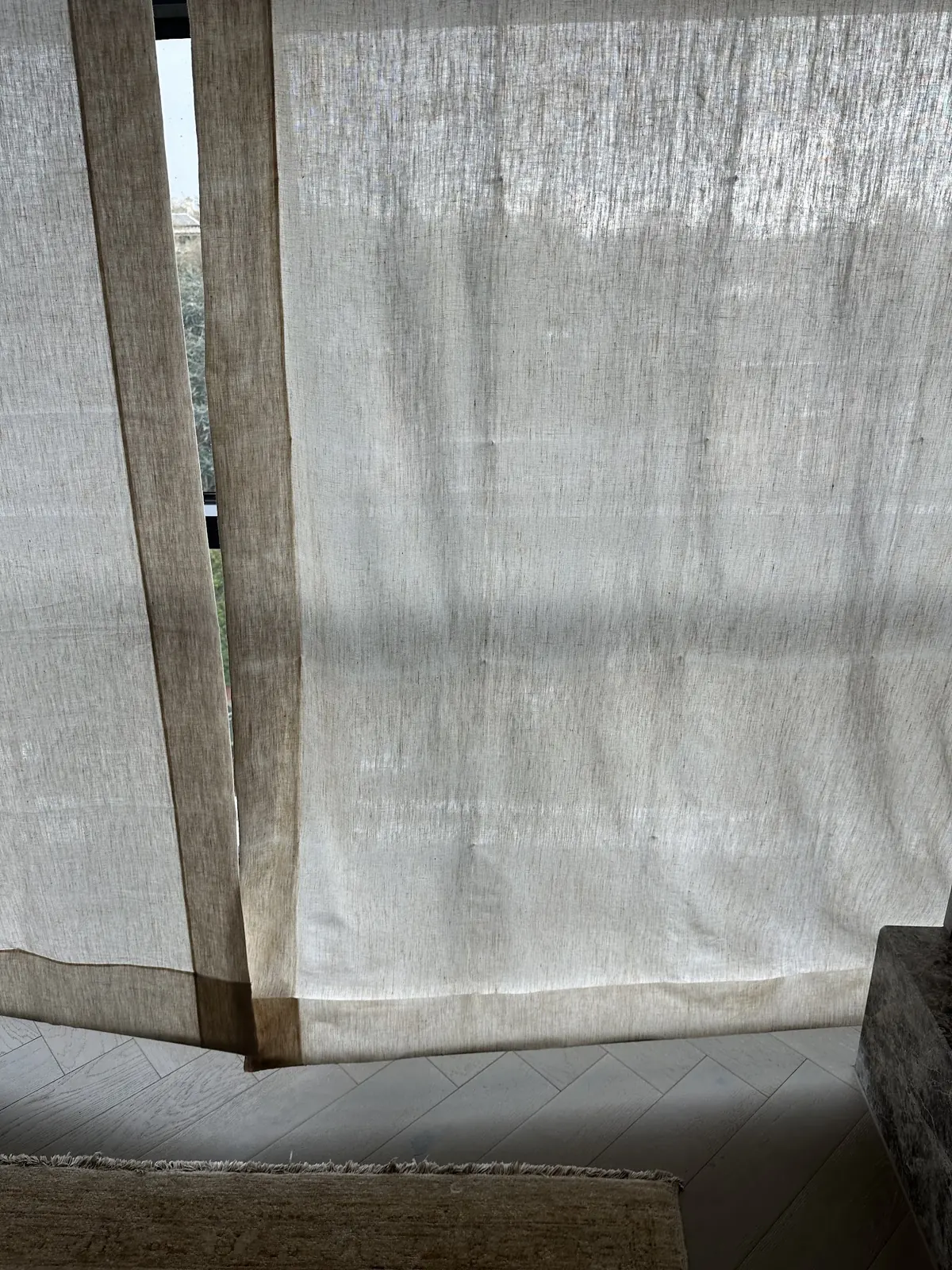
The first step in how to clean linen curtains is checking whether they're real linen or a linen-look polyester before you do anything. Real linen is best dry cleaned, or washed very gently in cold water only if the label allows it, then rehung damp. Hot water, a full spin and the dryer are what shrink linen curtains and leave them stiff and creased.
Linen-look polyester is far more forgiving. The difference matters, because the right method for one fabric can ruin the other.
We see a lot of linen in Melbourne homes, from relaxed sheers in Bayside living rooms to lined linen drapes in older terraces. It's a lovely fabric to live with, but it has a few habits worth understanding before you put it anywhere near water.
Real linen or linen-look? Find out first
A lot of curtains sold as "linen" in Australia are actually polyester or a poly-linen blend woven to look slubby and natural. That's not a bad thing; they hang well and wash better. But they're cleaned differently.
| Fabric | Typical behaviour | Safest cleaning |
|---|---|---|
| 100% linen | Shrinks with water and heat, creases heavily, marks easily | Professional dry cleaning, or cold hand-gentle wash if the label permits |
| Linen-cotton or linen-viscose blend | Can still shrink; viscose weakens when wet | Dry cleaning or a specialist; avoid machine washing at home |
| Linen-look polyester | Stable, rarely shrinks, creases drop out when hung | Cold gentle wash if labelled, or on-site steam cleaning |
The care label settles it. If it's missing, real linen tends to feel cool and slightly crisp, creases sharply when you scrunch a corner, and has uneven thick-and-thin threads. Polyester feels smoother and springs back from a scrunch.
If you're still unsure, treat it as real linen. Guessing wrong in the cautious direction costs nothing.
Why linen curtains shrink
Linen comes from flax fibres, which tighten up when they get wet and hot and are then agitated. A curtain is a long, flat piece of fabric hanging to a measured drop, so even a small amount of shrinkage shows up straight away as a hem that's now above the floor or a panel that won't close.
Lined linen curtains have a second problem: the lining is usually cotton or polyester and shrinks at a different rate, so the face fabric puckers. Our guide on whether curtains shrink when cleaned covers this in more detail. It's the main reason most linen curtains are labelled dry clean only, and why we usually recommend professional curtain dry cleaning for real linen.
How to clean linen curtains at home
Regular care (every few weeks)
Vacuum on the track with a soft brush attachment, top to bottom, and give the panels a shake when you open them in the morning. Linen's loose weave catches dust and pollen, especially in spring and in homes near busy roads.
If the label says it's washable
- Take them down carefully and remove hooks, gliders or rings. Our guide to taking down and rehanging curtains helps if you've got wave or pinch-pleat tape.
- Measure the drop before washing so you'll know if anything has changed.
- Wash one panel at a time on a cold, gentle or wool cycle with a mild liquid detergent. No bleach, no fabric softener build-up.
- Use the lowest spin or skip it. A hard spin sets deep creases in linen.
- Rehang straight away while damp. The weight of the fabric pulls it straight as it dries. Never tumble dry linen curtains.
- Touch up creases with a steamer or an iron on the linen setting from the back, while slightly damp.
Linen creases. Some softness and a few gentle waves are part of the look. If you want them crisp, see how to get wrinkles out of curtains.
Water stains and marks on linen
Linen is especially prone to tide marks: brown rings left when water from a leaking window, condensation or a spill dries and pulls dirt to its edge. Rubbing or dabbing more water on at home tends to make a bigger ring.
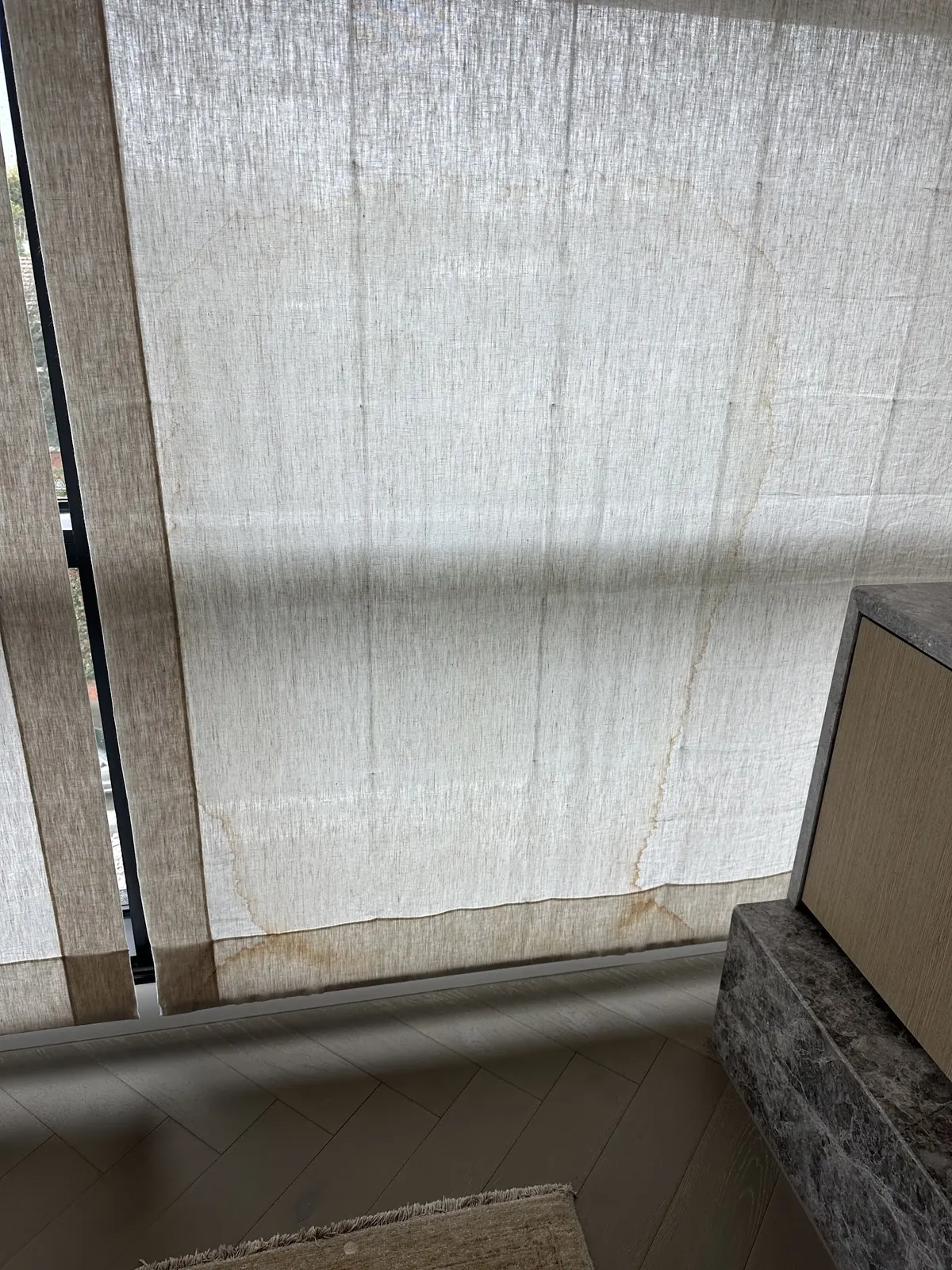
This one was a real job: a customer posted before and after photos of the water stain we removed from their linen curtain. Not every mark comes out completely; old stains and those that have been heat-set by ironing may only lighten. Our guide on how to get water stains out of curtains explains what's worth trying first.
Looking after linen curtains between cleans
Most linen curtains need a proper clean far less often than people think, as long as they get a little attention in between. A few habits make a real difference:
- Open them every morning in winter. Condensation on single-glazed windows soaks into the hem overnight. Drawing the curtains back and wiping the glass lets the fabric dry out and helps prevent mould and tide marks.
- Protect them from strong sun. Linen fades and weakens with UV, especially on north- and west-facing windows. A sheer or a lining behind the linen takes the brunt of it.
- Vacuum in spring. Pollen settles in the open weave and can leave a yellowish film along the folds if it sits for months.
- Deal with spills straight away. Blot, don't rub, and don't keep adding water. A small mark handled early is far easier to remove than a tide line that's had a season to set.
- Keep them off heaters. Heat near the fabric dries and yellows linen and can scorch the folds.
When to call a professional
You can safely handle regular vacuuming and, for washable linen-look fabrics, a gentle cold wash. It's worth calling a curtain cleaner when:
- the curtains are real linen or a linen-viscose blend
- they're lined, interlined or made to an exact drop
- there's a water mark, tide line or mould spotting
- they're linen sheers, which tear easily once sun-weakened (see how to clean sheer curtains)
- the label says dry clean only
When we collect linen curtains for dry cleaning, we check the fabric, measure, and return them cleaned and pressed. One customer handed over their curtains one day and had them delivered back cleaned the next. Every job is different, though, so ask about timing when you book. For pricing, which depends on size, fabric and condition, see curtain cleaning costs.
Not sure if your linen will survive a wash? Ask before you risk it. Call (03) 7066 4644 or request a free quote and we'll tell you the safest way to clean them.