Sheers & Fabrics
How to Clean Wave Fold (S-Fold) Curtains
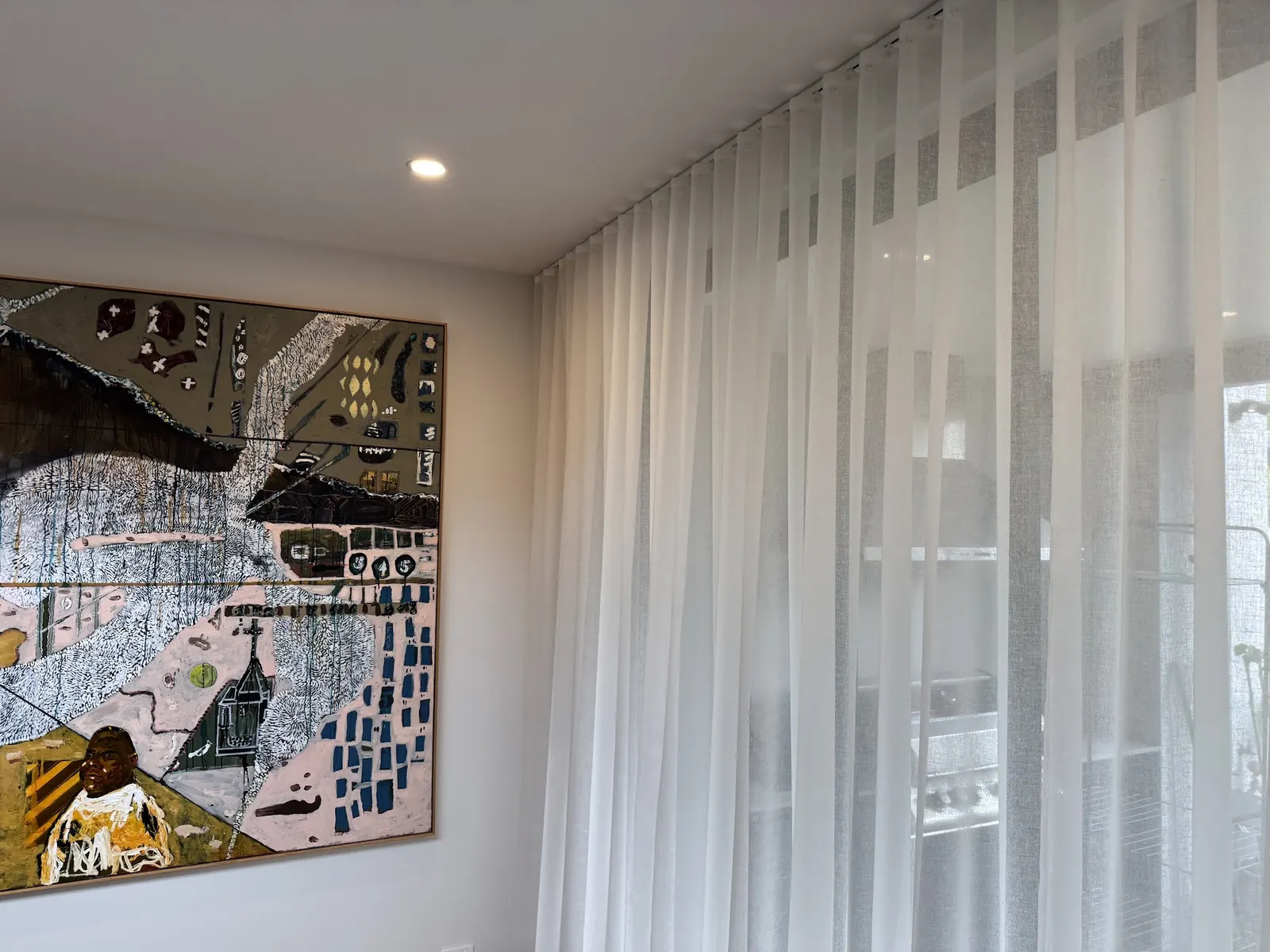
The easiest way to clean wave fold curtains is right where they hang: draw them closed, vacuum top to bottom, spot clean any marks, and have them steam cleaned on the track when they need a deep clean. Wave curtains attach to their carriers by snaps or hooks at exact intervals, so every time they come down there's a chance of losing the even S-shape that made you choose them.
Most wave curtains in Melbourne homes are sheers, which is why this guide sits alongside our sheer curtain cleaning service. The same principles apply to heavier wave-fold blockouts and lined curtains.
How a wave fold curtain actually works
A wave curtain doesn't rely on gathering tape or stitched pleats. The heading tape has press-stud snaps, or sometimes hook pockets, at even spacing, and these attach to carriers running in a wave track. The carriers are linked by a cord or tape that fixes how far apart they can travel. That spacing, not the fabric, sets the depth of each wave.
So two things control how it looks:
- Every snap on the right carrier. Miss one and you get a flat spot or a fold that turns the wrong way.
- The fabric hanging freely below. If the fabric shrinks, creases or dries folded on itself, the waves lose their roll.
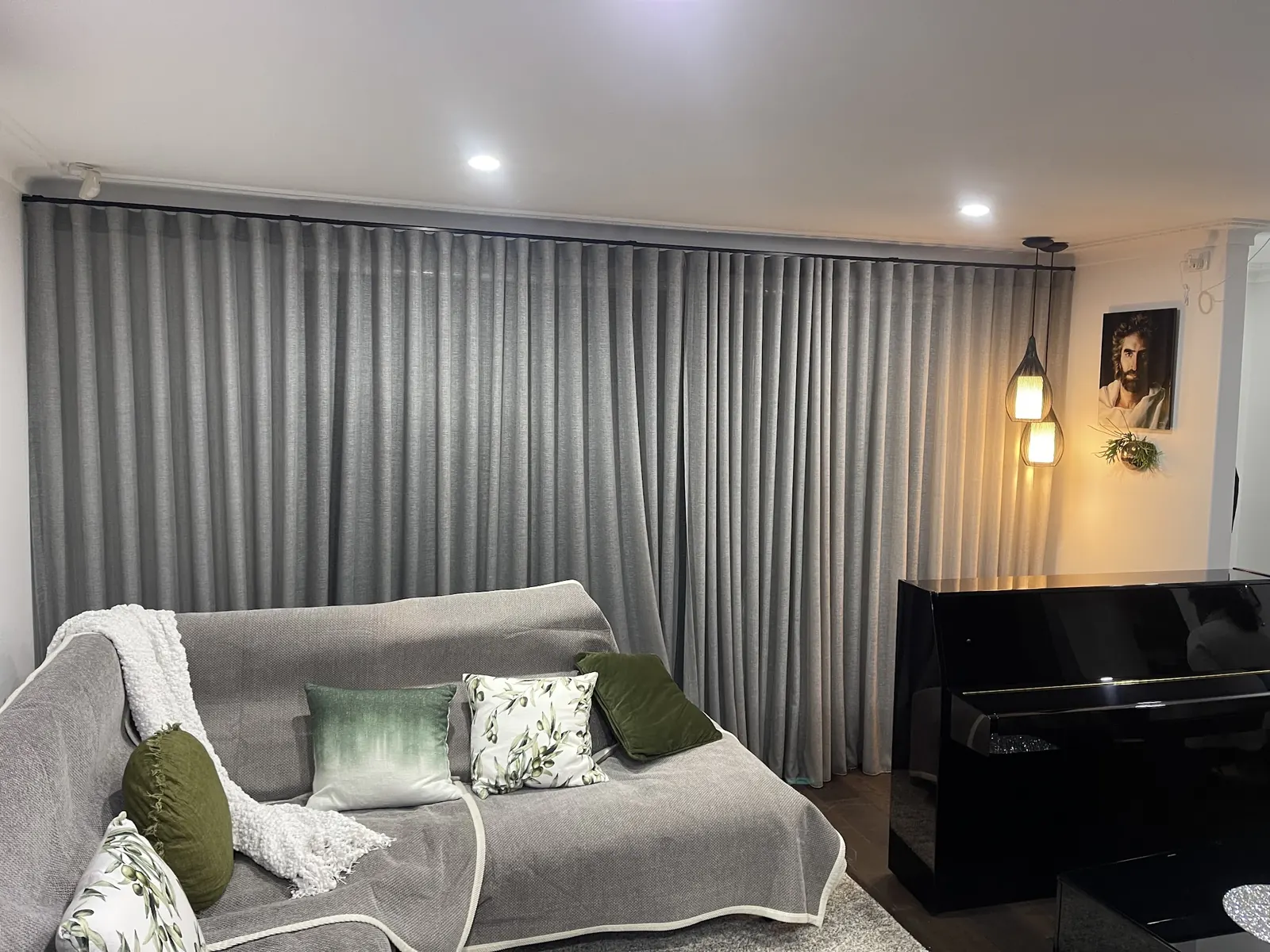
Open the curtain and look along it: the folds should alternate evenly, front and back, across the whole width. If yours is already uneven, check the snaps before anyone cleans it. Cleaning can't fix a misaligned heading, and it's worth knowing it was like that beforehand.
Cleaning wave curtains without taking them down
- Close them fully. Drawn closed, the waves are at their shallowest, so the inner curves facing the glass are exposed. When the curtain is open, those valleys hide dust.
- Vacuum the room side, then the window side. Upholstery brush, low suction, top to bottom. Sheers can be pulled into a nozzle and torn, so keep a light hand and support the fabric with your free hand if it's lifting.
- Brush the heading and track. A soft brush along the top catches cobwebs and dust on the carriers. Our guide to cleaning curtain tracks and gliders helps if the track is sticky or noisy.
- Spot clean gently. Cool water with a little mild detergent on a white cloth, dabbed, with a dry towel held behind the fabric. Sheers mark easily if one area gets too wet, so keep it light and feather the edges outwards.
- Restack and retrain. Open the curtain, then run a hand down each fold so the waves sit evenly. Leave them stacked for a few hours.
The floor-to-ceiling problem
Wave curtains are especially popular in newer apartments and townhouses with full-height glazing, from Southbank and Docklands towers to new estates in the west and south-east. That brings two specific problems.
The first is the hem. Full-length wave sheers often finish just above, or on, the floor beside a sliding door. In winter, condensation runs down the glass and pools in the door track, and the hem sits in it. A band of grey or black spotting along the bottom 10 to 20 centimetres is very common. Lifting the hem a little, or wiping the door track dry each morning, makes a real difference.
The second is height. A wave sheer close to three metres long is hard to clean safely from a step stool, and taking one down means unsnapping dozens of carriers above your head. That's where on-site cleaning earns its keep. In Southbank and similar buildings, it also saves carrying wet curtains through shared lifts and corridors.
If you do need to take them down
Sometimes a wave curtain needs to come off: the label says machine washable and you want to do it yourself, or the fabric needs off-site dry cleaning. A few habits make rehanging painless.
- Leave the carriers on the track. On most wave systems the curtain unsnaps from the carriers, which stay put. Don't remove the carriers or the spacing cord unless you have to.
- Unsnap in order from one end. Note which end is the leading edge, the one that meets the other panel in the middle.
- Protect the snaps. If washing, use a large mesh laundry bag, cold water and the gentlest cycle. Snaps can bend or crack against the drum, and a bent snap won't hold.
- No dryer. Heat can shrink sheers and distort the heading tape.
- Rehang while slightly damp. Snap back in order, end to end, then let the weight of the fabric pull out creases as it dries.
Check that the first snap is on the first carrier before going any further. Start one carrier out and the whole curtain is thrown off, and you won't notice until the last snap has nowhere to go. There's more in how to take down and rehang curtains, and how long curtains take to dry will help you plan the day.
Wave fold fabrics and what to expect
| Fabric | Usual approach | Honest limits |
|---|---|---|
| Polyester sheer | Clean on the track; some are machine washable if labelled | Sun-brittle sheers can split near the snaps |
| Linen or linen-look sheer | Clean on the track or dry clean | Real linen can shrink and lose drop |
| Wave blockout | Clean on the track | Old coatings can crack along the folds |
| Lined wave curtain | Clean on the track or dry clean | Face and lining can shrink differently |
For fabric-by-fabric risks with sheers, see how to clean sheer curtains.
When to call a professional
A regular vacuum is all most wave curtains need between deep cleans. Bring in help when the curtains are full height and you'd be working off a ladder, when there's mould along the hem, when the fabric is dry clean only or unlabelled, or when they've gone noticeably grey. With on-site cleaning, the curtain stays snapped to its carriers the whole time, so the wave spacing isn't disturbed.
Older sheers can be fragile. One customer had been told by other cleaners that their old sheers would probably tear; Danny cleaned them on the spot without damage. Even so, if a fabric looks too far gone, we'll say so before we start.
Want your wave curtains cleaned without unsnapping a single carrier? Phone (03) 7066 4644 or get a free quote online.