Sheers & Fabrics
How to Clean Silk Curtains Safely
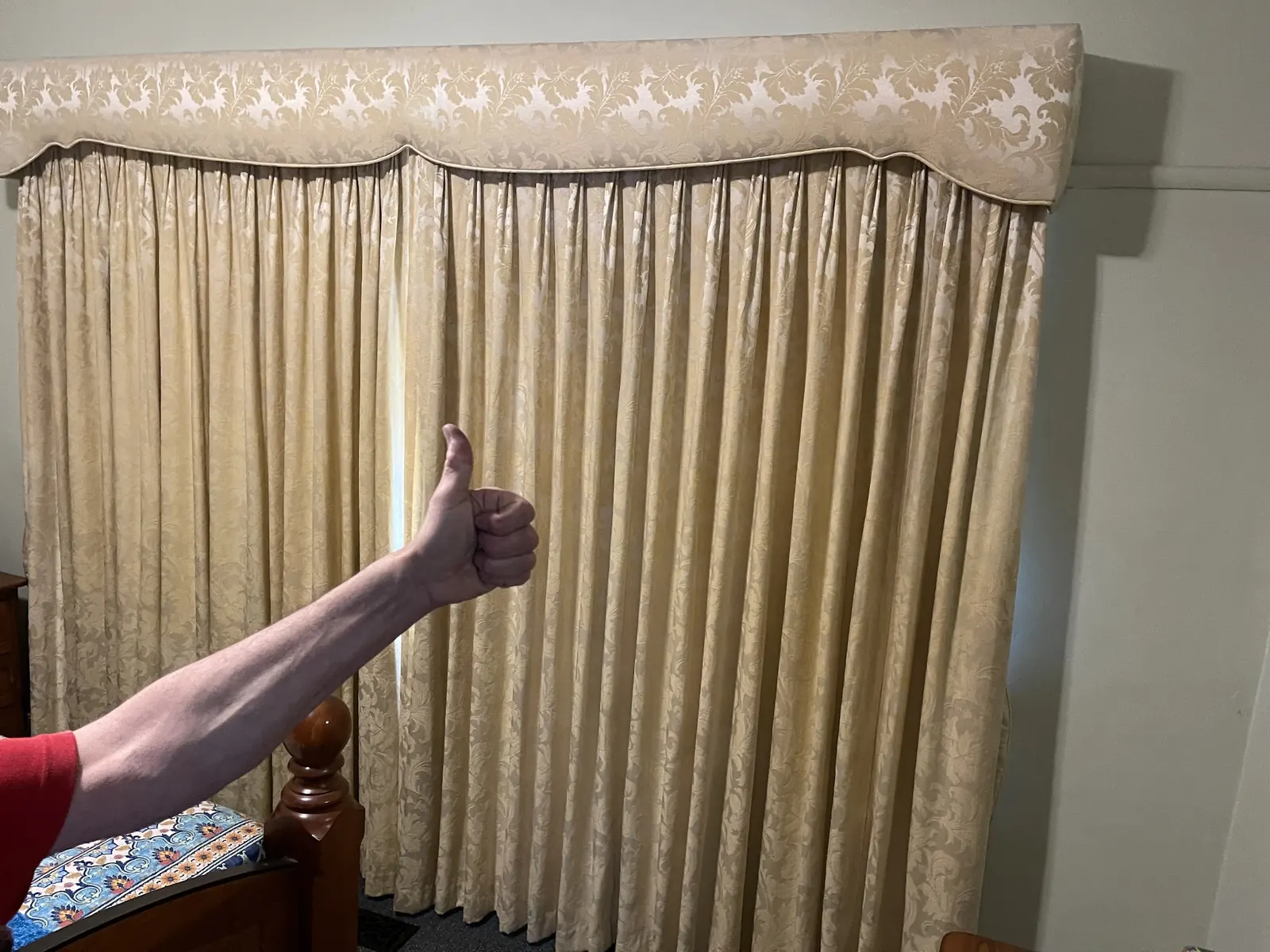
To clean silk curtains safely, keep them dry: vacuum gently on the track with a soft brush on low suction, deal with spills by blotting rather than wetting, and send them to a curtain dry cleaner for anything more. Silk spots and rings with water, weakens in sunlight and can lose colour quickly, so most home washing methods do more harm than good.
Real silk curtains are usually labelled dry clean only for good reason. Our curtain dry cleaning service takes silk and silk-blend drapes down, cleans them off site and rehangs them. If you're not ready for that, here's what you can safely do at home, and what to keep well away from.
First, is it actually silk?
A lot of curtains sold as "silk look", "faux silk" or "dupion style" are polyester. That matters, because polyester tolerates far more than real silk does. Check:
- The label. Look for fibre content on the back of a side hem or the lining. "100% silk" or a silk blend means treat it as silk.
- The slubs. Silk dupion (also spelled dupioni) has irregular thick-and-thin threads running across the weave. Faux dupion copies the look, but its slubs tend to be more regular.
- The feel and sheen. Real silk warms quickly in your hand and has a soft, shifting lustre. Polyester tends to feel slicker, with a more uniform shine.
- The paperwork. If the curtains were custom made, the original quote or invoice usually names the fabric.
Don't try a burn test on a hanging curtain. If you can't tell, treat it as silk until you know otherwise.
Why silk curtains need different care
Silk is a protein fibre, like wool and hair. That one fact explains most of the care rules.
Water spotting
Many silks, especially dupion and taffeta, mark where a drop of water dries, leaving a ring with a crisp edge or a patch with a different sheen. Water disturbs the finish on the fibres, and it can happen with perfectly clean tap water. It's the reason steaming and misting silk curtains at home is risky.
Sun damage
Silk weakens in ultraviolet light faster than most curtain fibres, and ordinary window glass doesn't block all of it. Unlined silk on a north- or west-facing window can turn brittle along the leading edges and folds. Once silk has sun-rotted, it can split under very gentle handling, whoever cleans it.
Enzymes and bleach
Many supermarket stain removers and "bio" laundry products contain protease enzymes, designed to break down protein stains like blood and egg. Silk is protein too, so those enzymes can attack the fibre itself. Chlorine bleach and oxygen soakers are also off the table; they weaken silk and strip its colour.
A quick water-spotting test
Before you let any moisture near a silk curtain, try this on a hidden spot, such as the inside of a side hem near the floor:
- Put a single drop of cool tap water on the fabric with your fingertip.
- Leave it to dry completely, without blotting it or using a hairdryer.
- Look at the spot in daylight from a few different angles.
If you can see a ring, a change in sheen or a darker patch, the fabric water-spots, so don't spot clean or steam it at all. If it dries invisibly, gentle blotting with a barely damp cloth may be safe for small marks, but stop at the first sign of change.
What you can safely do at home
- Vacuum regularly. Use a clean, soft brush attachment on the lowest suction and work with the drape of the fabric. Dust is abrasive and dulls silk over time, so this is the most useful thing you can do.
- Blot fresh spills straight away. Press a clean white cloth or paper towel on the spill to lift it. Don't rub: rubbing breaks the surface fibres and leaves a fuzzy, lighter patch, known as chafing.
- Air the room. On a dry, mild day, open the windows to freshen stale drapes instead of using fabric sprays, which can spot silk.
- Shade them. Draw sheers or blinds across during harsh afternoon sun, and consider a lining if the curtains are unlined.
What not to do: machine wash, hand wash, steam, iron directly on the face, use enzyme or oxygen stain removers, or dry a damp patch with a hairdryer, which tends to set a sharper ring.

Silk curtain problems and realistic outcomes
| Problem | DIY? | Realistic outcome with professional cleaning |
|---|---|---|
| General dust and dullness | Vacuum, yes | Usually freshens well |
| Water ring from a spill or leak | No | Often improves; some rings are permanent |
| Sun fading on folds | No | Can't be reversed; colour lost to UV is gone |
| Brittle, splitting fabric | No | High risk of further splits with any method |
| Mould spots on the lining | No | Lining often cleans up; marks on the silk may only lighten |
Fading is covered in more depth in can sun-faded curtains be restored. For rings left by a leaking window, see how to get water stains out of curtains, but on real silk, leave the home methods in that guide alone.
Choosing who cleans them
Not every dry cleaner is set up for curtains. Silk drapes are large, often lined, and should be measured before and after cleaning so any change in drop is caught. Our guide on whether dry cleaners can clean curtains lists what to ask. A cleaner who handles silk well will check for sun damage first and tell you if the fabric is at risk.
Silk blended with polyester or cotton is generally sturdier, but it still usually carries a dry clean only label. Our explainer on dry clean only curtains covers what that label is protecting.
When to call a professional
Vacuuming and blotting fresh spills are fine to do yourself. Anything else on real silk belongs with a professional: marks that need more than a blot, an overall clean, water rings, mould on the lining, or curtains you're about to move with. Fragile older silk is a judgement call. We'll look at it first and tell you plainly if cleaning is likely to cause splits, before anything comes down.
Silk drapes that need careful hands? Call (03) 7066 4644 or request your free quote, and we'll check the fabric before recommending a method.