Sheers & Fabrics
Why Are My Curtains Turning Yellow?
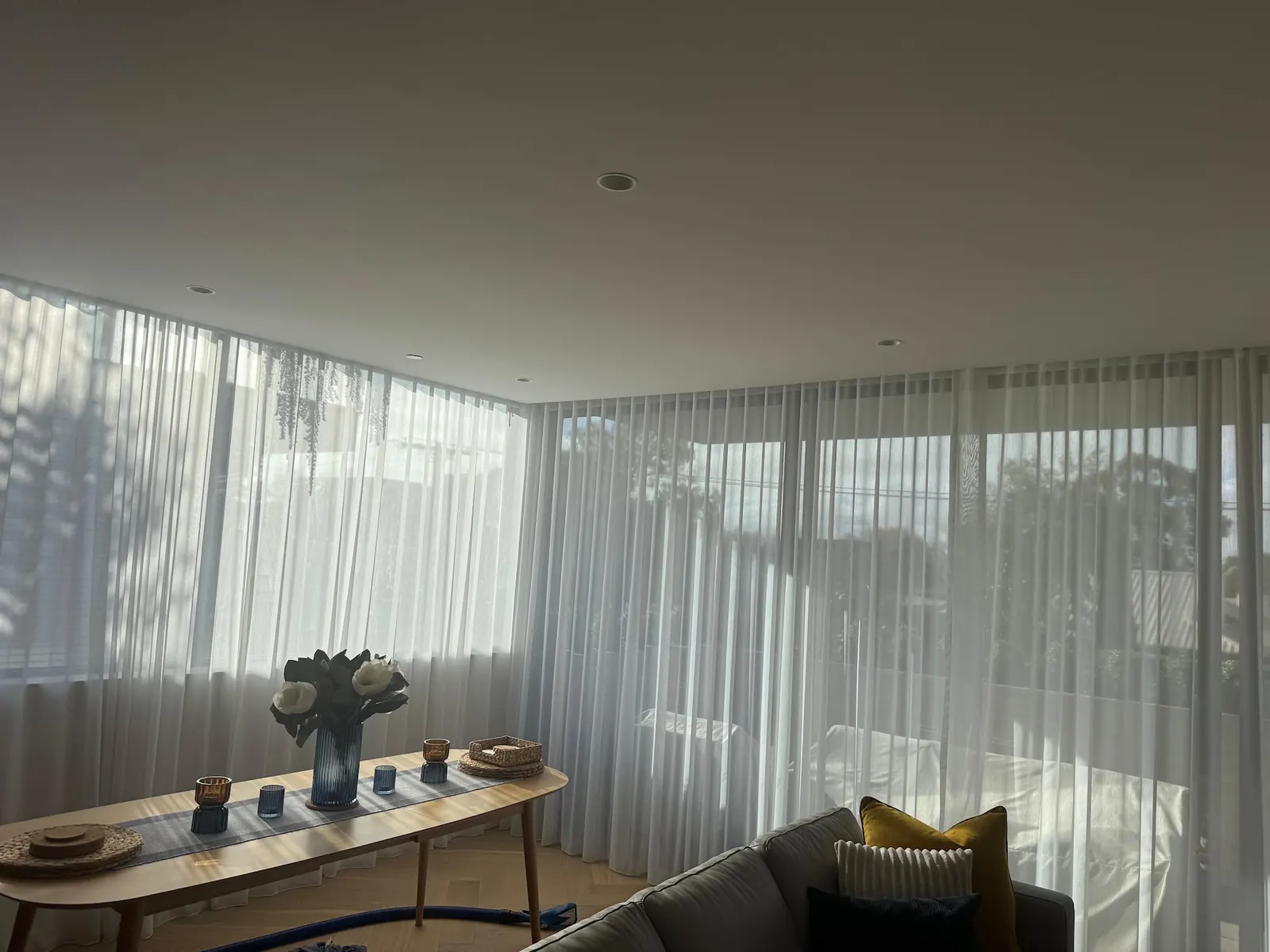
If you're asking why are my curtains turning yellow, the answer is usually one of four things: residue settling on the fabric (cooking oil, smoke, heater fumes), the sun breaking down the fibres or the whitening agents in them, moisture and dirt wicking into the hem, or an ageing lining or blockout coating showing through. The pattern of the yellowing tells you which, and that matters, because the first and third usually clean out while the second and fourth don't.
This guide is about diagnosis: reading where the yellow sits, a few quick tests you can do at home, and what each cause means for your options. If you already know it's grime and want the method, our guide on how to whiten yellowed sheers covers the soak. If they're sheers you'd rather hand over, see our sheer curtain cleaning service.
Read the pattern before anything else
Yellowing is rarely random. Stand back from the curtain in daylight, draw it fully closed, and look at where the colour is strongest. Technicians do this before touching the fabric because the location points straight at the cause.
| Where the yellow is | Likely cause | Does cleaning usually help? |
|---|---|---|
| Evenly over the whole panel | Airborne residue: cooking, smoke, heater fumes, dust film | Often, yes |
| Strongest at the top, fading downward | Warm air rising from a heater or a downlight above | Often, if the fibre isn't heat-damaged |
| Vertical stripes down the folds | Sun hitting the exposed face of each fold while the curtain sits stacked open | No; that's fading or fibre damage |
| Whole window-facing side, fabric papery | UV damage over years | No; cleaning may also weaken it further |
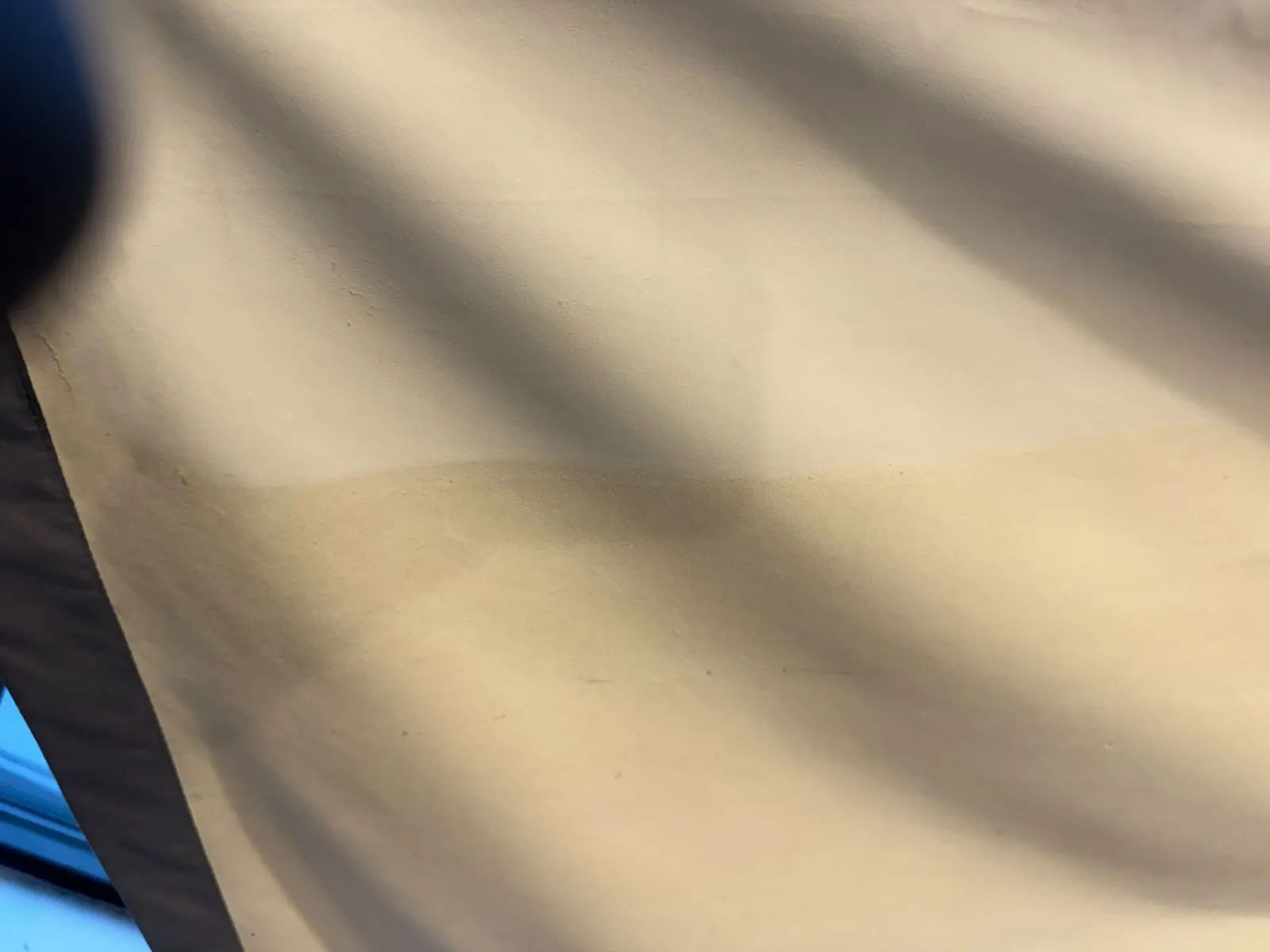
| A band along the bottom with a crisp edge | Water or condensation wicking up and drying as a tide line | Usually lightens or clears |
| Small orange-brown dots | Rust from hooks, weights or a wet window frame | Sometimes, with the right treatment |
| Showing through from the back | Yellowing lining or breaking-down blockout coating | Lining residue may; ageing coating won't |
The fold-stripe pattern catches a lot of people out. Curtains pushed back to the sides for months have the outer face of each fold exposed to sun and the inner face protected. Pull the curtain flat and you see alternating bands of yellow and white. It looks like dirt, but it's light damage in a neat stripe.
Why your curtains are turning yellow: the usual causes
Cooking and heater residue
Frying, roasting and even boiling a kettle puts fine droplets into the air that settle on the nearest fabric and slowly oxidise from clear to yellow. Gas heaters and older gas cooktops add combustion by-products. In a Melbourne house that runs a gas heater all winter with the windows shut, sheers near the heater can turn a noticeably warmer shade in a season. Grease-based yellowing often feels faintly tacky. Our guide on grease on kitchen curtains goes into the kitchen side.
Smoke
Cigarette smoke leaves a yellow-brown film and a smell that's easy to spot. Bushfire smoke is subtler: after a smoky summer, you may notice a dull, slightly brown cast on sheers that faced open windows. The smell usually goes first; the colour lingers. See our guide to getting smoke smell out of curtains.
Sunlight
UV attacks curtain fibres in two ways. It breaks down the optical brighteners that make new white fabric look brilliant, so the cloth slips back to its natural creamy shade. And over longer periods it weakens the fibre itself, which turns brittle and yellow. The first is cosmetic; the second is structural. Our post on whether sun-faded curtains can be restored is honest about the limits.
Moisture and dirt wicking
Sheers that touch condensation-soaked glass or a wet sill draw water up into the fabric. As it dries, it carries dissolved grime to the edge of the wet patch and leaves it there as a yellow-brown line. Melbourne's cold, damp winters and single-glazed older homes make this one of the most common causes we see on hems.
Residue from washing
Too much detergent, fabric softener or an incomplete rinse leaves a coating that yellows with heat and light. Curtains washed often at home, then dried in a sunny window, are prone to this.
Linings and coatings
Cotton linings yellow with age and moisture, and the foam or acrylic backing on blockout curtains can discolour and go crumbly as it ages. From the room side, the face fabric can look yellow when it's really the layer behind showing through.
Quick tests you can do at home
- The room comparison. If the same fabric hangs in more than one room, compare them. Yellow only in the room with the kitchen or the gas heater points to residue. Yellow only on the north- or west-facing windows points to sun.
- The touch test. Rub the yellow area between finger and thumb. Tacky or slightly greasy points to cooking or smoke residue. Dry, thin or papery, especially on the window side, points to sun damage. Give it a gentle tug at the hem; if it tears easily, don't wash it at home.
- The damp-cloth test. Dab a hidden yellow spot with a white cloth dampened in cool water. If the cloth picks up yellow-brown colour, the discolouration is at least partly soluble residue, which is good news.
- The UV torch test. If you have a cheap ultraviolet torch, shine it on the curtain in a dark room. Fabric with its optical brighteners intact glows bluish-white; patches where they've broken down look dull and flat. Dull patches on the window side mean light damage rather than dirt.
- The smell test. Bury your nose in the fabric. Stale smoke, cooking or a musty note all point to residue or damp.
- Turn it over. Look at the back. A yellow lining or a powdery, cracking blockout coat explains a lot.
What each cause means for your options
- Residue (grease, smoke, detergent, dust film): the best outcome. Proper cleaning usually brings a big improvement, sometimes in more than one round for long-term smoke.
- Tide lines and water marks: usually lighten a lot or clear. The trick is treating the whole panel so you don't create a new line. Our guide on water stains explains why spot-washing goes wrong.
- Rust spots: need a targeted treatment and sometimes leave a faint mark. Remove or replace rusty hooks first.
- Sun damage: cleaning can freshen it but won't bring the white back, and weak fibre may split under any handling.
- Ageing linings or coatings: a lining can sometimes be cleaned or replaced; a failing blockout coating usually means the curtain is near the end of its life.
Slowing it down
Keep sheers a few centimetres off the glass where the track allows, wipe condensation on cold mornings, run the rangehood when cooking, and keep curtains well away from heaters. Rinse thoroughly and skip softener if you wash at home. Drawing curtains fully closed now and then evens out sun exposure across the folds.
When to get a professional opinion
If the tests point to residue and the curtains are washable polyester, you may be able to handle it yourself. Get someone in when the fabric is linen, silk or dry clean only, when the curtains are large or heavy, when the yellowing comes with mould, or when the fabric feels weak and you don't want to risk tearing it. One customer whose sheers and roller blind we cleaned said Danny managed expectations well, and that's the point of an inspection: you find out what's realistic before you spend anything.
Not sure whether your curtains are dirty or damaged? Send a photo through our quote page or call (03) 7066 4644, and we'll give you an honest read on what cleaning can do.