DIY Curtain Care
How Often Should You Clean Your Curtains?
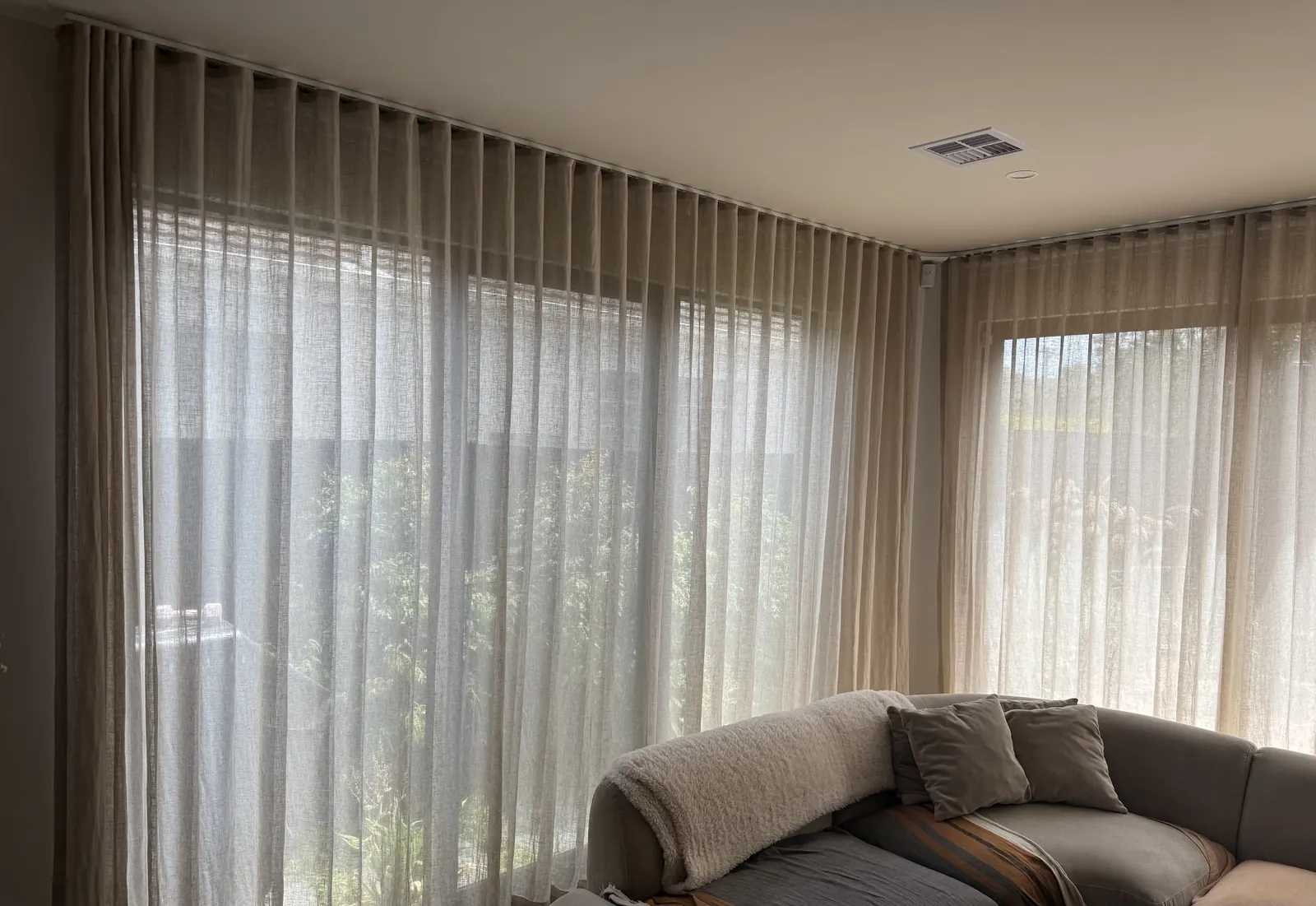
How often should you clean curtains? For most Melbourne homes, vacuum or shake them out every one to three months and give them a proper deep clean every 12 to 24 months. Sheers, kitchen curtains and anything hanging against condensation-prone windows usually need a deep clean closer to every 6 to 12 months. If you have pets, smokers, allergies or a busy road outside, shorten every interval.
Treat those numbers as a rule of thumb rather than a rule. The right schedule depends on what the curtains are made of, where they hang and what the room goes through. Here's how to set one that suits your house, and how to tell when you've let it slide. If you'd rather hand the whole thing over, our curtain cleaning in Melbourne covers everything from sheers to heavy drapes and blinds.
How often should you clean curtains? A quick guide
| Curtain or situation | Light care | Deep clean |
|---|---|---|
| Living room sheers | Vacuum monthly | Every 6 to 12 months |
| Lined drapes and pinch pleats | Vacuum every 1 to 3 months | Every 12 to 24 months |
| Bedroom blockout curtains | Vacuum every 2 to 3 months | Every 12 to 24 months |
| Kitchen and dining curtains | Wipe or vacuum monthly | Every 6 to 12 months |
| Windows that run with condensation | Check weekly in winter | At least yearly, ideally after winter |
| Homes with pets or smokers | Vacuum every few weeks | Every 6 to 12 months |
| Blinds (roller, holland, venetian) | Dust monthly | Every 12 months or so |
| Rentals | Light care through the lease | Before you move out |
Businesses run on different rules, because curtains in shared spaces get handled by far more people. If you manage an office, clinic, hotel or aged care site, our guide to how often commercial curtains should be cleaned goes into it.
Blinds sit on a slightly different clock. Horizontal surfaces like venetian slats catch falling dust every day, so a quick monthly dust stops it caking on, while roller and holland blinds mostly need attention when marks appear or the fabric starts to look flat and grey. Our guide to cleaning roller blinds shows how to do it without taking them down.
What makes curtains need cleaning more often
Condensation and damp
Melbourne winters are hard on fabric. Single-glazed windows in Victorian and Edwardian homes, and CBD or Southbank apartments with little cross-ventilation, stream with condensation on cold mornings. Curtains that touch wet glass stay damp, and damp fabric is where mould gets started. Our guide on why curtains get mouldy explains the mechanics.
Allergies and household dust
Curtains act like a big, slow filter for household dust. If someone at home has allergies or asthma, regular vacuuming and cleaning may help reduce dust and allergens in the room. It isn't a treatment, so talk to your GP about symptoms, and see curtains, dust mites and allergies for what cleaning realistically does. The Better Health Channel also has general guidance on dust mites and mould.
Pets, smoke and cooking
Pet hair, odour, cigarette smoke and cooking fumes all cling to fabric. Open-plan kitchens and living areas build up a fine greasy film that turns sheers grey or yellow much faster than in a bedroom.
Where you live
A main road, nearby building work, bayside salt air and spring pollen all add to the load. So do bushfire smoke seasons; after a smoky summer it's worth bringing the next clean forward.
Signs your curtains are overdue
- A grey band along the leading edge, where hands pull the curtain open and closed
- A puff of dust when you draw them
- Sheers that look grey or yellow held next to a fresh white towel
- A musty smell, especially after rain or first thing on a cold morning
- Black or brown spots along the hem or the window-facing side
- Tide lines or water marks from a leaking or sweating window
- Sneezing or itchy eyes when you open them (see your GP, but don't ignore the curtains either)
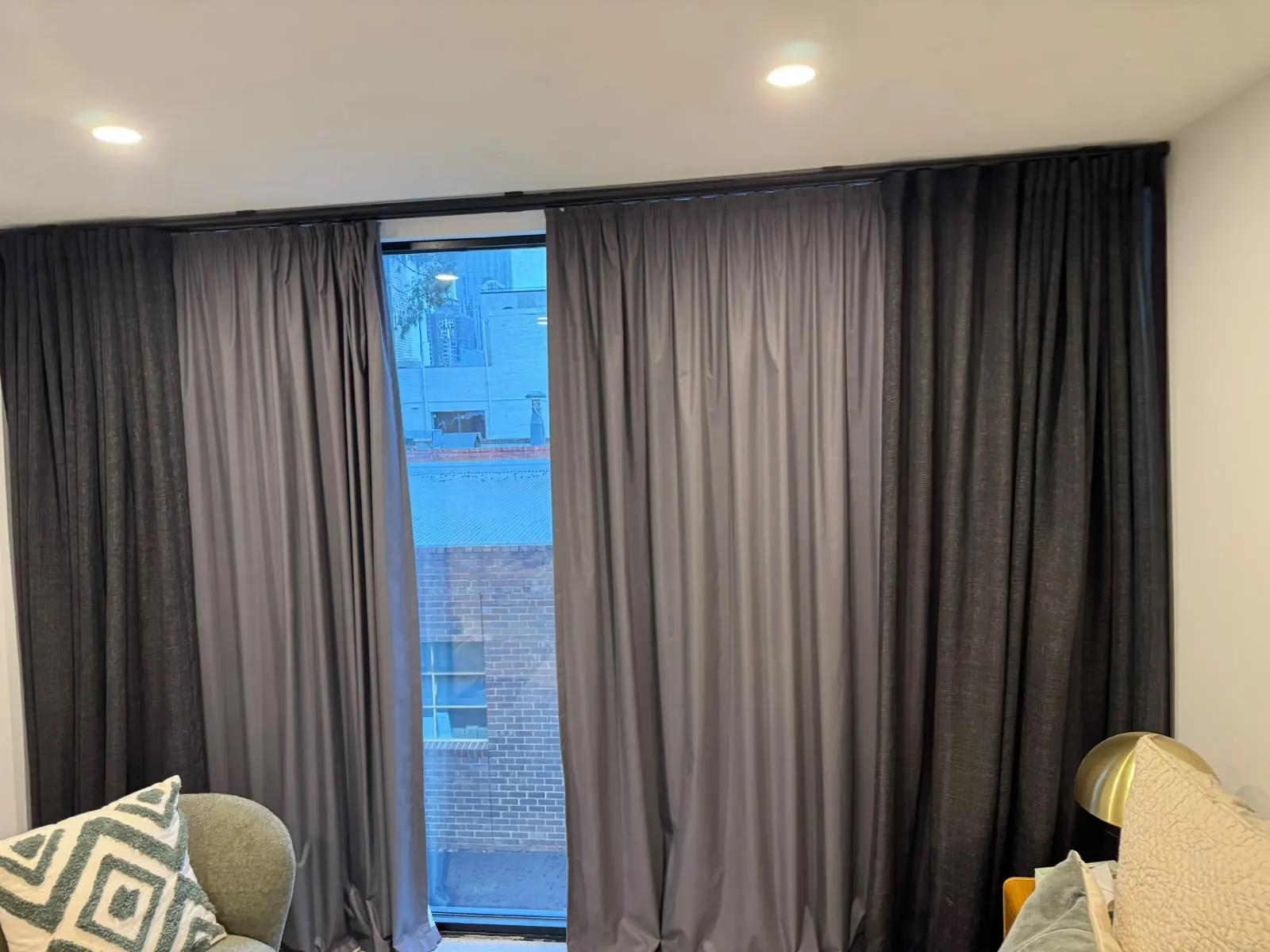
A simple year-round routine for Melbourne homes
- Every month or two: vacuum curtains top to bottom with a soft brush attachment, and dust the pelmets and the top of the track.
- Through winter: wipe condensation off the glass in the morning, open a window or run the exhaust fan for a few minutes, and check hems for spots.
- Early spring: the natural time for a deep clean, once winter damp is over and before pollen season peaks. Wash what's washable and book the rest.
- Before summer: a quick vacuum and check, especially for bedroom blockouts that will be drawn more during hot spells.
- After anything unusual: a renovation, a leak, a smoky week or a new pet all justify an extra clean.
Want to tackle the washable ones yourself? Our guide on how to clean curtains at home walks you through it, fabric by fabric.
Does cleaning curtains too often wear them out?
A little. Every wash takes something out of fabric, especially linen, cotton and old sheers, and heavy lined curtains don't enjoy being taken down and rehung. But dirt wears fabric too: grit worked into the weave rubs at the fibres every time the curtains move, and grime holds the moisture that feeds mould. In our experience the biggest enemy is usually the sun, not the cleaning.
The sensible middle ground is frequent gentle care, like vacuuming and airing, with less frequent deep cleans done the right way for the fabric.
When DIY is enough, and when to book a clean
Regular vacuuming and washing polyester sheers at home are well within reach for most people. A professional clean makes more sense for lined, blockout, velvet or "dry clean only" curtains, for anything with mould or heavy staining, and for big or high curtains that are risky to take down. Many curtains can be steam cleaned on the track, so there's no wrestling with hooks and ladders.
If budget is part of the decision, our curtain cleaning cost page explains how pricing works: curtains are measured, then quoted on area, fabric, condition and method. Spacing deep cleans sensibly, with light care in between, is the easiest way to keep the cost down over the years.
Can't remember when your curtains were last cleaned? That's usually your answer. Call (03) 7066 4644 or request a free quote online, and we'll measure up and suggest the right method for each room.