Mould & Stains
Why Do Curtains Get Mouldy? Condensation, Airflow and Melbourne Winters
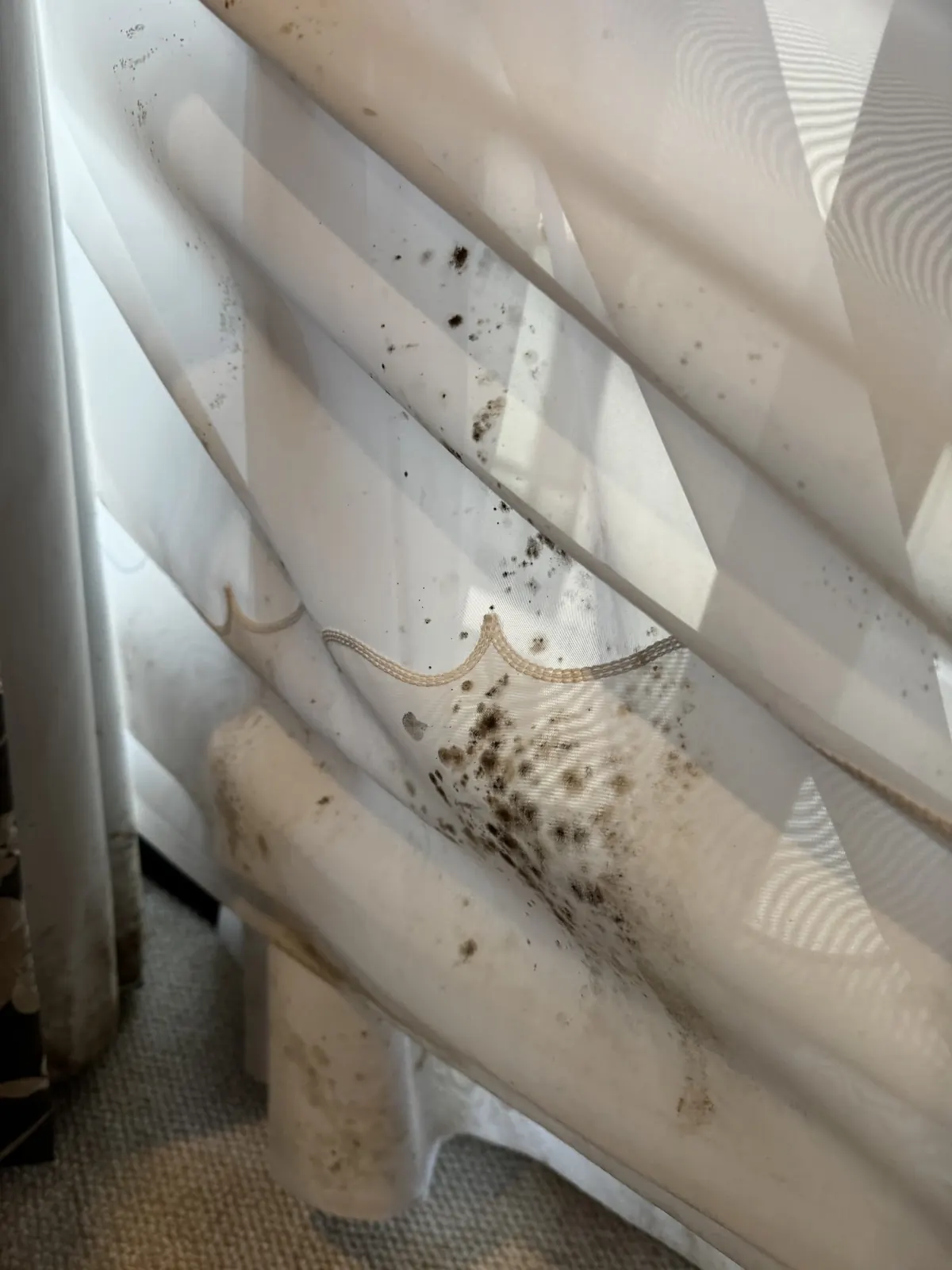
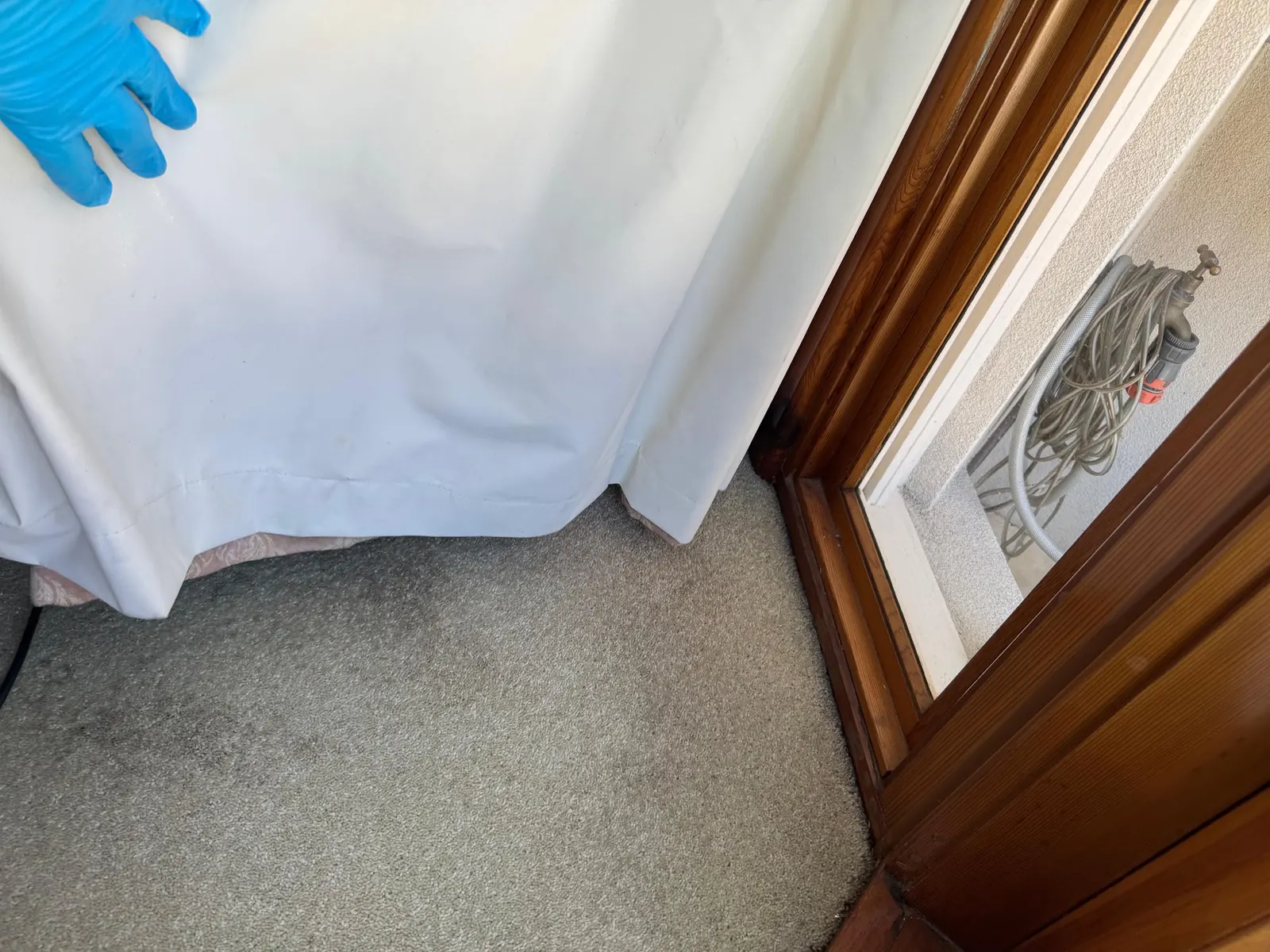
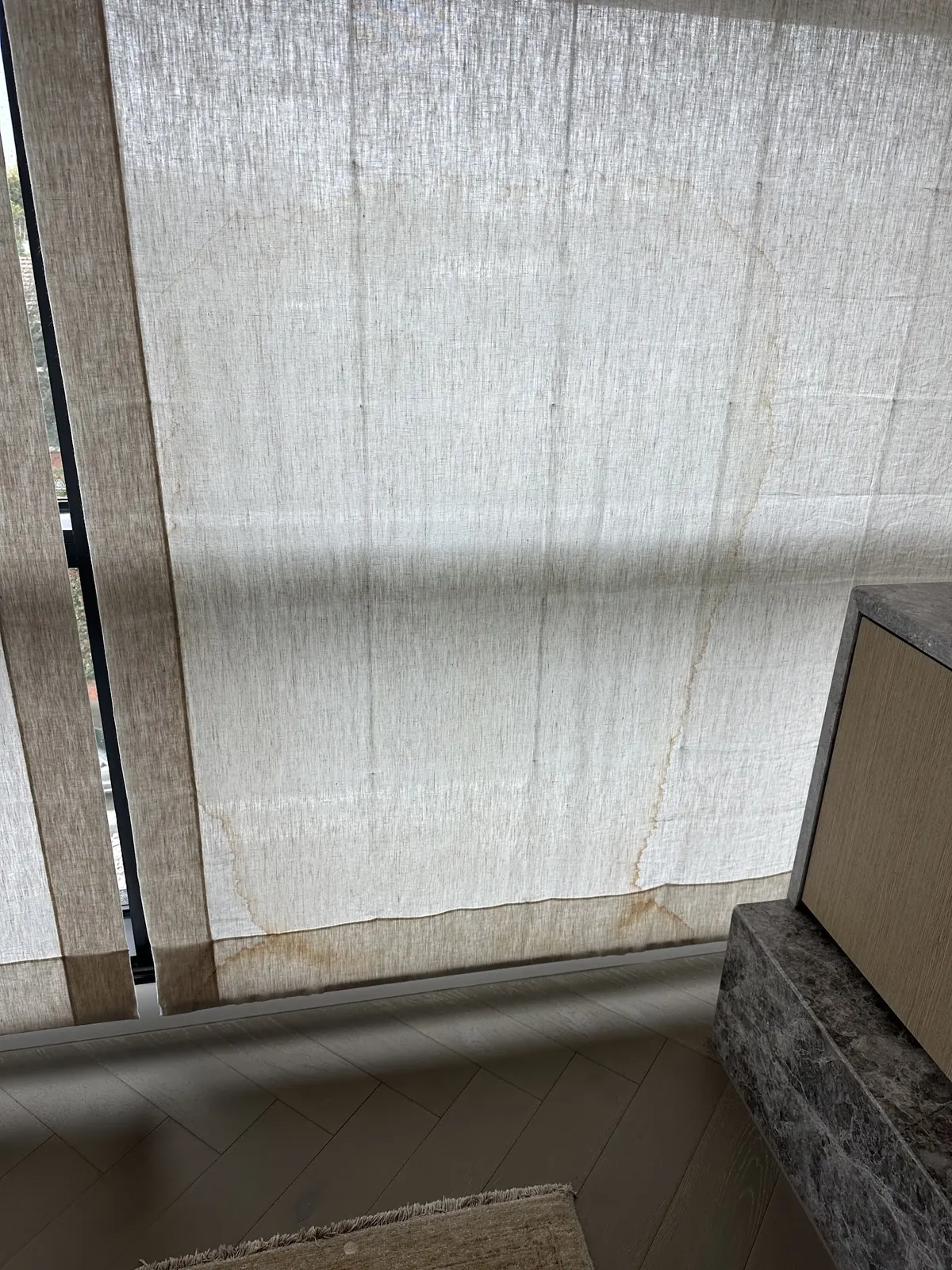
Why do curtains get mouldy? Almost always it's condensation. Warm, moist indoor air hits cold window glass, turns to water, and the curtain hanging against that glass stays damp for hours. Add dust for the mould to feed on and a room with little airflow, and spores that are always present in the air settle in and grow, usually starting at the hem.
That's why mould on curtains is a winter problem in Melbourne, and why even thorough curtain mould removal works best alongside fixing the cause. Fix the moisture and the mould mostly stops. Leave it, and even a perfectly cleaned curtain can spot again within a season.
Condensation: the main reason curtains get mouldy
Indoor air carries water vapour from breathing, cooking, showers, kettles and washing drying on racks. Warm air holds more moisture than cold air. When it touches a surface colder than its dew point, such as a single pane of glass on a 5-degree July morning, the vapour condenses into droplets.
A curtain closed across that window traps a pocket of cold, still air against the glass. The fabric soaks up the condensation, never fully dries during the day, and the cycle repeats every night. Mould needs moisture, a food source (dust, skin flakes and cooking residue in the fabric are plenty) and time. A curtain against a wet window has all three.
Why the hem goes first
Water runs down the glass and pools on the sill, so the bottom of the curtain stays wettest for longest. Hems that touch the sill or floor also wick moisture upwards. That's why mould so often shows as a band of black or grey-brown spots along the lower edge before it appears anywhere else.
Why Melbourne homes are so prone to curtain mould
Melbourne's cool, damp winters do a lot of the work, but the buildings matter just as much.
- Single-glazed windows. Many Victorian, Edwardian and post-war homes still have single panes, which get far colder than double glazing and run with water on winter mornings.
- Apartments with little airflow. CBD, Docklands and Southbank apartments are often sealed tight, with one wall of glass and nowhere for moisture to go, particularly when windows stay shut through winter.
- Heating with the windows closed. Warm rooms hold more moisture, and the bigger the gap between indoor and outdoor temperature, the more condensation forms.
- Drying washing indoors. A full rack of clothes releases a lot of water into a room overnight.
- Bathrooms, laundries and kitchens. Without exhaust fans running, steam travels to the coldest surface it can find.
- Bayside homes. Damp sea air near the bay can add to the moisture load on cold mornings.
Which curtains are most likely to go mouldy
| Curtain | Mould risk | Why |
|---|---|---|
| Sheers hanging against the glass | High | They sit closest to the condensation and are thin enough to soak through quickly. |
| Blockout curtains kept closed | High | The coated back stops moisture escaping and traps cold air against the window. |
| Cotton and linen | Moderate to high | Natural fibres absorb and hold moisture well. |
| Lined drapes | Moderate | The lining faces the glass and can mould before the face fabric shows it. |
| Curtains in rooms with good airflow | Lower | Moisture dries off before mould can establish. |
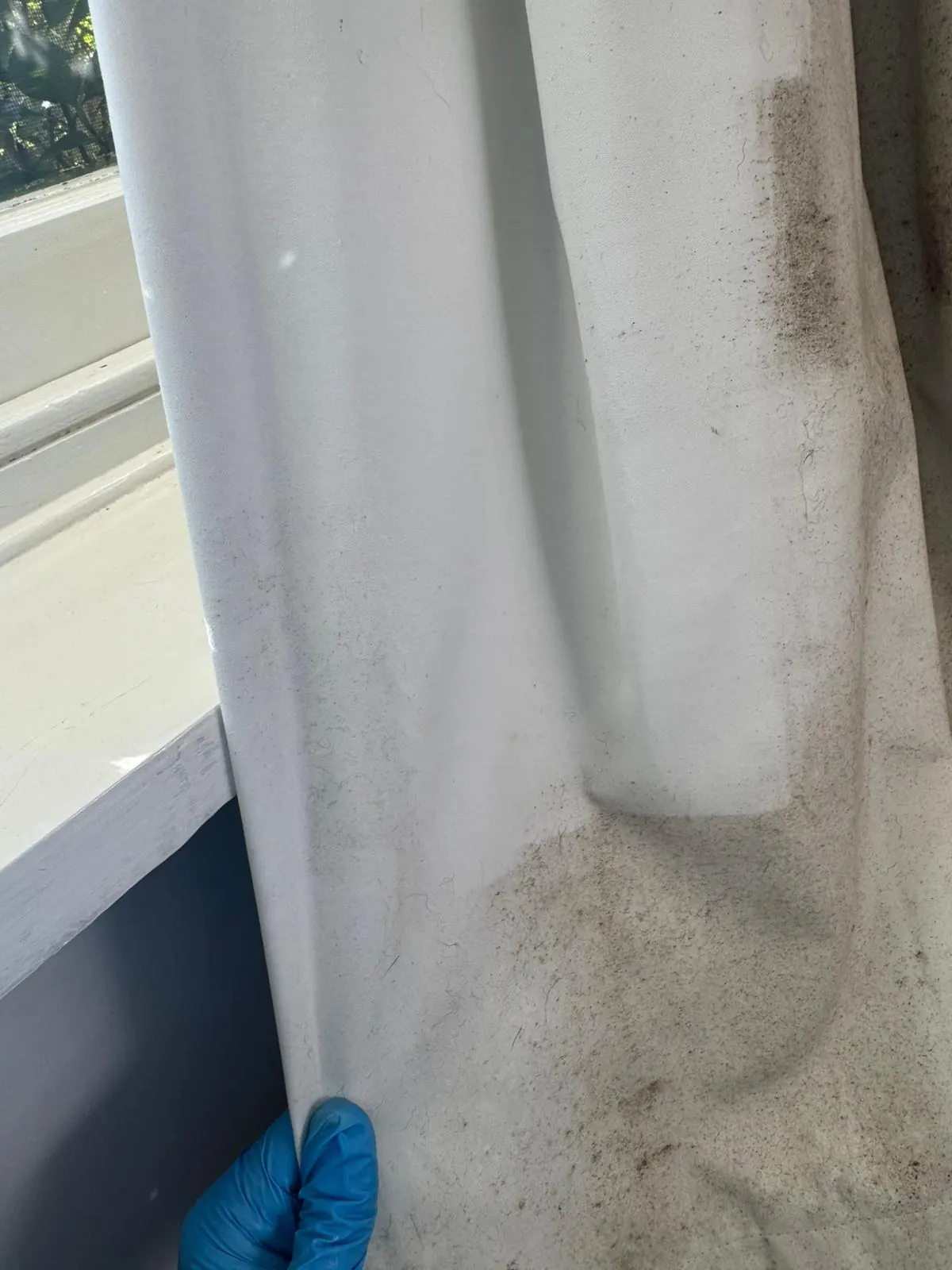
Blockout deserves a special mention, because the mould often grows on the backing where you don't see it until it's well established. Our guide on how to clean blockout curtains explains how to treat it without damaging the coating.
How to stop curtains getting mouldy
You can't control Melbourne's weather, but you can cut the moisture reaching the fabric. Most of these cost nothing.
- Wipe the glass every winter morning. A squeegee or microfibre cloth takes a minute and removes the water before the curtain absorbs it. Wring the cloth into a bucket, not back onto the sill.
- Open the curtains during the day. Let the glass and the fabric dry out, even on grey days.
- Air the room daily. Ten minutes with a window open, ideally on opposite sides of the room, swaps damp air for drier air.
- Use the exhaust fans. Run them while showering and cooking, and for a while afterwards.
- Dry washing outside or in a ventilated space. If it has to be indoors, keep a window cracked and the door to the rest of the house closed.
- Keep a gap between fabric and glass. Where the track allows, even a few centimetres helps air move.
- Keep hems off the sill and floor. A hem that sits in pooled water will mould first.
- Vacuum the curtains regularly. Less dust means less for mould to feed on. Our guide on how often you should clean curtains has sensible intervals.
If condensation is severe even after all of this, longer-term fixes such as a dehumidifier, better ventilation or double glazing may be worth looking into.
What one customer learned about their mouldy curtains
When Danny inspected one customer's mouldy curtains, he explained that the mould was coming from condensation and poor airflow in the room, not from the curtains themselves, and gave practical advice on stopping it returning. After the clean, the customer said the room felt fresher. That's the pattern we see most often: cleaning removes the mould, and changing the habits around the window keeps it away.
When mould has already taken hold, the cleaning method depends on the fabric. How to remove mould from curtains walks through safe home treatment and its limits. Old black staining often lightens rather than disappearing completely.
Renting? Who deals with it
In a rental, mould can involve both the tenant's day-to-day habits and the property's condition, such as poor ventilation or leaks. Report persistent mould to your landlord or agent in writing, take dated photos, and check your lease and Consumer Affairs Victoria guidance on mould and damp. Our guide on who is responsible for cleaning curtains in a rental covers the curtain side of things.
When to call a professional
A few early spots on a washable sheer can usually be handled at home with gloves, a P2 mask and a gentle treatment done outdoors. Get a professional in when mould covers a large area, runs along the full width of the hem, has reached the lining or blockout backing, or keeps coming back despite your efforts. The same goes when the curtains are delicate, heavy or dry clean only, or when someone at home has asthma or allergies and shouldn't be disturbing mould. If you have symptoms you think are mould-related, talk to your GP. A professional mould clean treats the fabric and we'll point out what's causing the problem at the window.
Mould back on the curtains again this winter? Phone (03) 7066 4644 or request a free quote. We'll clean the curtains and talk you through what's feeding the mould so it's less likely to return.