Sheers & Fabrics
How to Clean Lace Curtains (New, Old and Heirloom)

The safest way to clean lace curtains is to soak and wash them by hand in cool water with a gentle detergent, support their full weight when you lift them out, and dry them flat or hanging without wringing. Modern polyester lace can usually handle a cold machine cycle in a pillowcase. Old cotton lace, and anything that's been in the sun for years, needs far more care, because lace is held together by fine bridging threads that snap long before ordinary fabric would tear.
If your lace is old, family-owned or simply irreplaceable, read the condition checks below before any water touches it. And if it fails them, our sheer and lace curtain cleaning is usually the lower-risk option.
Why lace behaves differently from other sheers
A voile sheer is a continuous woven sheet. Lace is mostly holes. The pattern is made of thin threads looping between thicker motifs, and every one of those threads carries load when the curtain is wet and heavy.
That has three practical effects. Lace snags easily, so a metal hook or zip in the wash can pull a whole run of loops. Wet lace stretches, so a curtain hung up dripping can grow and distort. And when a single bridging thread is weak, the strain jumps to its neighbours, which is why lace tends to fail as a sudden tear rather than a slow wearing patch.
Check the condition first: three quick tests
- The light test. Hold the panel up to a bright window. Thin, see-through patches in the solid parts of the pattern, or loops that look broken, mark weak areas. They're usually in the strip that sat against the glass or on the sill.
- The corner tug. At a bottom corner, take a small section between your thumbs and pull very gently. A faint crackle or threads giving way means the fibre is sun-rotted.
- The colour check. Compare the colour at the top heading, which gets the least light, with the hem. Strong yellowing at the bottom only often means sun and condensation damage, not just dirt.
If a panel fails the first two tests, don't machine wash it. Some fragile lace can still be cleaned with a careful hand soak or on-site steam, but brittle fibre may split however gently it's handled, and nobody honest will promise otherwise.
How to clean lace curtains by hand
This method suits cotton lace, heirloom panels and anything without a care label.
- Take them down carefully. Remove every hook and ring before folding the curtain. Fold it loosely and carry it in your arms rather than pulling it off the track in one go. Taking down and rehanging curtains has tips for different track types.
- Shake off loose dust outside. A gentle shake only. Don't flick lace like a towel.
- Fill a bath or laundry tub with cool water and dissolve a small amount of wool wash or gentle liquid detergent before the lace goes in.
- Lay the curtain in flat and leave it. Soak for 30 to 60 minutes. Press it down with flat hands a few times. Don't scrub, twist or rub the fabric against itself.
- Drain and rinse twice. Let the dirty water out with the lace still in the tub, then refill with clean cool water. That way you're never lifting a heavy wet curtain out of a full tub.
- Press out the water. Push down on the folded lace against the bottom of the empty tub, then roll it up inside a large towel.
- Dry it in shape. Either rehang it damp so it falls to length, or lay it flat on towels and ease scalloped edges and borders back into line with your fingers. Keep it out of direct sun while it's wet.
Machine washing modern lace
Newer polyester lace is far tougher. If the label allows it, put each panel in a pillowcase or mesh bag, use a cold delicate cycle with a low spin and wash it on its own. Never wash lace with towels or jeans; their zips and rough fibres catch the loops.
Lace types and how to treat them
| Lace type | Typical feel | Safest method |
|---|---|---|
| Modern polyester lace | Smooth, slightly slippery, springs back when crushed | Cold delicate cycle in a bag, or hand wash |
| Cotton lace (including older Nottingham-style panels) | Soft, matte, creases when squeezed | Hand soak in cool water; no machine |
| Lace with a sewn-on border or trim | Two fabrics joined at a seam | Hand wash; borders may shrink differently |
| Heirloom or very old lace | Fine, yellowed, possibly brittle | Condition check, then professional advice |
Yellowed lace, and what not to use
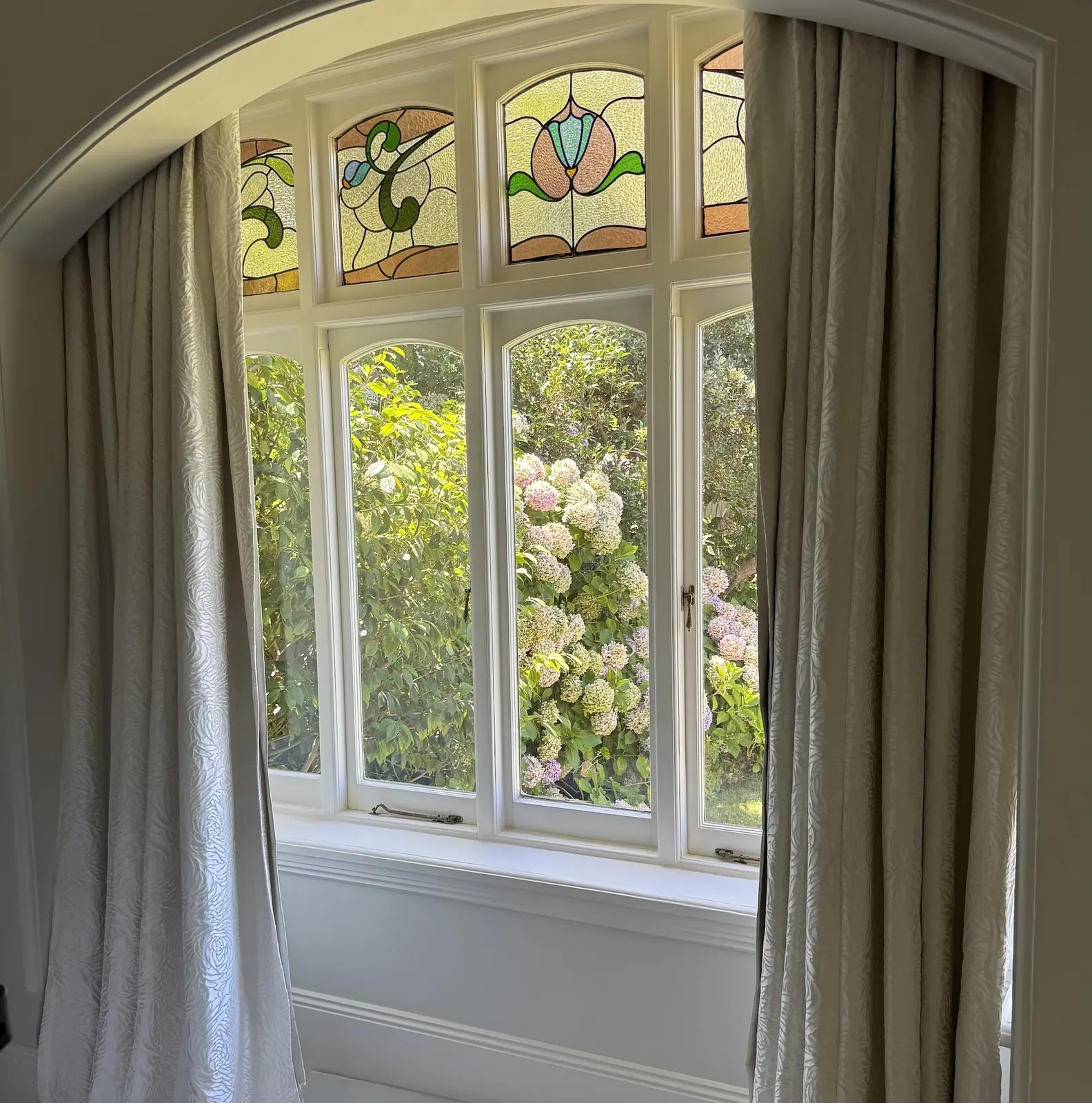
Lace in Victorian and Edwardian homes around suburbs like Carlton often sits right against single-glazed glass, catching condensation every winter and sun every summer. The result is a yellow-brown band along the hem.
Chlorine bleach is the wrong answer here. It weakens cotton fibres, and on fine lace that can mean holes appearing in the next wash. It also yellows some synthetics instead of whitening them. An oxygen-based soaker in cool to lukewarm water is gentler, but still test it on a hidden corner and keep the soak short on old lace. How to whiten yellowed sheer curtains goes into the options, and why curtains turn yellow explains which causes cleaning can and can't reverse.
A word on starch: some people like the crisp look of starched lace. Light spray starch is fine on cotton once it's dry, but starch residue feeds mould in a damp room, so skip it on lace that hangs against condensation-prone windows.
When to call a professional
Hand washing modern lace is a perfectly good weekend job. It makes sense to get help if:
- the lace is old, inherited or can't be replaced;
- it failed the light or corner test;
- it's very long, layered with drapes, or sits under an upholstered pelmet;
- there's black mould spotting as well as yellowing.
Someone who rang us had already been told by another company that their old sheers would likely fall apart. Danny cleaned them on the spot without damage, and did the pelmets at the same visit. That won't be possible for every fragile panel, which is exactly why we look before we start and tell you what's realistic. If pelmets are part of the picture, how to clean pelmets covers what you can do yourself.
Have lace you'd rather not risk in the tub? Ring (03) 7066 4644 for an honest opinion, or ask for a free quote. A photo of the fabric held up to the light tells us a lot.