Blinds
How to Clean Sunscreen Blinds
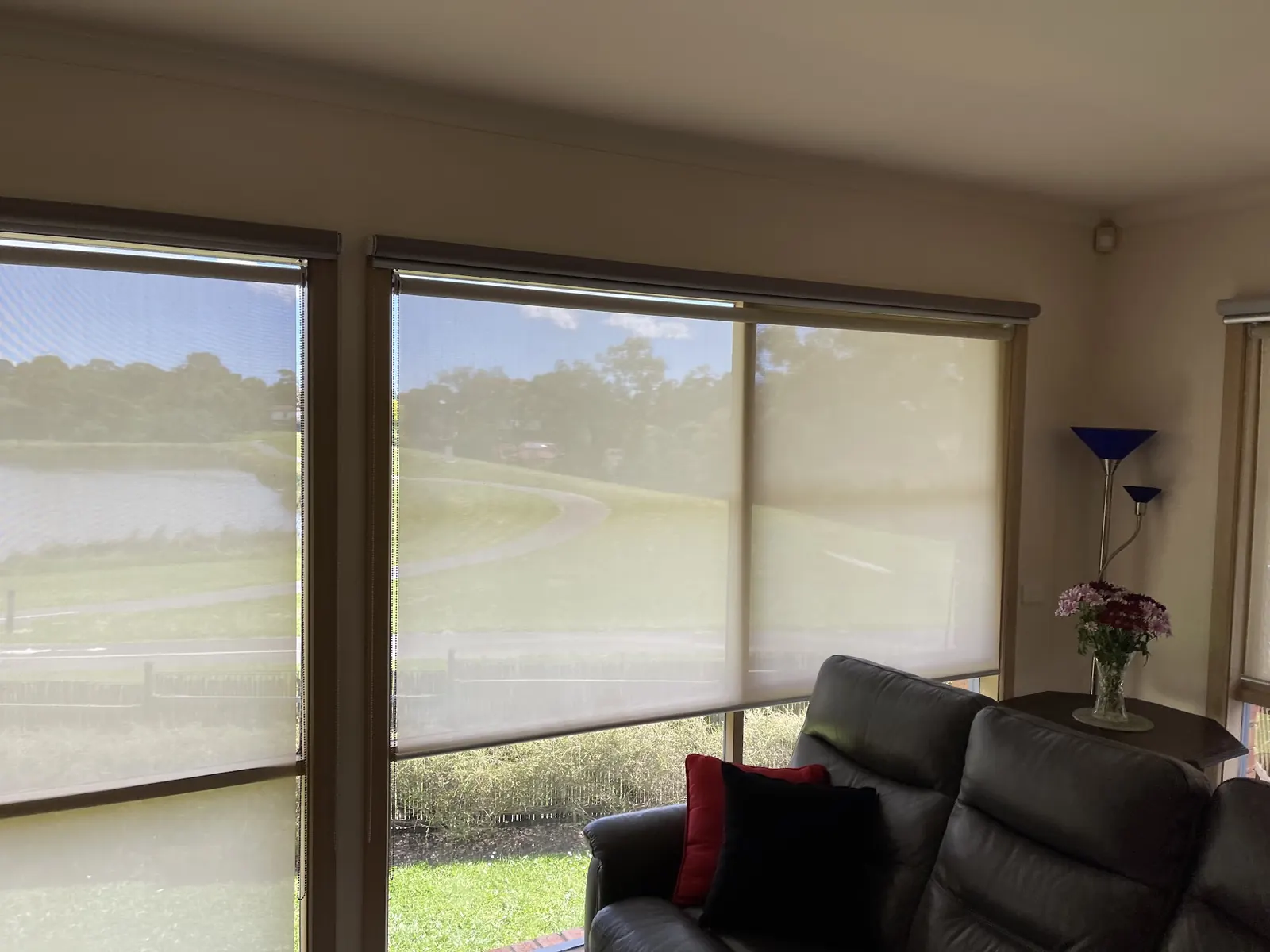
To clean sunscreen blinds, lower them fully, vacuum both sides with a soft brush, then wipe the mesh in light downward strokes with a sponge dipped in lukewarm water and a few drops of mild dishwashing liquid. Follow with a second sponge and clean water to lift out the soap, and leave the blind fully down until it's completely dry before you roll it up.
That's the short version. The details matter because sunscreen fabric isn't like other blind fabric, and the most common cleaning habits leave it looking worse, not better. For wide, high or mouldy blinds, our roller and sunscreen blind cleaning is done where the blinds hang.
What makes sunscreen fabric different
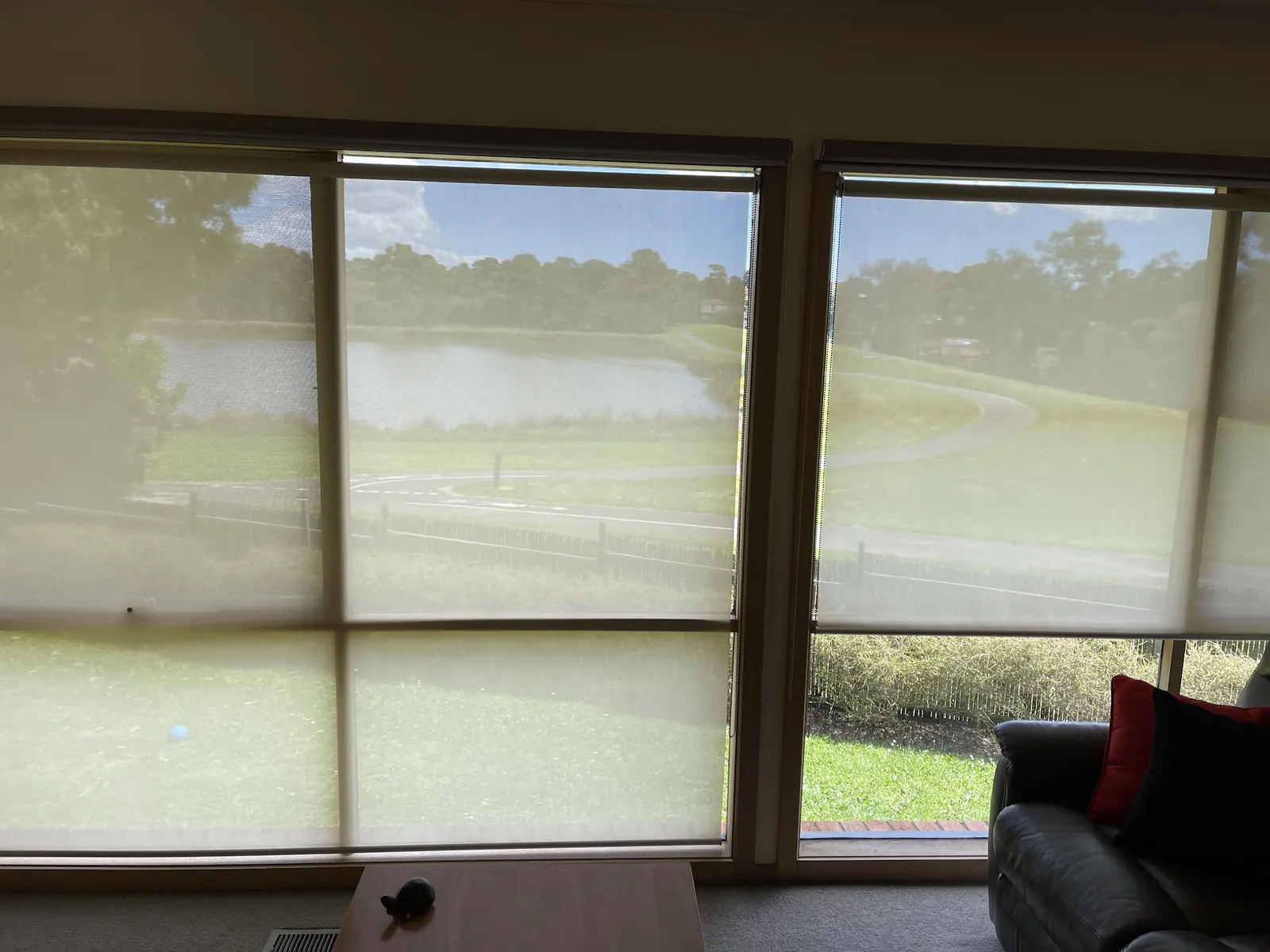
A sunscreen blind is a roller blind made from an open-weave mesh rather than solid fabric. The yarns are usually polyester or fibreglass with a PVC coating, woven with tiny gaps so you can see out while the blind cuts glare and heat. Makers describe this with an "openness factor", commonly somewhere between 1% and 10%: the higher the number, the more you can see through.
Those gaps are the whole point, and they're also the problem. Dust, cooking film, pollen and smoke particles lodge in the holes of the weave rather than sitting on a flat surface. Rubbing across them can push grime deeper or smear it from hole to hole, and leftover soap fills the gaps and catches more dust. If you also have solid roller blinds, the approach in how to clean roller blinds is a little different.
A quick way to judge how dirty yours really is: lower the blind on a bright day and look through it at something with a crisp edge, like a fence line or a neighbour's roof. A clean mesh gives a sharp view. A clogged one looks hazy, like looking through a dusty fly screen.
Step by step: cleaning a sunscreen blind on the window
- Lower it all the way. You want the whole fabric flat and exposed, with nothing left wound on the tube.
- Vacuum both sides. Use a soft brush head on low suction and work top to bottom. Low suction stops the mesh being drawn into the nozzle and stretched. This step alone removes most loose dust.
- Mix a weak solution. A few drops of mild dishwashing liquid in a bucket of lukewarm water. More detergent doesn't clean better; it leaves residue in the weave.
- Sponge in one direction. Use a soft, non-scratch sponge, squeezed out well, and wipe downward in long overlapping strokes. Don't scrub in circles. If you can reach behind, hold a dry towel there so you're not pressing the mesh against the glass.
- Rinse with clean water. Go over the blind again with a second sponge and plain water to lift the soap out of the holes.
- Blot the bottom bar. Water collects in the hem pocket and around the bar, and that's where marks and mildew start.
- Leave it down until bone dry. Usually a few hours with a window open. Rolling up a damp sunscreen traps moisture between the layers on the tube.
Single marks
For one mark, dab with the same weak solution and a white cloth, then rinse the spot. Test anything stronger on the very bottom of the blind first. Avoid solvents, methylated spirits and melamine "magic" sponges: they can dull or scuff the PVC coating, leaving a lighter patch that shows from the street.
Mistakes that make sunscreen blinds look worse
| Mistake | What goes wrong | Do this instead |
|---|---|---|
| Rubbing hard with a microfibre cloth | Fibres catch on the weave and can pull threads at the edges | Soft sponge, light downward strokes |
| Too much detergent | Residue dries in the holes, so the blind looks cloudy and gets dirty faster | A few drops only, then a clean-water rinse |
| Soaking the blind in the bath | Water gets into the tube, bottom bar and sometimes the motor; the fabric can crease | Clean it hanging, or have it cleaned on site |
| Rolling it up damp | Mildew spots and water marks in a repeating pattern down the blind | Leave it lowered until dry |
| Ironing or steaming creases | Coated yarns can distort or melt | Leave it lowered; some creases are permanent |
That repeating pattern is a useful clue. If you find small grey or black spots spaced at regular intervals down a sunscreen blind, it was almost certainly rolled up wet, or rolled up in winter with condensation on it. Each spot marks where the same patch of fabric sat pressed against the tube for weeks.
Melbourne conditions that clog the mesh
Where you live changes what ends up in the weave, and how often you need to bother.
- Kitchens and open-plan living. Cooking oil travels further than people think and glues dust to the mesh. A blind near the cooktop needs more than a vacuum; our guide to grease on kitchen curtains and blinds explains how to lift it.
- Bayside suburbs. Salty air leaves a fine film that dulls the mesh, especially on blinds beside sliding doors.
- Main roads and new estates. Traffic grime and building dust settle into the weave quickly.
- Smoke and pollen seasons. Fine particles from bushfire smoke and spring pollen lodge easily. A gentle vacuum after a smoky week stops them building up.
- Cold glass in winter. Sunscreens left down against wet windows overnight can mildew along the bottom bar.
For a sensible routine, see how often blinds should be cleaned. Most indoor sunscreens do well with a light vacuum every month or two and a proper clean when the view starts to haze.
Outdoor sunscreen and patio blinds
External sunscreen blinds cop far more weather, bird droppings and cobwebs than indoor ones. The same rules apply, and a hose on a gentle shower setting is usually fine for rinsing if the manufacturer's care guide allows it. Never use a pressure washer on the mesh; it can strip coating from the yarns and fray the weave. Let them dry fully lowered before retracting.
When to call a professional
Regular vacuuming and an occasional sponge clean are enough for most indoor sunscreen blinds. It's worth getting help when:
- the blind is wide, high or motorised, and you can't reach it safely or keep water off the mechanism
- there's mould or mildew spotting, especially in a repeating pattern
- the mesh stays hazy after a careful clean
- a kitchen blind has a sticky grease build-up
- you're moving out and want every blind in the house done at once
Some damage won't clean out: sun-brittle mesh, frayed edges, hard creases and permanent staining. We'll point those out before we start. For an idea of how blinds are priced, see blind cleaning cost in Melbourne, and for the other blind styles in your home, our blind cleaning service covers the lot.
Sunscreens looking hazy or spotty? Give us a ring on (03) 7066 4644 or book a free quote, and we'll clean them where they hang.