DIY Curtain Care
How to Get Pet Hair and Smells Out of Curtains
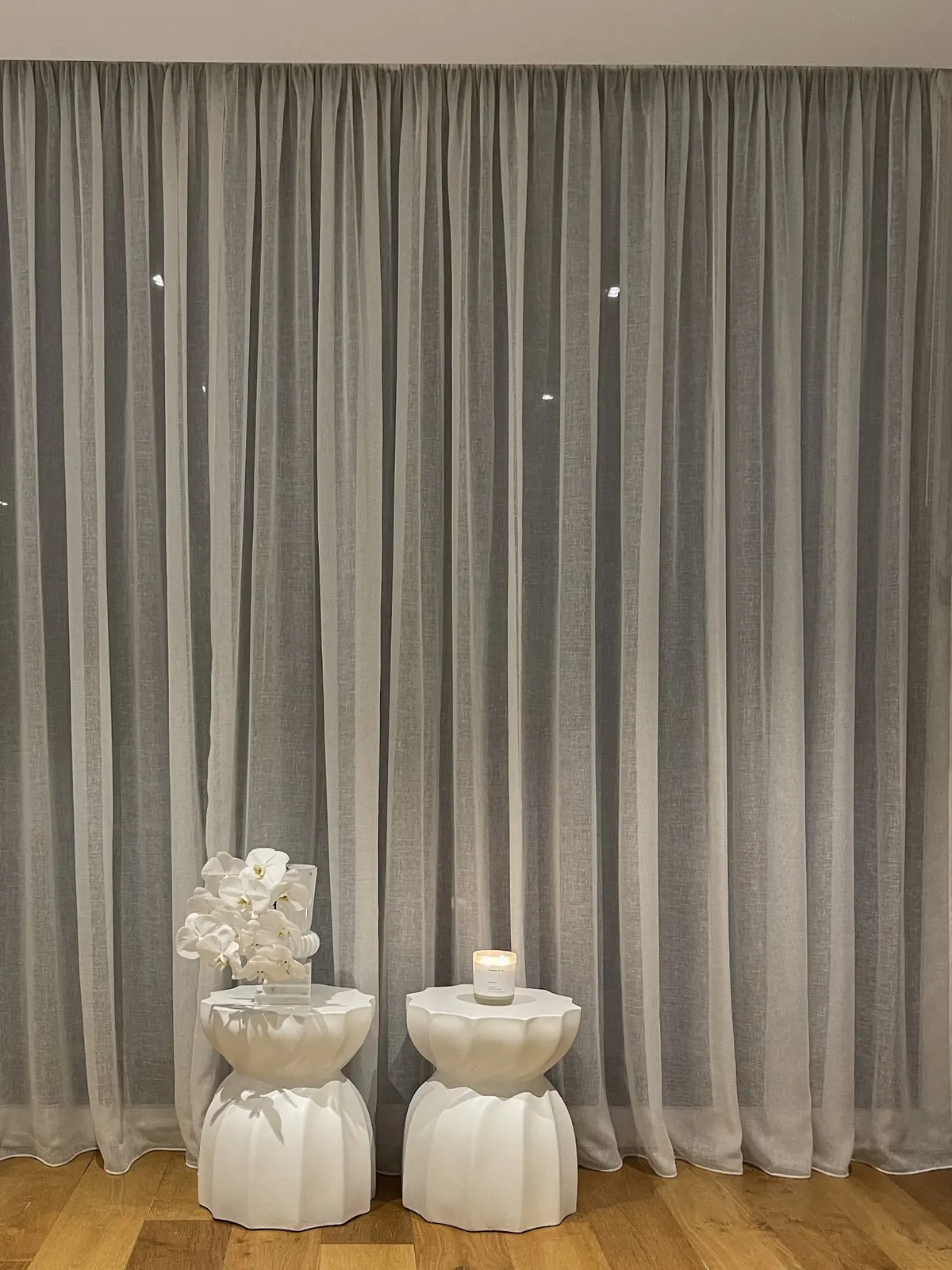
The quickest way to get pet hair off curtains is a slightly damp rubber glove or a lint roller, worked downwards, followed by a slow vacuum with an upholstery brush. Smells are a different job: hair sits on the surface, but odour from urine, saliva and oily coats soaks into the fibres and usually needs a proper clean rather than a spray.
If your pets have left more than a light dusting, an on-site curtain and blind clean deals with hair, odour and grime without taking anything down. Here's what works at home first, fabric by fabric.
Why pets and curtains are a messy combination
Curtains are at exactly the wrong height. Dogs brush past the hems, cats sleep on the sill behind them and climb the folds, and both like to watch the street through the gap. Static in synthetic sheers holds hair on, and textured fabrics like linen-look weaves and velvet trap it in the weave.
Then there's what you can't see. Dander, the tiny flakes of skin that pets shed, settles into fabric along with general household dust. Oils from fur leave a grey band where a dog leans. And a cat that's marked a curtain once may come back to the same spot.
Getting pet hair off curtains: what works
| Tool | Best for | Tip |
|---|---|---|
| Damp rubber glove | Most fabrics, including sheers | Wipe downwards; hair balls up and lifts off |
| Lint roller | Smooth fabrics and hems | Roll gently on sheers; don't press hard enough to pull threads |
| Vacuum with upholstery brush | Lined and heavy curtains | Low suction, top to bottom, hold the hem |
| Rubber pet-hair brush | Velvet and thick weaves | Brush with the pile, never against it |
| Fabric softener in the wash | Washable synthetic sheers | Helps reduce static so hair doesn't cling as much |
A simple routine
- Close the curtains so the full face is exposed.
- Start at the hem, where most hair collects, and work up to about the height of your tallest pet.
- Use the damp glove first to gather loose hair, then vacuum to lift what's deeper in.
- Do the back of the curtain, especially if a cat sits on the sill.
- Finish with the floor under the window so the hair doesn't drift straight back.
For delicate sheers, keep it gentle. Our guide on how to clean sheer curtains covers washing them without tearing.
Dealing with pet smells in curtains
Airing helps with a general "doggy" smell. Open the windows on a dry, breezy day and let the curtains move. For anything stronger, the odour is in the fibres and needs to be washed or cleaned out.
Accidents and marking
- Blot fresh urine immediately with paper towel. Don't rub.
- Use an enzyme-based pet odour cleaner made for fabrics, testing it on a hidden spot first. Enzyme cleaners break down the residue rather than masking it.
- Avoid ammonia-based cleaners. Urine contains ammonia compounds, and some pets are drawn back to a spot that smells similar.
- Never mix bleach with ammonia or vinegar, and don't use bleach on coloured curtains; it strips colour and weakens fibres.
Washable curtains
If the care label allows, wash on a cold, gentle cycle after removing as much hair as possible first. Hair in the machine tends to redistribute onto everything. Rehang slightly damp, and never tumble-dry sheers or blockout. If the label says dry clean only, don't wash them; that's a job for a professional.
Lingering smells in fabric behave a lot like smoke. If you've also got a cooking or cigarette smell to deal with, see how to get smoke smell out of curtains.
Keeping hair and smells from building up
Prevention takes less effort than a deep clean. A few habits make a noticeable difference:
- Give cats a better perch. A window seat, shelf or cat tree beside the window takes the pressure off the curtains and sill.
- Tie curtains back during the day so hems sit clear of where dogs lie and walk.
- Groom outside, especially during spring moulting, when Melbourne dogs and cats drop their winter coats.
- Wipe the sill weekly. Hair and dust on the sill transfers straight to the back of the curtain.
- Keep hems off the floor. Curtains that puddle on the floor collect far more hair than ones that clear it by a centimetre or so.
- Wash pet bedding near windows often, so the smell doesn't migrate into nearby fabric.
If a cat has started scratching or climbing the curtains, deal with it early. Claw snags in sheers and loose weaves can't be cleaned out, and they tend to spread.
Blinds, and homes where the last owner had pets
Moving into a home where the previous owners kept animals brings its own problem. Smells can hide in blinds and curtains you'd never think to check. One customer had holland blinds left filthy and smelly by the previous owner's animals; after cleaning, the blinds came up like new and the smell was gone.
For DIY on fabric blinds, lower them fully, vacuum both sides with a brush, then spot clean with a barely damp cloth. Our step-by-step on how to clean holland blinds goes further.
Pets, dander and allergies
Regular cleaning of curtains and blinds may help reduce dust and allergens in a room, including pet dander. It won't remove an allergy, and it's not a substitute for medical advice. If someone in the house is sneezing or wheezing around pets, see a GP. ASCIA has general information on allergies, and our post on curtains, dust mites and allergies covers what cleaning can realistically achieve.
When home cleaning isn't enough
A weekly glove-and-vacuum routine is enough to keep hair under control for most households. Think about a professional clean when:
- There's a smell that comes back within a day or two of airing.
- A cat has sprayed or a dog has had an accident on the curtains more than once.
- The hems have a dark band from dogs leaning or rubbing.
- The curtains are lined, heavy, velvet or dry clean only.
- You've moved into a home where the previous occupants had pets.
Be realistic about damage. Cleaning removes hair, grime and odour, but it can't repair claw snags, pulled threads or fabric that's been chewed. On older urine stains, the colour may lighten rather than vanish. That said, one customer whose four cats had made a mess of the curtains said afterwards they looked stunning.
In a pet household, curtains usually need cleaning more often than the average. Our guide on how often to clean curtains helps you set a schedule.
Love the pets, not the hair on the curtains? Give us a ring on (03) 7066 4644 or request a free quote, and let us know what kind of animals share the house.