Costs & Booking
How to Measure Curtains for a Cleaning Quote
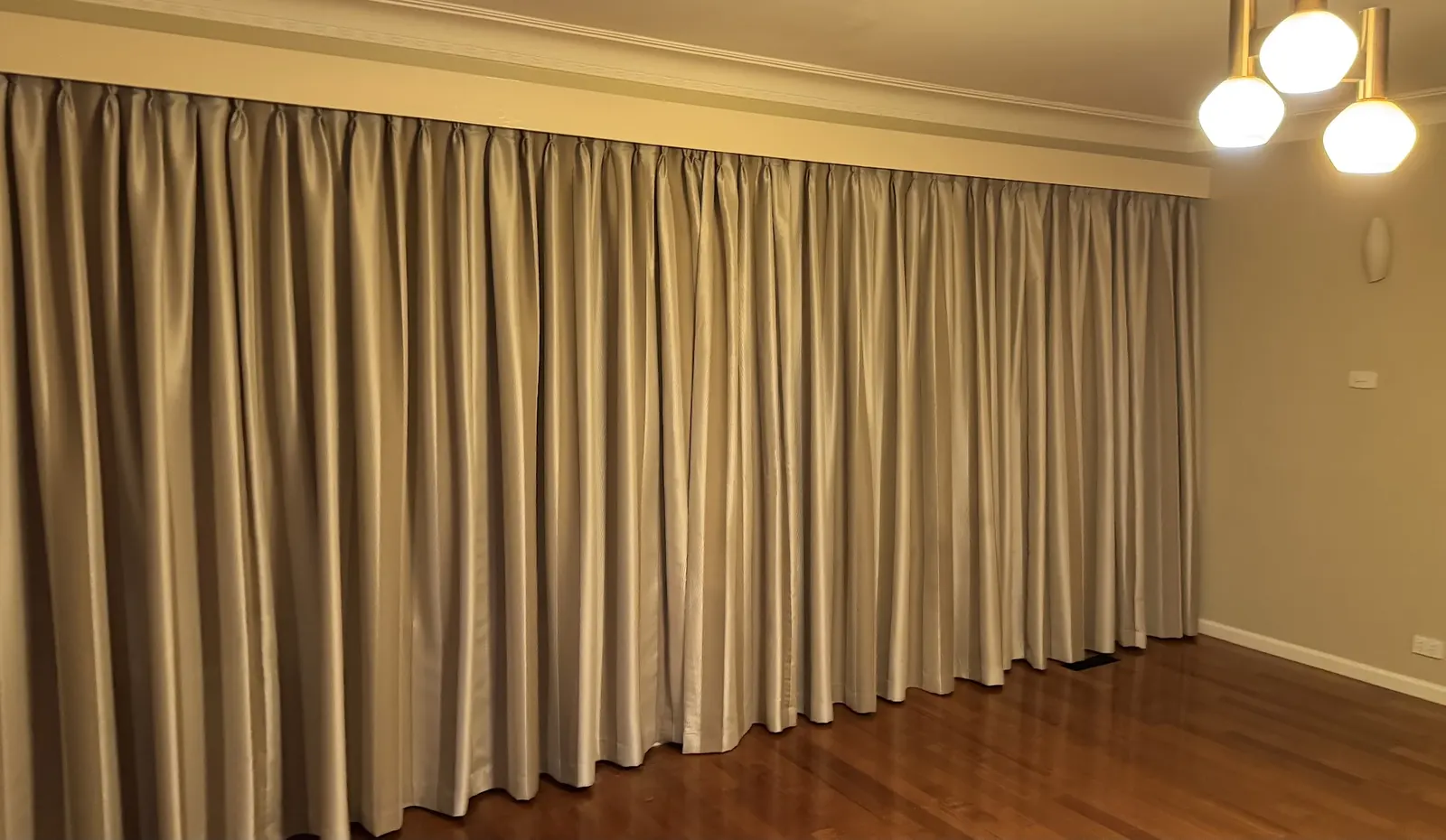
To measure curtains for cleaning, you need two numbers per panel: the height from the top of the curtain to the bottom of the hem, and the width across the hem with the curtain drawn closed as it normally hangs. Multiply them and you have the area a cleaner prices from. Add the fabric type, any lining, and anything wrong with it (mould, stains, smells), and you can get a reliable quote without anyone visiting first.
It takes about five minutes a window with a tape measure. Below is exactly where to put the tape, the mistakes that throw quotes out, and a simple table you can copy. If you want the bigger picture on how area, fabric and condition turn into a price, our curtain cleaning cost page explains it.
What you need
- A retractable steel tape measure, ideally 5 metres or longer. Fabric tapes stretch and sewing tapes are too short.
- Your phone, for notes and a photo of each window.
- A helper for tall or wide windows. One person holds the tape end, the other reads it.
- A sturdy step ladder only if you can't reach the top any other way (there's a floor-level trick for that below).
How to measure curtains for cleaning, step by step
- Close the curtains fully. Draw them across the window the way they hang when shut. That's the shape the cleaner will be working with.
- Measure the height. Start at the very top of the fabric (the top of the heading, not the track) and run the tape down to the bottom of the hem. Do it at the middle of the panel, where the fabric hangs freely.
- Measure the width across the hem. Run the tape along the bottom hem, following the folds as they hang, from one side edge of the panel to the other. Don't pull the pleats flat.
- Repeat for each panel. A pair of curtains is two panels. Measure both; they're often slightly different.
- Measure sheers separately. If you have a sheer behind a drape, it's a second set of curtains with its own measurements.
- Note the extras. Linings (sewn in or separate), pelmets, tie-backs, and any blinds on the same window.
- Photograph each window. One wide shot with the curtains closed, plus close-ups of the care label and any problem areas.
The floor-level trick for tall curtains
Can't reach the top safely? Hook the tape end at the hem, then measure the height of a side edge where it hangs straight down the wall, feeding the tape upward. Or measure from the floor to the top of the curtain heading and subtract the gap between hem and floor. Either is accurate enough for a quote, and neither needs you balancing on a chair.
Common measuring mistakes
Most quote surprises come from one of these.
| Mistake | What happens | Do this instead |
|---|---|---|
| Measuring the window, not the curtain | Curtains are usually wider and longer than the glass, so the area comes out too small | Measure the fabric itself |
| Measuring the track width only | Ignores overlap at the centre and the returns at each end | Measure along the hem of each panel |
| Pulling pleats flat | Gives the flat fabric width, which can be two to three times the hanging width | Follow the folds as they hang closed |
| Measuring from the track down | Misses fabric above the track on some headings, or adds air on others | Start at the top edge of the fabric |
| Forgetting the sheers | Halves the job on paper | List sheers as their own line |
| Rounding to the nearest metre | Small errors add up across a house | Record to the nearest 10 centimetres |
If you're not sure how a cleaner wants the width taken, measure it closed and hanging and say so in your note. A careful cleaner will confirm on the day anyway; it's one of the things worth checking in our guide on how to choose a curtain cleaner.
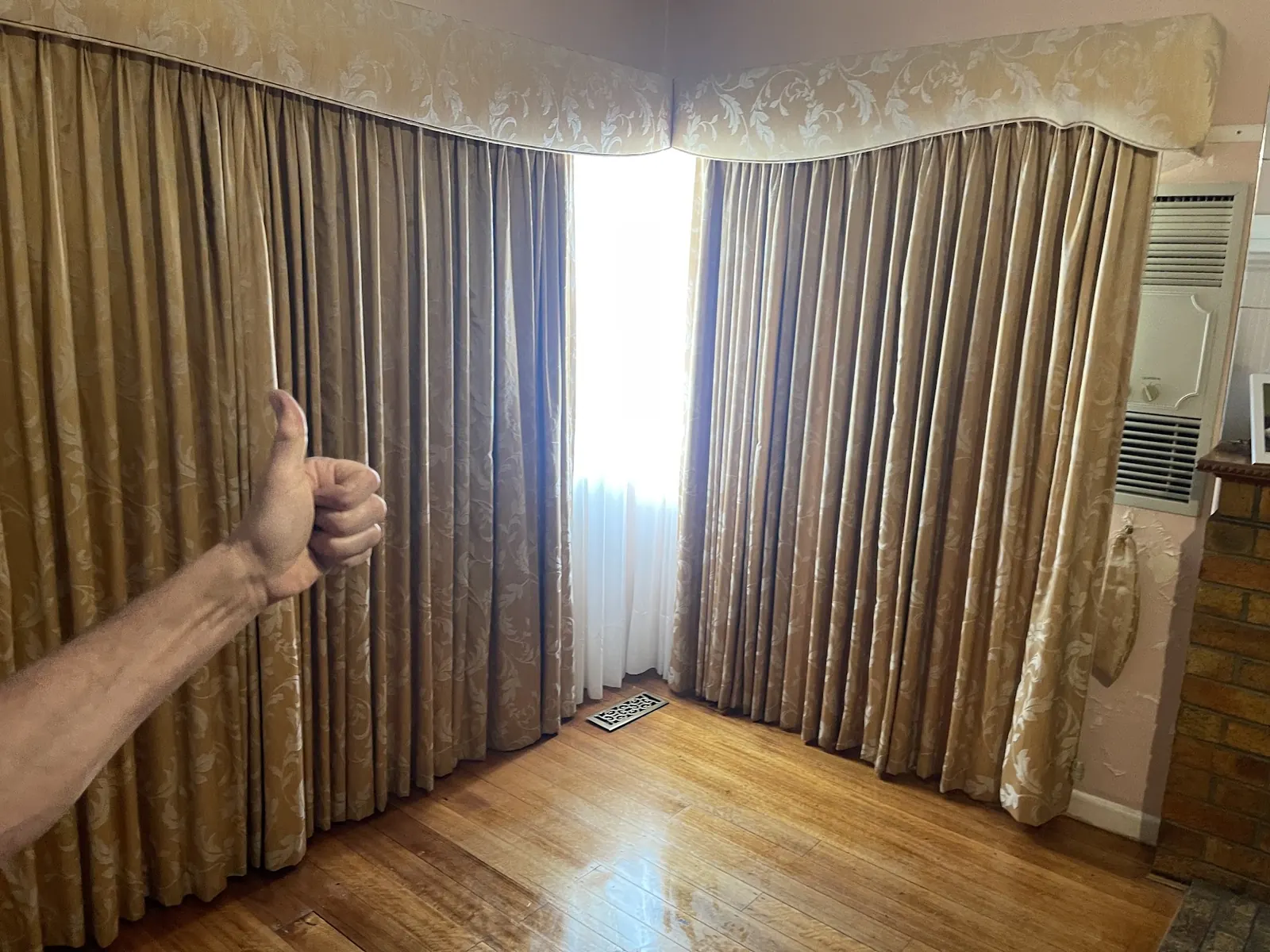
A worked example
Say you have a lounge with a pair of pinch-pleat drapes and a sheer behind them.
- Drapes: each panel is 2.4 m high and 1.6 m across the hem when closed. Two panels: 2.4 × 1.6 × 2 = 7.68 square metres.
- Sheer: one wide panel, 2.35 m high and 3.1 m across the hem. That's 7.29 square metres.
- Total for the window: just under 15 square metres of curtain, plus a note that the drapes are lined and the sheer has black spots along the hem.
With that, a cleaner can tell you the method, flag whether the mould is likely to come out fully, and give you a figure you can plan around. If you'd like to understand why a pleated drape is treated differently to a flat sheer, see how to clean pinch pleat curtains.
Measuring blinds, pelmets and other extras
Blinds
Measure the width of the fabric or slats, not the bracket or the window frame, and the drop when the blind is fully lowered. For vertical blinds, measure the full width of the vanes when closed and the length of one vane. Note the type: roller, sunscreen, holland, roman, venetian or vertical. Our blind cleaning cost guide explains how blinds are priced.
Pelmets and valances
Measure the face width and the height of the front, and note whether it's fabric-covered timber, a soft valance, or a box you can't remove. Upholstered pelmets are usually cleaned in place.
The care label
It's usually sewn into a side hem near the bottom or inside the heading. Photograph it. "Dry clean only", a fibre content, or a "do not wash" symbol all change the method, and sometimes the price.
Write it down like this
Copy this layout into a note or spreadsheet. One line per panel or blind.
| Room | Item | Height (m) | Hem width (m) | Fabric / label | Notes |
|---|---|---|---|---|---|
| Lounge | Drape, left | 2.4 | 1.6 | Lined, dry clean only | Sun-faded on outer edge |
| Lounge | Drape, right | 2.4 | 1.6 | Lined, dry clean only | |
| Lounge | Sheer | 2.35 | 3.1 | Polyester | Black spots on hem |
| Bedroom 1 | Roller blind | 1.8 drop | 1.2 | Blockout | Finger marks on bottom |
Condition notes matter as much as size. A mouldy hem, a pet smell or a water stain changes the method and the time involved, and it's far better for the quote to include them than for them to come up on the day.
When to let the cleaner measure
Measuring yourself is fine for most homes and saves a step. Leave it to the cleaner if the curtains are very high (stairwells, double-height living areas), if you can't tell where one panel ends and the next begins on a long track, or if the fabric is fragile and you'd rather not handle it. Commercial sites with dozens of windows also benefit from an on-site measure. Our guide to what happens at a curtain cleaning appointment explains how that visit usually runs.
If you're planning to take curtains down yourself for an off-site clean, measure them before they come off the track, while they're hanging in shape. The guide on taking down and rehanging curtains has tips for keeping the panels in order.
Got your measurements? Send them through our free quote form with a photo or two, or call (03) 7066 4644 and read them out. If you'd rather not climb, ask about having them measured on site instead.