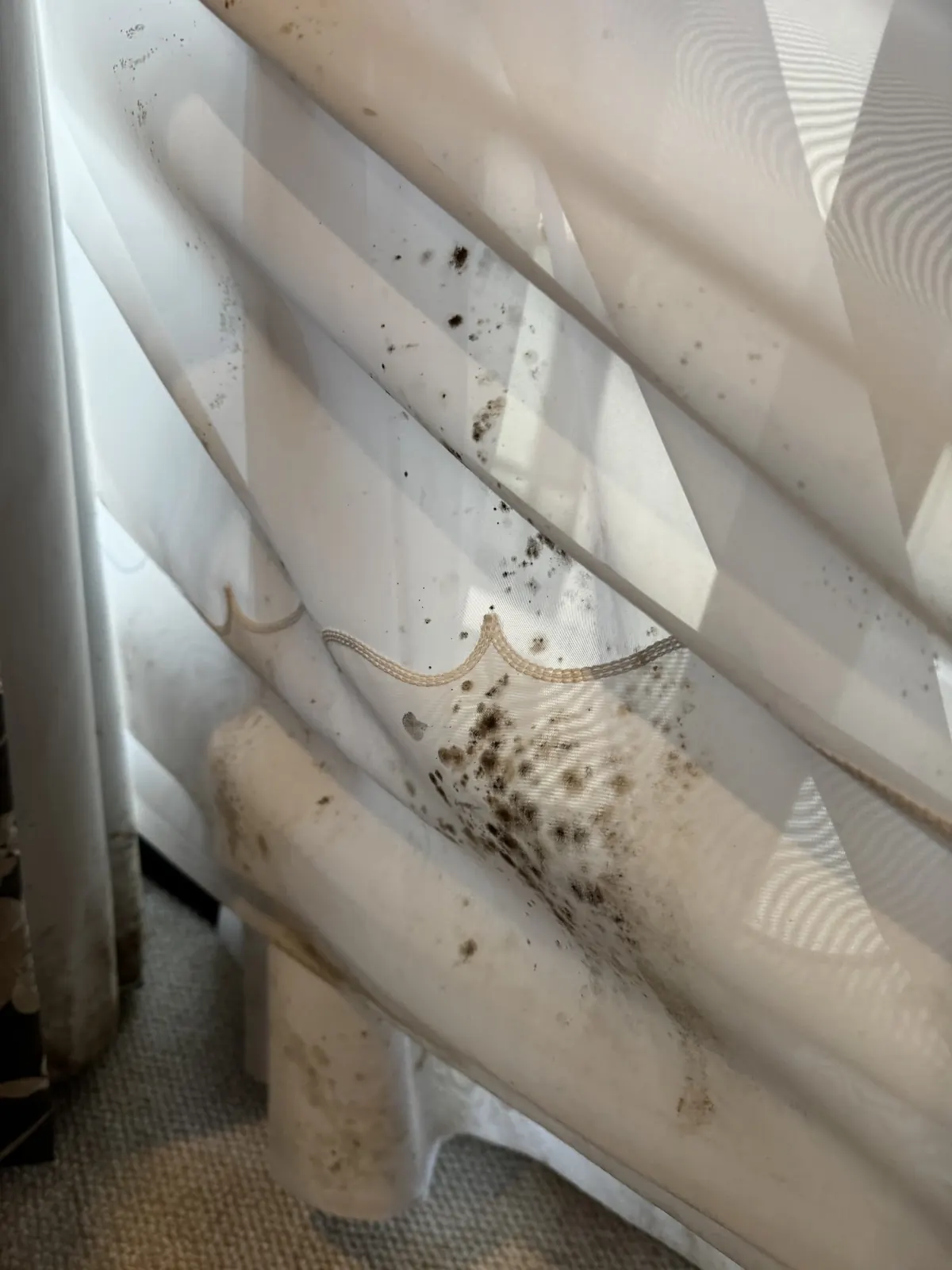
Mould & Stains
How to Remove Mould From Curtains (and When You Can't)
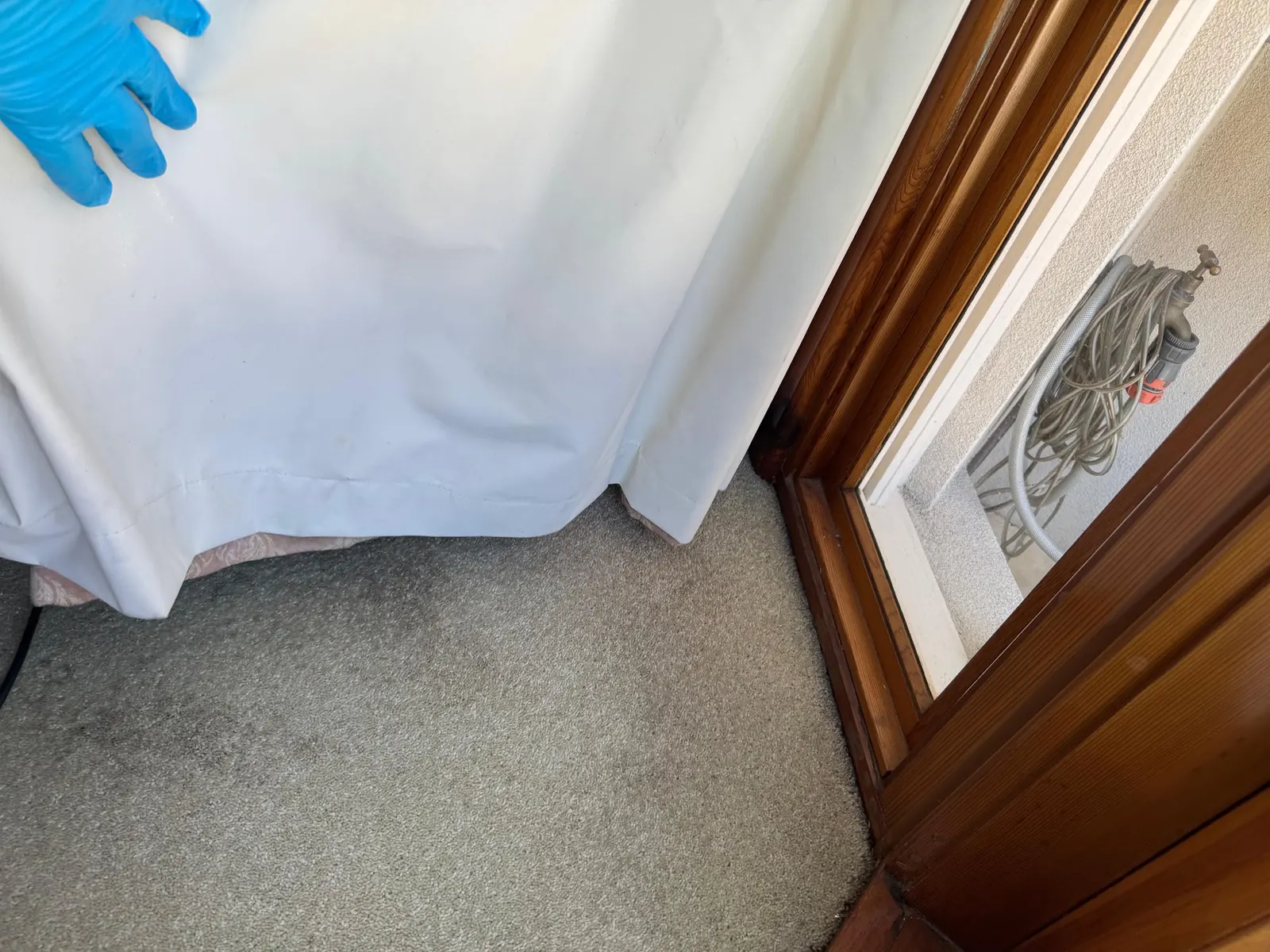
How to remove mould from curtains, in short: take them outside, wear gloves and a P2 mask, brush off the loose growth outdoors, then treat and wash according to the care label: usually a cool wash with detergent for washable synthetics, after pre-treating with diluted white vinegar or an oxygen-based cleaner tested on a hidden corner. Dry them thoroughly and rehang them only once the window problem is sorted. Fresh spots often come out fully; old black staining usually lightens rather than disappears.
Below is the safe, step-by-step method, a fabric guide, the honest limits, and the point where professional curtain mould removal makes more sense.
Safety first: before you touch mouldy curtains
Mould releases spores when it's disturbed, and brushing a mouldy hem inside the house just spreads them around the room. Set yourself up properly before you start.
- Wear disposable or rubber gloves and a P2 mask (available from hardware stores).
- Open the windows and keep the room ventilated.
- Don't dry-brush or vacuum mould indoors with a standard vacuum; do it outside.
- Never mix bleach with ammonia or vinegar. The combination gives off dangerous fumes.
- Keep children and pets out of the room while you work.
If anyone in the house has asthma, allergies or a weakened immune system, it's worth having someone else do this job. The Better Health Channel has general guidance on mould at home, and your GP is the right person to ask about symptoms.
How to remove mould from curtains, step by step
- Check the care label. If it says dry clean only, or the curtain is silk, wool, velvet or heavily lined, stop here and skip to the professional section below.
- Take the curtain down and carry it outside. Fold the mouldy section inwards so spores stay contained on the way out.
- Brush off loose growth outdoors. Use a soft brush, working away from you and downwind. Throw the brush out afterwards or wash it in hot soapy water.
- Test your treatment on a hidden spot. A side hem or the back of the heading is ideal. Let it dry and check for colour change.
- Pre-treat the mould. For most washable synthetics, mist the area with white vinegar diluted roughly half and half with water, and leave it for about an hour. On white polyester sheers, an oxygen-based laundry soaker (sodium percarbonate) is another option; follow the pack directions.
- Wash gently. Use cold or cool water and a gentle cycle with ordinary detergent, with sheers inside a large laundry bag. Don't overload the machine.
- Dry thoroughly. Hang outside on a dry, breezy day, or rehang slightly damp on the track with the window open so the creases drop out. Never tumble-dry sheers or blockout.
- Check again once dry. If grey shadows remain, a second gentle treatment may lighten them further. Don't keep scrubbing, as it weakens the fibres.
What about bleach?
Chlorine bleach does whiten mould stains, but it strips colour from anything that isn't pure white, and it weakens fibres, especially on older sheers that have spent years in the sun. A curtain that looks fine straight after bleaching can start splitting a few months later. We'd leave it alone for curtains.
Removing mould by fabric type
| Fabric | Safer approach | Avoid |
|---|---|---|
| Polyester sheers | Vinegar or oxygen soaker pre-treat, cool gentle wash, line dry | Chlorine bleach, hot washes, tumble-drying |
| Synthetic drapes (unlined) | Vinegar pre-treat, gentle wash if they fit the machine | Overloading the machine |
| Cotton and linen | Test carefully; often better cleaned professionally | Hot water (shrinkage), bleach |
| Lined or blockout curtains | Assess the backing; spot-treat or clean professionally | Soaking, heat, scrubbing the coating |
| Velvet, silk, "dry clean only" | Professional cleaning only | Any home wash |
Sheers are the most common mouldy curtain we see, because they hang right against the glass. For general care, see how to clean sheer curtains, and if they've gone grey or yellow rather than spotty, try how to whiten yellowed sheer curtains. If you're unsure whether yours can go in the machine at all, our guide to washing curtains in a washing machine covers the risks.
What you can't fix with cleaning alone
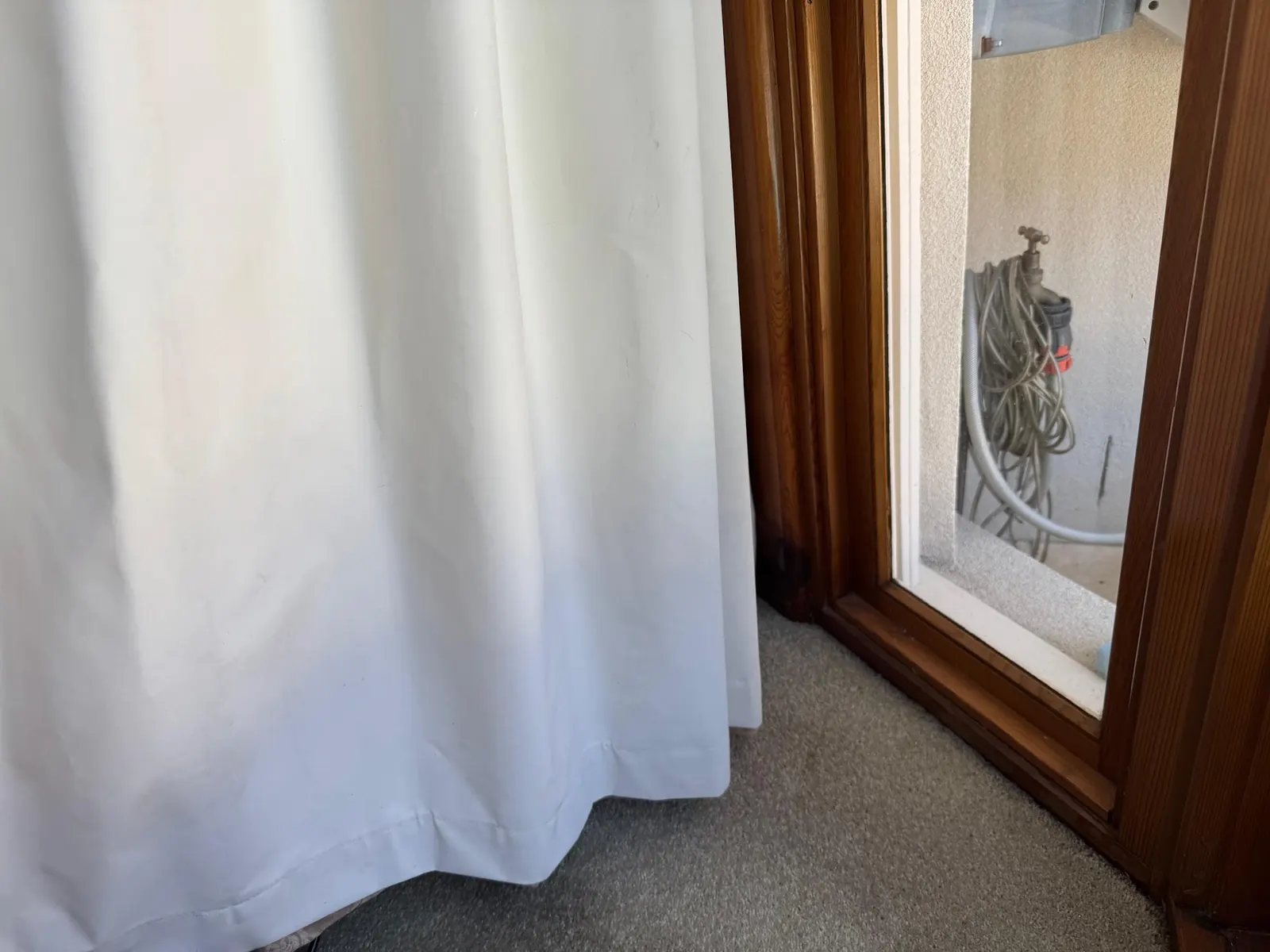
Here's the part many guides skip. When mould has been growing for a long time, it can stain the fibres themselves. Cleaning removes the living growth and much of the discolouration, but some dark shadows may stay. Treating them over and over usually does more harm to the fabric than good.
Mould also tends to come back if nothing changes at the window. Curtains go mouldy because they sit against cold, wet glass in a room with poor airflow, which is very common in Melbourne's single-glazed homes and closed-up apartments over winter. If you only clean the curtain, you'll likely be doing it again next July. Our guide on why curtains get mouldy explains the causes and how to stop them.
That said, it's often better than people expect. In one job, mould a customer was worried about came completely out of their sheer curtains. In another, Danny inspected mouldy curtains, explained that the mould was coming from condensation and poor airflow, and gave advice on stopping it returning. The customer said the room felt fresher afterwards.
Keeping mould off your curtains after cleaning
- Wipe condensation off the glass and sills each morning in winter.
- Open the curtains during the day so the fabric and glass can dry.
- Leave a small gap between sheers and the glass where the track allows.
- Run exhaust fans when cooking and showering, and avoid drying washing indoors in closed rooms.
- Check the hems every week or two through winter and treat spots early.
When to call a professional
A few fresh spots on a washable polyester sheer are a reasonable DIY job if you follow the safety steps above. Call a professional if the curtains are lined, blockout, velvet, linen, silk or labelled dry clean only; if the mould covers a large area or runs right along the hem; if the curtains are too large or heavy for your machine; if you've tried once and the staining hasn't shifted; or if someone at home is sensitive to mould and shouldn't be handling it.
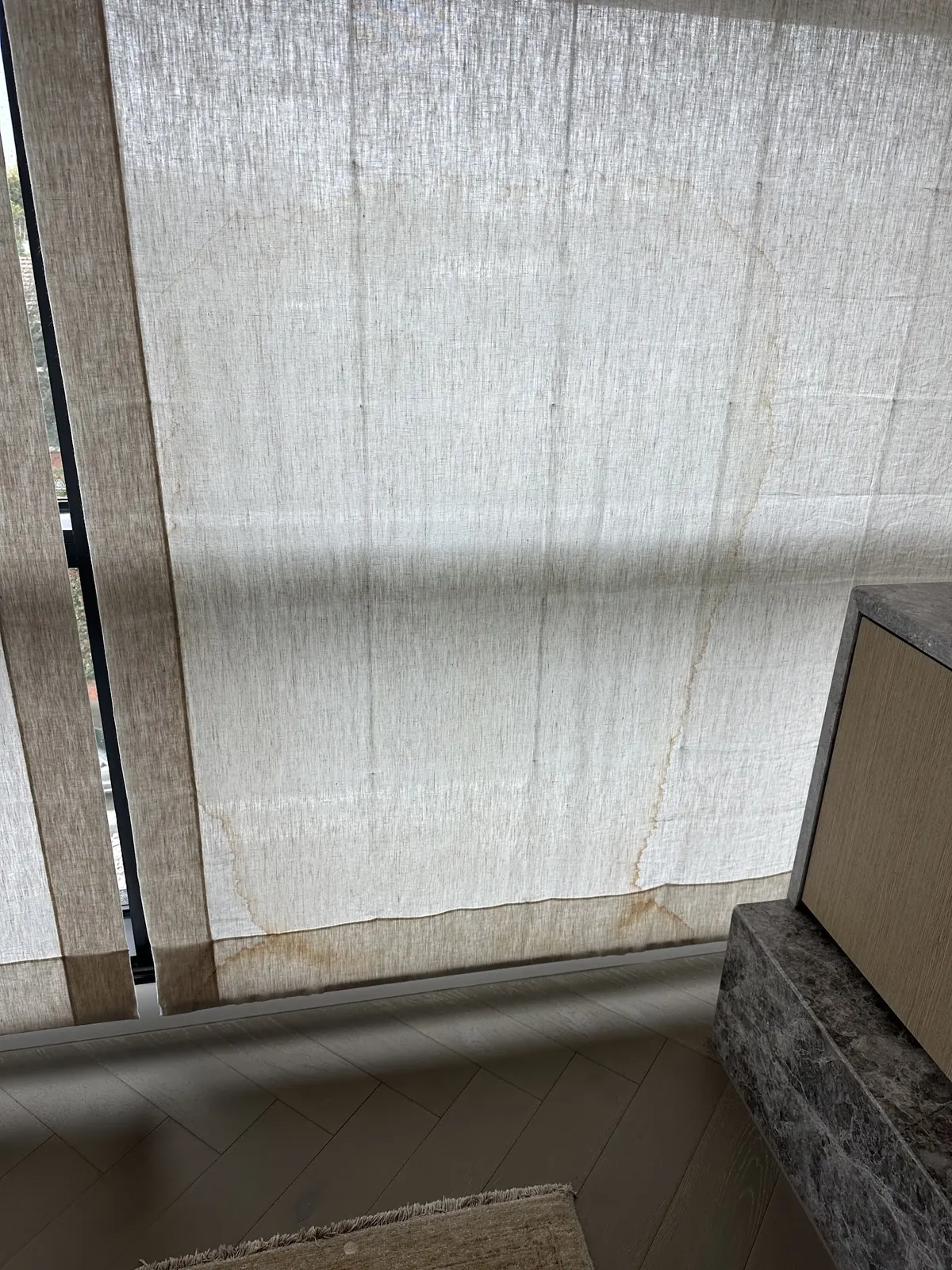
Water marks often appear alongside mould, especially where condensation has run down onto the hem. If you've got tide lines as well as spots, see how to get water stains out of curtains.
Spotted mould on your curtains? Have it treated before it spreads further. Ring (03) 7066 4644 or send us photos for a free mould cleaning quote, and we'll tell you honestly how much is likely to come out.