DIY Curtain Care
Can You Put Curtains in the Washing Machine?
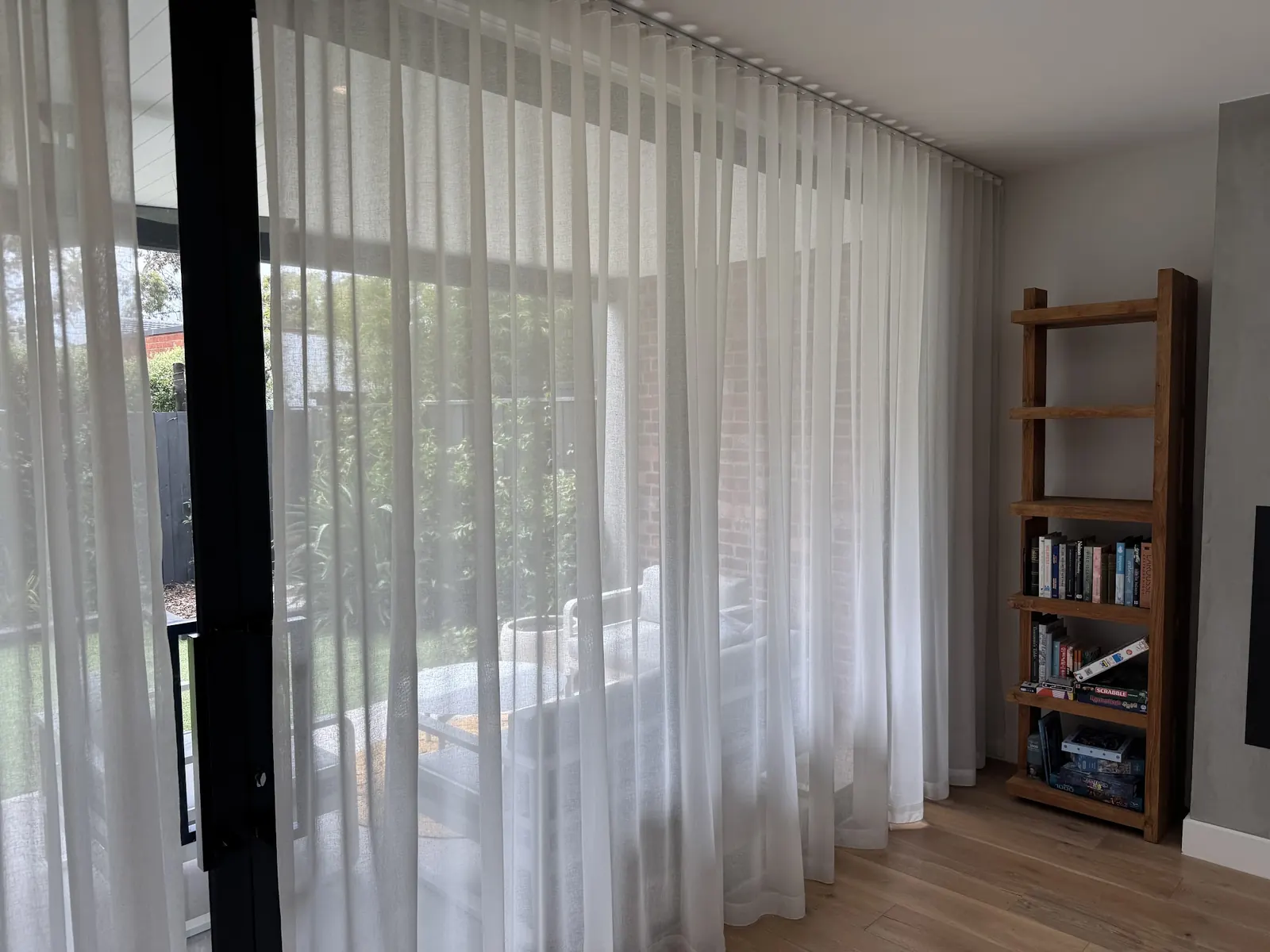
Can you wash curtains in the washing machine? Some, yes: unlined polyester sheers and many plain cotton or polyester curtains labelled machine-washable, on a cold, gentle cycle with a low spin. Lined curtains, blockout curtains, velvet, silk, most linen, and anything labelled dry clean only generally shouldn't, because linings shrink at a different rate from the face fabric, coatings crack and headings distort.
The care label is the first and best guide. If yours says dry clean only, or there's no label on a heavy lined drape, our curtain dry cleaning service is the safer path.
Quick check: can your curtains go in the machine?
Run through these before anything goes near the washer:
- Care label. Does it show a washtub symbol? Dry clean only means exactly that, and our guide on what "dry clean only" means for curtains explains why.
- Lining. Turn the curtain over. A sewn-in lining is a strong sign it shouldn't be machine washed.
- Backing. A rubbery or foam-like back is blockout coating, which doesn't like agitation or heat.
- Heading. Pinch pleats with stiff buckram inside can warp. Simple tape, eyelet or rod-pocket headings handle washing better.
- Size and weight. A wet curtain is far heavier than a dry one. If it barely fits dry, it won't wash properly.
- Condition. Sheers that have been in sun for years can be brittle. Pull gently on a hem corner: if it tears or feels papery, a machine will split it.
How to wash curtains in a washing machine safely
- Take them down carefully and remove every hook, glider and weight. Our guide on taking down and rehanging curtains explains how with different track types.
- Shake or vacuum them first to get the loose dust off, so you're not washing in a slurry.
- Test for colour run by dabbing a damp white cloth on a hidden spot.
- Use a front loader if you can. Top loaders with a central agitator twist and pull long fabric. If you only have a top loader, use the gentlest setting and a large laundry bag.
- Don't overload. One or two panels at a time, loosely folded, inside a mesh bag for sheers and eyelet curtains.
- Cold water, gentle or delicate cycle, with a mild liquid detergent. Skip fabric softener on sheers; it can leave them dull.
- Low spin. A high spin creates deep creases and stresses seams.
- Never tumble-dry sheers, blockout or lined curtains. Rehang them slightly damp on the track so they dry straight.
Fabric by fabric
| Curtain | Machine wash? | Better option if not |
|---|---|---|
| Unlined polyester sheers | Usually yes, cold and gentle in a bag | On-site steam cleaning if fragile |
| Unlined cotton or poly-cotton | Often, if the label allows | Professional clean if it's large or pinch-pleated |
| Linen and linen blends | Rarely; shrinkage is common | Dry cleaning |
| Lined curtains | No in most cases | Dry cleaning or on-site steam extraction |
| Blockout curtains | Usually no | On-site steam extraction |
| Velvet, silk, embellished | No | Professional dry cleaning |
Blockout gets a lot of people. The coating can look fine coming out of the machine and then show crazing a week later. Our guide to cleaning blockout curtains explains what's safe.
What can go wrong in the machine
When people ask us to fix curtains after a home wash, it's usually one of these:
- Shrinkage. The curtain no longer reaches the floor, or the lining has pulled up and the face puckers. This can't be stretched back reliably. See will curtains shrink when cleaned for which fabrics are most at risk.
- Split sheers. Old, sun-rotted sheers can tear in any wash, gentle or not.
- Cracked blockout. Agitation and heat break up older coatings.
- Warped headings. Buckram in pinch pleats goes soft or wavy.
- Deep creases. Usually from a high spin or being left in the drum. Our guide on getting wrinkles out of curtains helps with those.
Drying and rehanging after the wash
How you dry curtains matters as much as how you wash them. Take them out of the drum as soon as the cycle finishes, because wet fabric left sitting in a ball sets creases and can start to smell.
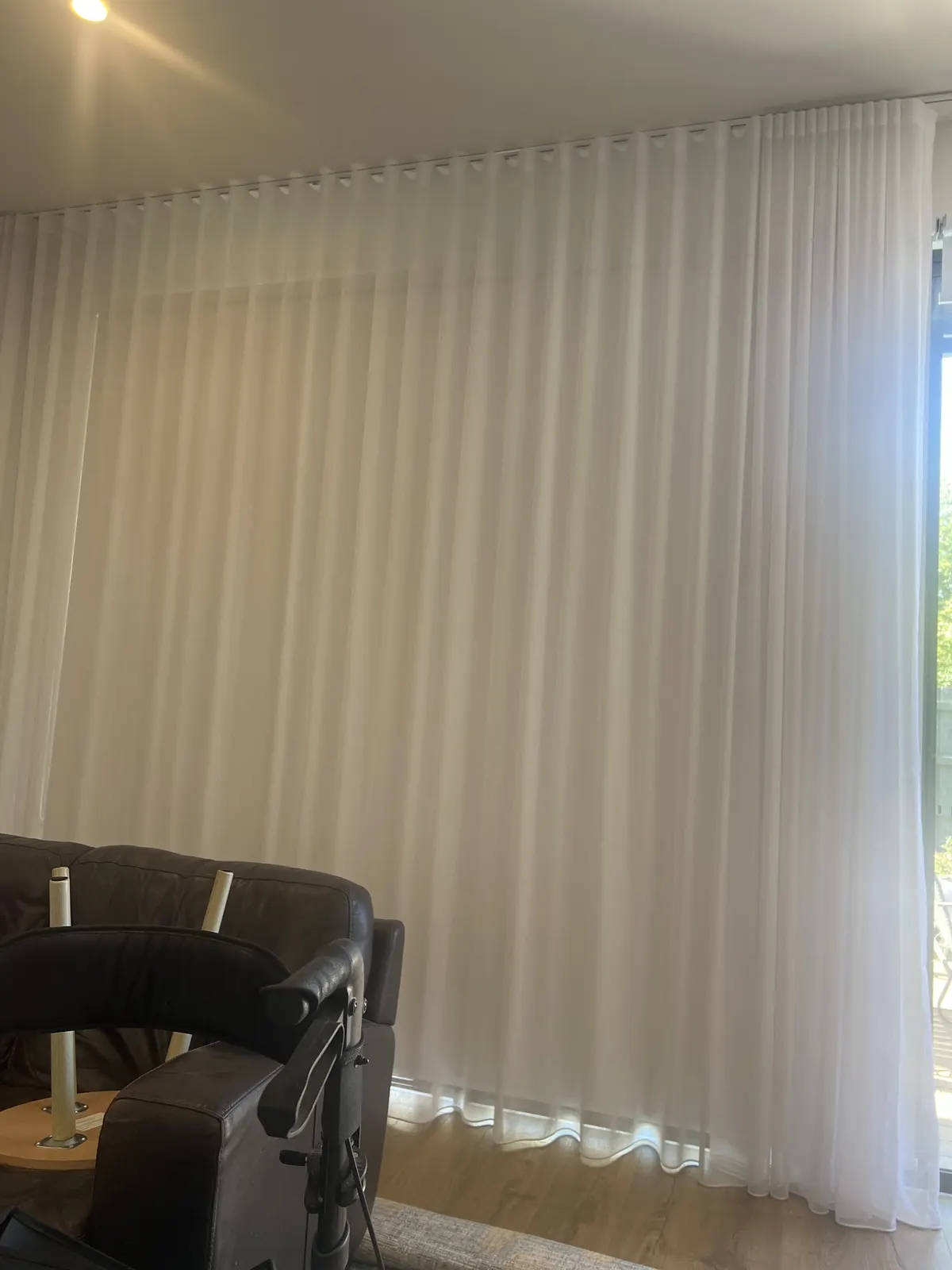
The best place to dry most washed curtains is back on their own track. Rehang them while they're still slightly damp, close them, and straighten the folds and hem with your hands. The weight of the damp fabric pulls the wrinkles out as it dries, and the curtain dries to the length it will hang at.
In a Melbourne winter, that needs a bit of thought. A cold, closed-up room with damp curtains and condensation on the glass is exactly the setup that encourages mildew. Wash on a dry day if you can, crack a window or run a fan or heater in the room, and don't close the curtains tight against wet glass. If they're still damp after a day, open the room up more rather than leaving them.
Avoid draping curtains over a clothesline in strong sun. Sheers in particular can yellow or weaken, and dark colours fade. A shady line works for small, light panels; long ones are better on the track.
Sheers versus heavier curtains
Sheers are the curtains most people successfully wash at home, but they're also the ones that fail most dramatically. A sheer that's been in a north-facing window for ten years may look fine and still be weak enough to shred in the drum. Do the gentle tug test on a hem corner every time, not just the first time.
Heavier curtains go the other way. The fabric is tough, but the construction isn't: linings, weights sewn into hems, stiffened pleat headings and coatings all react badly to a wash, and the sheer weight of a wet drape strains the machine and the seams. That's why we usually clean those on the track or take them off-site rather than suggest washing.
When to skip the machine and call a professional
If your curtains are unlined, labelled washable and fit comfortably in a front loader, there's no reason not to wash them yourself. Get them professionally cleaned when they're lined, blockout, linen, velvet or silk, when there's no label on an expensive drape, when they're too long or heavy for your machine, when there's mould or a stain you don't want to set, or when you're short on time and ladder confidence.
Off-site cleaning means taking them down, cleaning and rehanging; one customer handed their curtains over one day and had them back cleaned the next. If you're weighing it up on cost, see how curtain cleaning is priced: it's measured, then quoted by area, fabric, condition and method.
Not sure your curtains will survive the wash? Call (03) 7066 4644 before you risk it, or request a free quote online and tell us what's on the care label.