Blinds
How to Clean Roller Blinds Without Taking Them Down
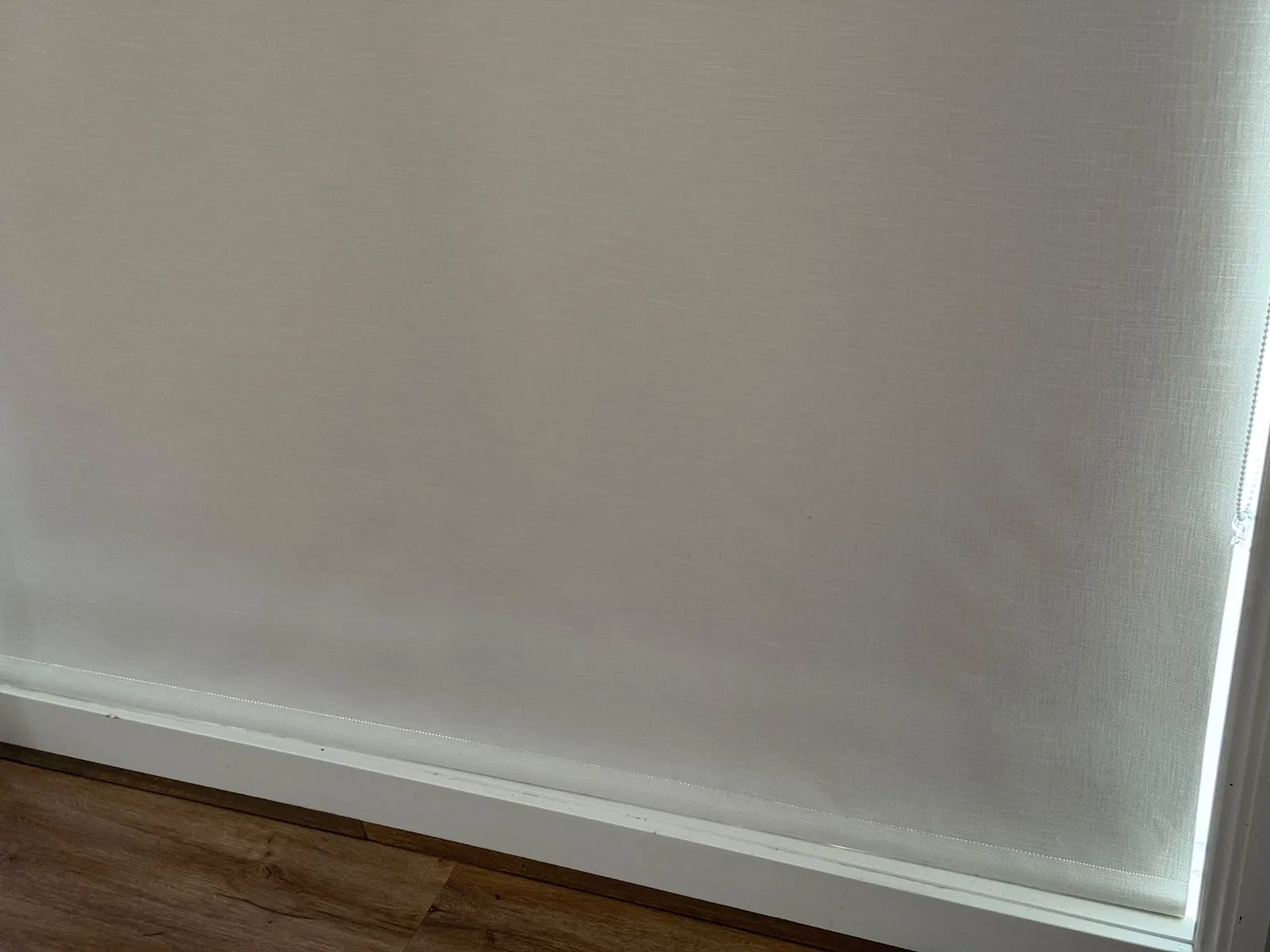
You can clean roller blinds without taking them down: pull the blind all the way down, dust or vacuum both sides from the top, spot clean marks with a barely damp microfibre cloth and mild detergent, then leave it fully lowered until it's completely dry. Rolling a damp blind back up is the most common way people cause mould and permanent marks.
That is how to clean roller blinds for routine care. For a deeper clean, or a whole house of them, our on-site blind cleaning does the job without anything coming off the brackets. The details below depend on which fabric you have.
What kind of roller blind is it?
| Blind fabric | What it tolerates | Watch out for |
|---|---|---|
| Blockout (coated) | Vacuuming and light damp wiping | Scrubbing or melamine sponges, which can polish or crack the coating |
| Sunscreen mesh | Vacuuming, gentle damp wiping across the weave | Pressing hard, which can stretch the mesh or push dirt into the weave |
| Light-filtering fabric | Vacuuming, careful spot cleaning | Too much water, which leaves tide marks |
| Traditional holland | Mostly dry methods | Wetting the stiffened fabric; see how to clean holland blinds |
Check the brand or care sticker on the bottom rail or the end of the roller tube if you can reach it. If in doubt, start with the gentlest method and test on a back corner.
How to clean roller blinds step by step
- Lower the blind fully. You want the whole fabric exposed and flat. Check the chain or spring mechanism is holding it in place.
- Dust both sides. Use a vacuum with a soft brush on low suction, or a dry microfibre cloth, working from the top down in long strokes. Do the window side too; that's where condensation leaves grime.
- Wipe the bottom rail and chain. These get handled every day and carry the most grease, especially in kitchens.
- Spot clean marks. Mix warm water with a few drops of dishwashing liquid. Dip a microfibre cloth, wring it until it's barely damp, and dab or wipe gently in one direction. Don't scrub in circles.
- Rinse with a clean damp cloth to lift any detergent, which otherwise dries as a dull patch that attracts dirt.
- Leave it down until bone dry. Give it a few hours with a window open if possible. Then roll it up.
Use a stable step ladder for tall windows, and keep the cord or chain tidy and out of reach of children while you work.
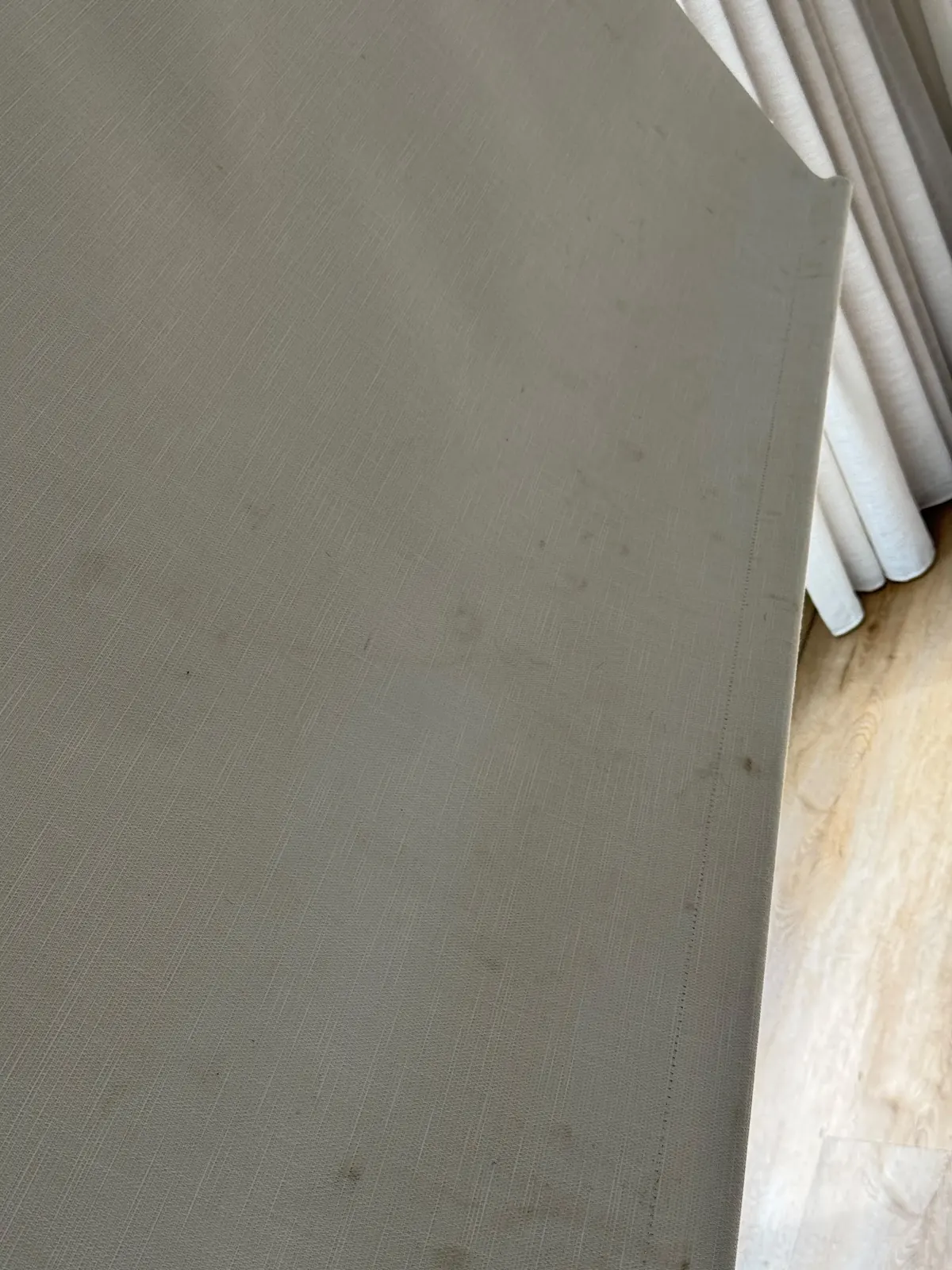
Stains, grease and splash marks
Kitchen blinds collect a film of cooking grease that dust sticks to. Warm water and dishwashing liquid, applied with a well-wrung cloth, usually shifts it with patience. For bathroom and laundry blinds, splash marks and soap residue respond to the same mix.
Some marks won't move. Stains that have been there for years, rust from a wet bottom rail, and discolouration from sunlight are often permanent. Pushing harder at that point usually damages the coating or leaves a clean "halo" that looks worse than the original stain.
After a renovation, fine plaster dust works deep into blind fabric. Vacuum before you wipe, or the dust turns into a paste. Our guide to cleaning curtains and blinds after renovation dust covers this.
Habits that keep roller blinds cleaner for longer
Most of the roller blinds we're called out to aren't just dirty; they've been slowly damaged by small daily habits. A few changes go a long way:
- Raise them on damp mornings. A blind left down against wet glass all day soaks up condensation. Raising it lets the window and fabric dry.
- Never roll a damp blind. Moisture trapped in the roll is how a few spots become a full band of mould, and it can also leave permanent pressure marks.
- Pull the chain straight down. Yanking it at an angle makes the fabric track to one side and roll unevenly, which eventually creases the edges.
- Dust the top of the roll. When the blind is up, the exposed roll and bracket collect a ridge of dust that falls onto the fabric each time it's lowered.
- Keep cooking steam away. Run the rangehood when you cook. Grease and steam are what turn a kitchen blind sticky.
Sunscreen blinds deserve a special mention. The open mesh is designed to let you see out, so dust and spider webs show up quickly in the afternoon light. A soft brush every few weeks keeps them clear, and wiping across the weave rather than along it stops dirt being pushed into the holes.
Mould on roller blinds
In Melbourne winters, condensation runs down the glass overnight and wicks into the lower part of the blind, especially when it's left down against the window. That's why mould on roller blinds usually starts as black spots along the bottom few centimetres.
If you're tackling it yourself, wear gloves and a P2 mask, ventilate the room and don't dry-brush the spots indoors. Never mix bleach with ammonia or vinegar, and remember bleach can strip colour and weaken the fabric. The approach in how to remove mould from curtains applies to blinds too.
Deep mould staining often lightens rather than disappears. And unless you deal with the condensation, by wiping the glass in the morning and raising the blind to let air circulate, it will come back.
When to call a professional
A wipe-down every few months is plenty for most roller blinds. It's worth getting help when:
- mould covers more than a few small spots
- the blind is large, high or on a motorised system you'd rather not handle
- you've got a houseful of blinds and limited time, for example before you move out
- there are stains you can't shift without scrubbing
- pets have marked or soiled them (see getting pet smells out of curtains)
Our roller blind cleaning is done on site, with the blinds left on their brackets. One customer had sheers and a roller blind cleaned and said Danny "managed expectations so well" and removed all the stains. That's what you should expect from any cleaner: an honest view of what will come out before they start. If you're comparing other blind types, see how to clean venetian blinds.
Got a house full of grubby roller blinds? We'll clean them where they hang. Phone (03) 7066 4644 or get a free quote online.