Blinds
How to Clean Holland Blinds
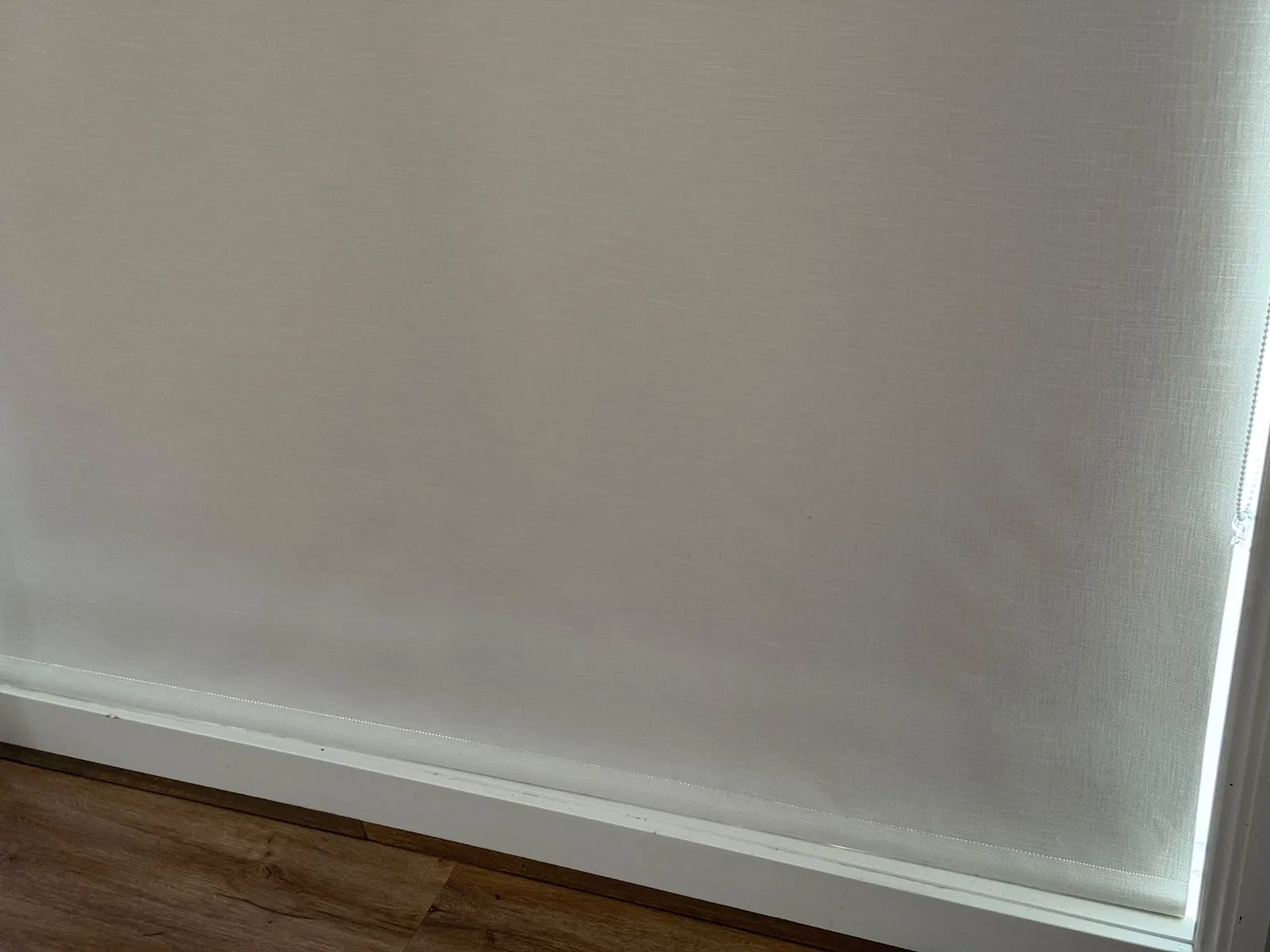
Most holland blinds are made from a stiffened fabric, so the safest way to clean them is mostly dry: vacuum with a soft brush, lift surface grime with a dry-cleaning sponge, and only spot clean small marks with a barely damp cloth. Soaking or scrubbing a holland blind can soften the stiffening, leaving ripples, sagging edges and water rings that don't come out.
That's the core of how to clean holland blinds. For blinds that are filthy, smelly or mouldy, professional blind cleaning done on site is usually the better option, and the blinds don't need to come off their brackets.
What makes a holland blind different
In Melbourne, "holland blind" gets used loosely for almost any fabric roller blind. Strictly speaking, a traditional holland is a roller blind made from a tightly woven cotton or linen fabric that's been stiffened, often with a timber or metal bottom rail, a pull cord or ring, and sometimes a scalloped or braided hem. You see them a lot behind curtains in Victorian and Edwardian homes in suburbs like Hawthorn, Brighton and Carlton.
Modern hollands are often polyester with a stiffening finish and behave more like standard roller blinds. Either way, the stiffness is what keeps the blind flat and rolling straight. Lose it, and the blind starts to curl at the edges and roll crooked.
| Holland type | How to tell | Safe at home |
|---|---|---|
| Traditional cotton or linen holland | Matt, papery feel; often older, with a timber rail or decorative hem | Dry methods only; spot clean with extreme care |
| Modern polyester holland | Smoother, slightly plasticky feel; newer brackets and chain | Dry methods plus light damp spot cleaning |
| Spring-roller holland | No chain; you pull it down and it catches, then flicks up | As above, but control the spring when lowering and raising |
If yours is a plain fabric roller blind without that stiff, papery finish, our guide to cleaning roller blinds without taking them down may suit it better.
How to clean holland blinds: the dry method
- Lower the blind fully. On a spring roller, pull it down slowly and let it catch. Don't let go mid-pull; a spring blind released suddenly can snap up hard enough to damage the fabric or your fingers.
- Vacuum both sides. Use a soft brush attachment on low suction, top to bottom, in long overlapping strokes. Do the window side as well.
- Use a dry-cleaning sponge. These dense rubber sponges, sometimes sold as soot sponges at hardware and paint stores, lift dust and grime without water. Wipe in one direction, top to bottom, and turn the sponge as it darkens.
- Clean the bottom rail and pull. These get handled the most. Wipe a timber rail with a barely damp cloth and dry it straight away.
- Leave it down for an hour so any loosened dust settles, then give it a final light vacuum.
Work from a stable step ladder for anything above head height, and don't lean on the blind for balance.
How often? For a holland in a living room or bedroom, a light vacuum every month or two and a dry-sponge wipe once or twice a year keeps it in good shape. Kitchen hollands near the cooktop pick up grease faster and need more frequent dusting, because once grease bonds with dust, dry methods stop working.
Spot cleaning small marks
For a fingerprint or a small splash, test on the back corner first. Use a white cloth dampened with water and a single drop of mild detergent, wrung out until it's nearly dry. Dab the mark, then blot with a dry cloth and let it air dry fully before rolling. If a faint ring forms on the test spot, stop: that fabric can't take water at home.
Smelly, stained or pet-soiled hollands
Holland fabric absorbs odours. Cooking smells, cigarette smoke and pet accidents all settle in, and because you can't wash the blind like a tea towel, the smell lingers.
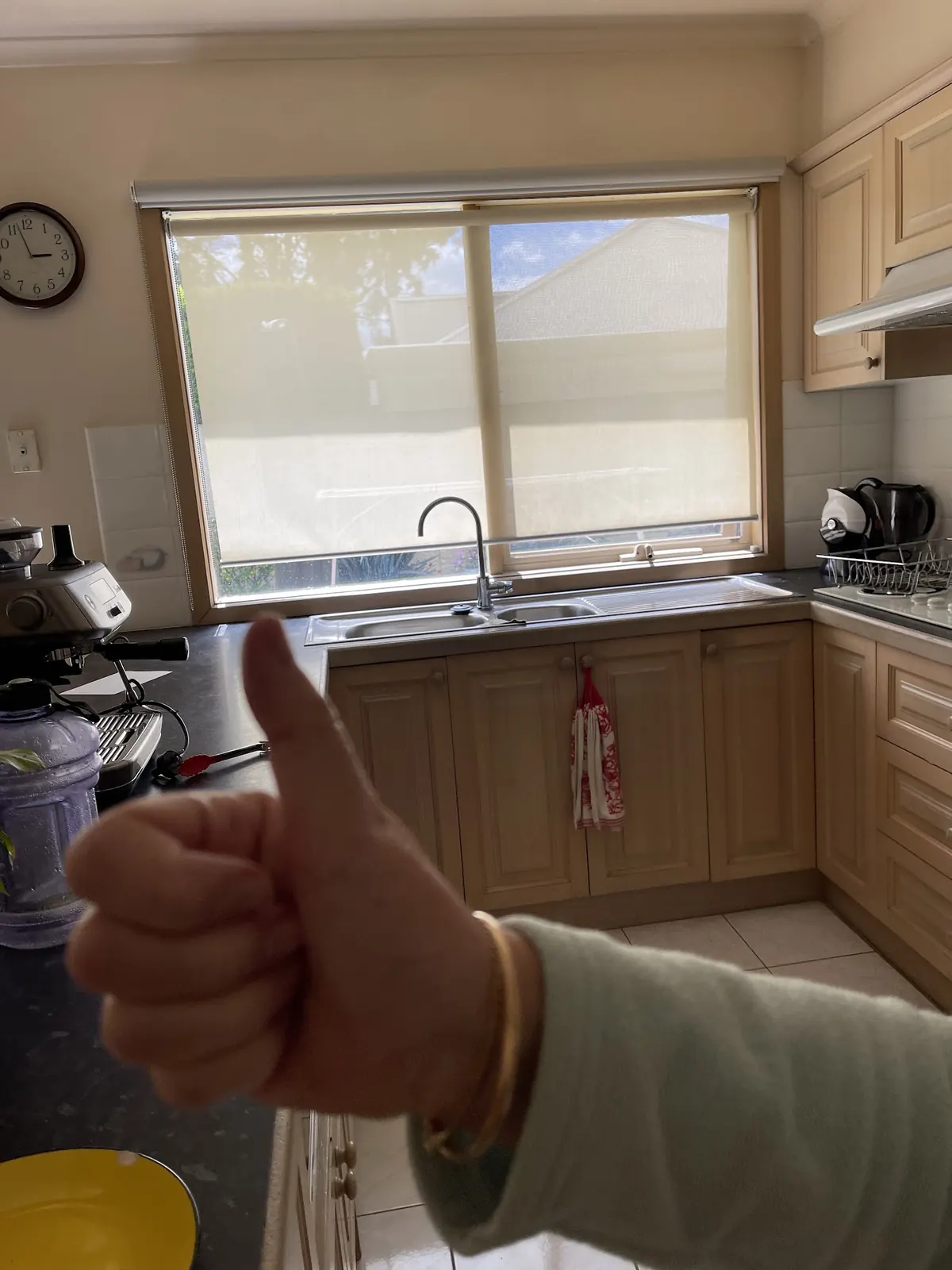
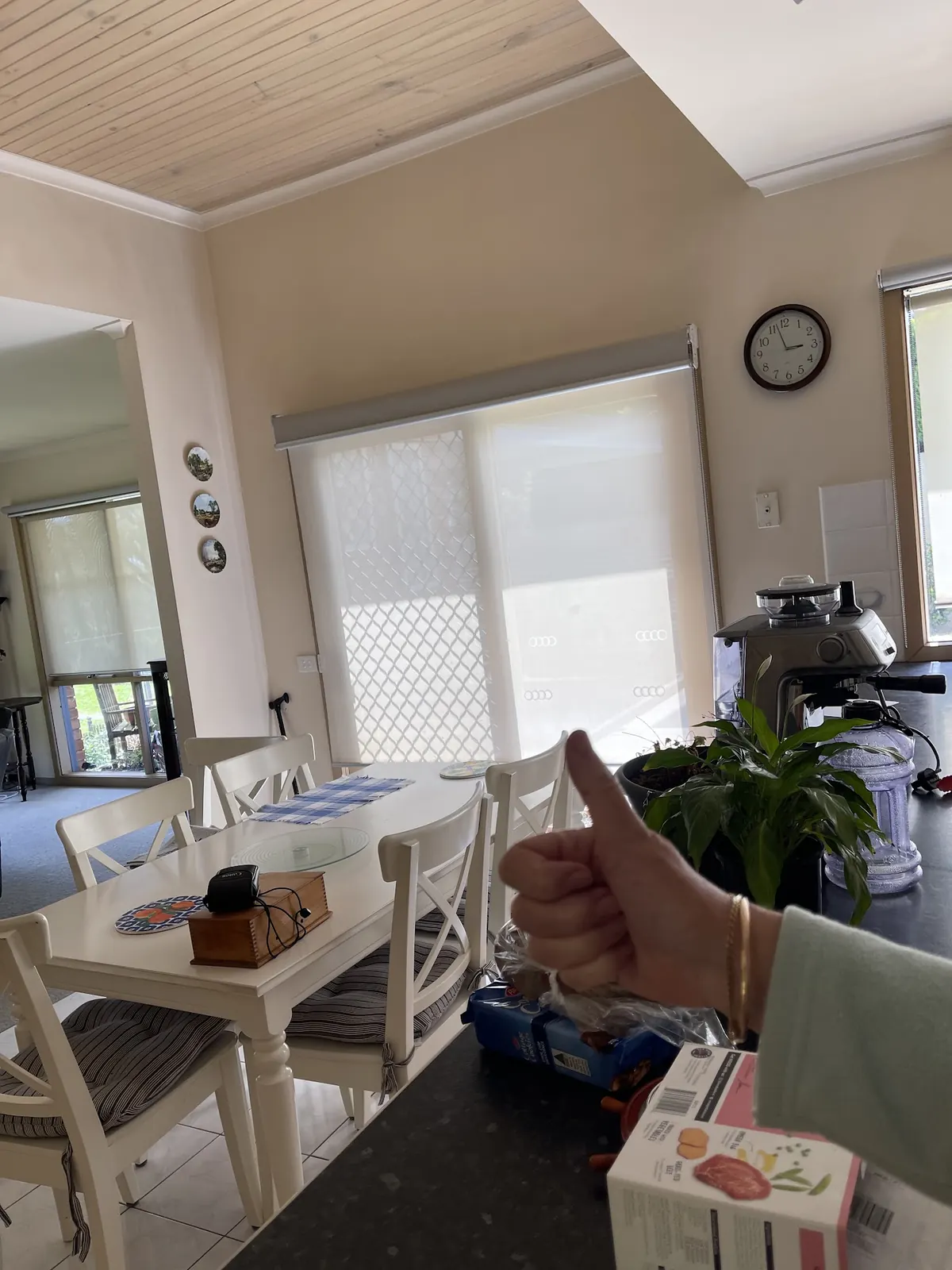
One job sticks out. A customer had moved into a home where the previous owner's animals had left the holland blinds filthy and smelly. After cleaning, the blinds came up like new and the smell was gone. That's a good outcome, but not a guaranteed one; urine that has soaked in for years can leave staining or a faint odour on some fabrics.
If smoke is the issue, see how to get smoke smell out of curtains; for animals, our guide to pet hair and smells in curtains applies to blinds too. Avoid masking sprays on hollands. They can leave a sticky film that attracts more dirt, and some leave marks.
Mould and condensation
Holland blinds sit right against the glass, and in winter they're often left down all night in bedrooms. Condensation wicks into the hem and the lower part of the fabric, which is why mould on holland blinds usually shows as black spotting along the bottom.
Wear gloves and a P2 mask if you're dealing with mould, ventilate, and don't dry-brush it indoors. Don't use bleach on holland fabric: it strips colour and weakens the fibres, and the water alone can ruin the stiffening. Deep mould staining often lightens rather than disappears, and it will return unless the window is wiped and the room aired regularly.
When to call a professional
A vacuum and a dry-sponge wipe a couple of times a year is enough for most holland blinds in reasonable condition. Get help when:
- the blind smells of smoke, pets or damp
- there's mould spotting or large stains
- it's an original or older holland you don't want to risk
- you're moving out of a rental (our end of lease curtain and blind checklist covers what to check)
- you have a lot of blinds and not much time
We clean holland blinds on site with controlled moisture, so the stiffening isn't soaked and the blind stays on its brackets. Some old hollands are simply worn out: if the fabric is cracking along the roll line or the edges have frayed, cleaning won't reverse that, and we'll tell you before we start. For pricing, see how blind and curtain cleaning is quoted.
Holland blinds looking tired or smelling musty? Talk to Danny on (03) 7066 4644, or fill in the quote form for a free, no-obligation quote.