Blinds
How to Clean Vertical Blinds
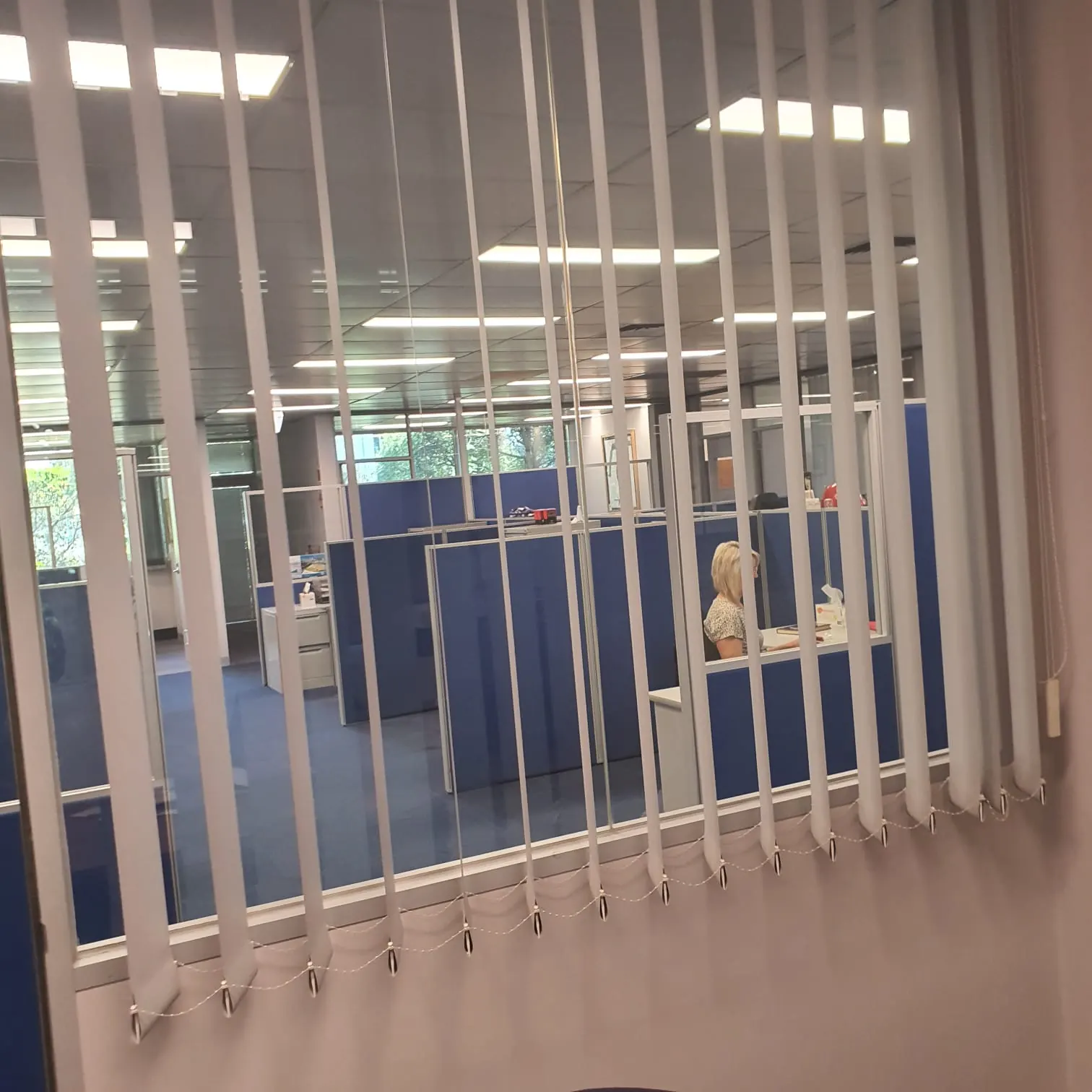
The easiest way to clean vertical blinds is on the window: close the vanes flat, vacuum or dust each one from top to bottom, then turn them to the other side and repeat. Fabric vanes should only be spot cleaned with a barely damp cloth; PVC vanes can be unclipped and washed in warm soapy water. Keep the bottom weights and connecting chain in place, or the vanes won't hang straight again.
That's the short version of how to clean vertical blinds. If you'd rather skip the job, our on-site blind cleaning cleans verticals while they hang. Below is the step-by-step, with the mistakes we see most often, especially in offices and on big sliding doors.
Verticals are popular on sliding doors and wide windows because they stack neatly to one side and let you angle the light. The same design makes them easy to knock out of alignment while cleaning, so the order you work in matters.
Fabric or PVC vanes? It changes everything
| Vane type | How to tell | Cleaning |
|---|---|---|
| Fabric (stiffened polyester) | Soft woven texture, slight flex, often with a weight sewn or slotted into the bottom | Vacuum and spot clean; don't soak |
| PVC | Smooth, hard, often embossed with a pattern; rattles when you brush past | Wipe or remove and wash in warm soapy water |
| Fabric with blockout coating | Fabric front, rubbery back | Dust and light damp wiping only; no scrubbing |
Fabric vanes are stiffened so they hang flat. Soaking softens the stiffening, and the vanes curl, twist or drop unevenly. That's why fabric verticals almost always need a gentler approach than PVC.
How to clean vertical blinds on the window
- Close the vanes flat. Rotate them so they form a continuous wall facing into the room.
- Dust from the top. Use a vacuum with a soft brush on low suction, or a microfibre duster. Hold the bottom of each vane lightly with your free hand so it doesn't swing and unclip.
- Turn the vanes the other way and do the window side, which usually holds more grime from condensation and outside air.
- Spot clean marks. On fabric, dab with a barely damp white cloth and a drop of mild detergent, then blot dry. On PVC, wipe with warm water and dishwashing liquid.
- Clean the headrail and chain. Run a dry cloth along the track, and wipe the bottom chain, which picks up dust and pet hair.
- Leave the vanes open to dry before closing them against the glass.
Work from a step ladder for the headrail rather than reaching up and pulling on the vanes; they unclip easily under weight.
Washing PVC vanes off the track
If PVC vanes are really grimy, it can be quicker to take them down and wash them in a bath or laundry tub.
Taking them down
First, open the vanes so they're perpendicular to the window. Unhook the connecting chain at the bottom, noting which side it runs. Slide each vane up gently until it releases from its carrier clip; there's usually a small hook or slot at the top. Lay them in order on a towel so they go back the same way, especially on blinds where vanes are cut to slightly different lengths for uneven floors.
Washing and rehanging
Soak PVC vanes briefly in warm (not hot) soapy water, wipe each one with a soft cloth, rinse and dry with a towel. Don't stack them wet, or they can mark each other. Rehang with the vanes open, clip each back into its carrier, then reattach the bottom chain. Check every vane rotates freely before you close them.
Don't do this with fabric vanes. Soaking a fabric vertical blind is one of the most common ways people end up replacing it.
Small habits that keep verticals clean
- Open them by the wand or chain, not by hand. Pushing vanes aside with your fingers leaves greasy marks and can unclip them.
- Keep the bottom off the floor. Vanes that drag pick up dust and wear through at the hem. If they touch, a blind repairer can adjust the length.
- Stack them clear of a doorway. On sliding doors, fully opened vanes that hang in the opening get brushed past, kicked and pawed by pets every day.
Mould, sliding doors and offices
Vertical blinds are often fitted to sliding doors, and in winter the bottom of each vane sits against cold glass and wet tracks. Mould spotting along the lower edge of fabric vanes is a common call for us. If you're tackling it, wear gloves and a P2 mask, ventilate, and avoid dry-brushing. Old mould staining on fabric usually lightens rather than vanishing, and it comes back unless the condensation is dealt with; why curtains get mouldy explains the causes, and they apply to blinds just the same.
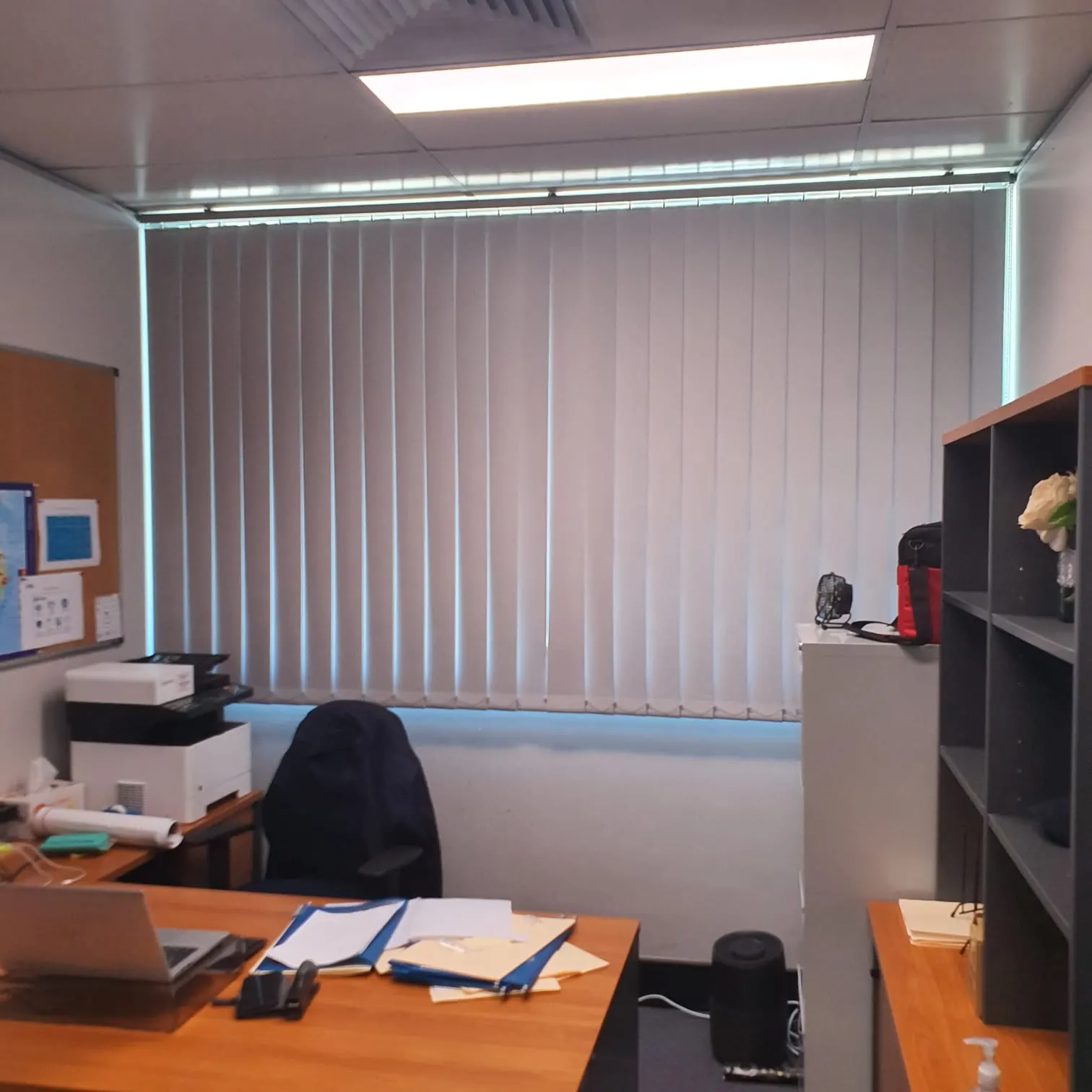
In offices, vertical blinds often run the full length of a floor, and nobody quite owns them. They gather dust for years until a client meeting makes someone notice. Our commercial curtain and blind cleaning is set up for that. On one office job, the customer noted we arrived on time, were careful of the people working in the space, and left the site clean. For maintenance schedules, see how often commercial curtains should be cleaned.
When to call a professional
For a few PVC verticals at home, the steps above are all you need. It's worth calling us when:
- your vanes are fabric and genuinely dirty, stained or mouldy
- there are long runs across an office, clinic or school
- the blinds are high, or behind furniture that's hard to move
- a pet or child has marked the lower vanes
- you'd rather they stayed on the track the whole time
Our vertical blind cleaning is done on site, with the vanes left hanging, so there's nothing to unclip, lose or rehang in the wrong order. A blind with brittle, cracked or sun-faded vanes may not look new afterwards, and we'll be upfront about that before starting. If you've got other blinds in the house, see our guides to venetian blinds and roller blinds.
Rather not unclip a hundred vanes? We'll clean them where they hang. Call (03) 7066 4644 or request your free quote, for home or office.