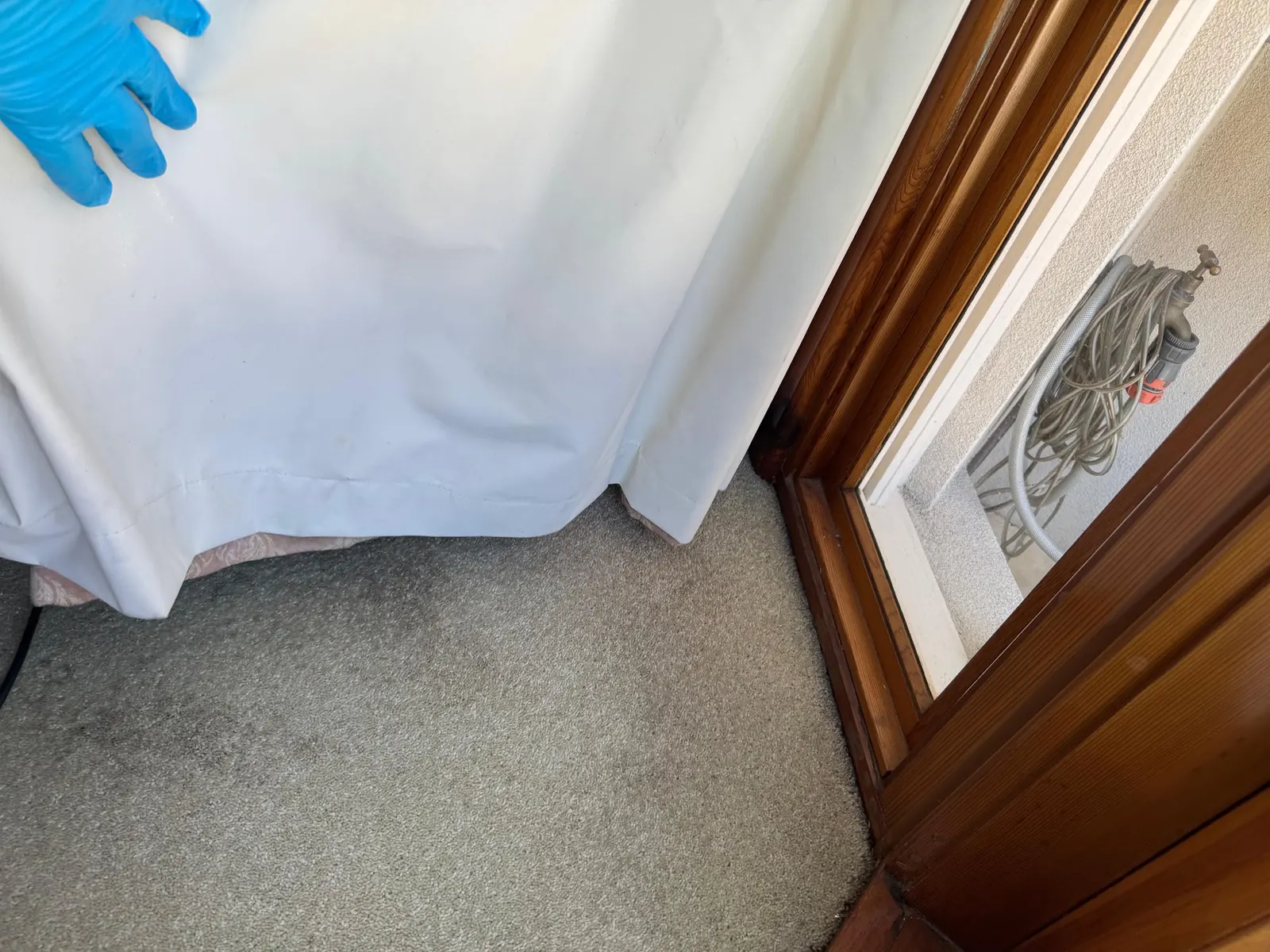
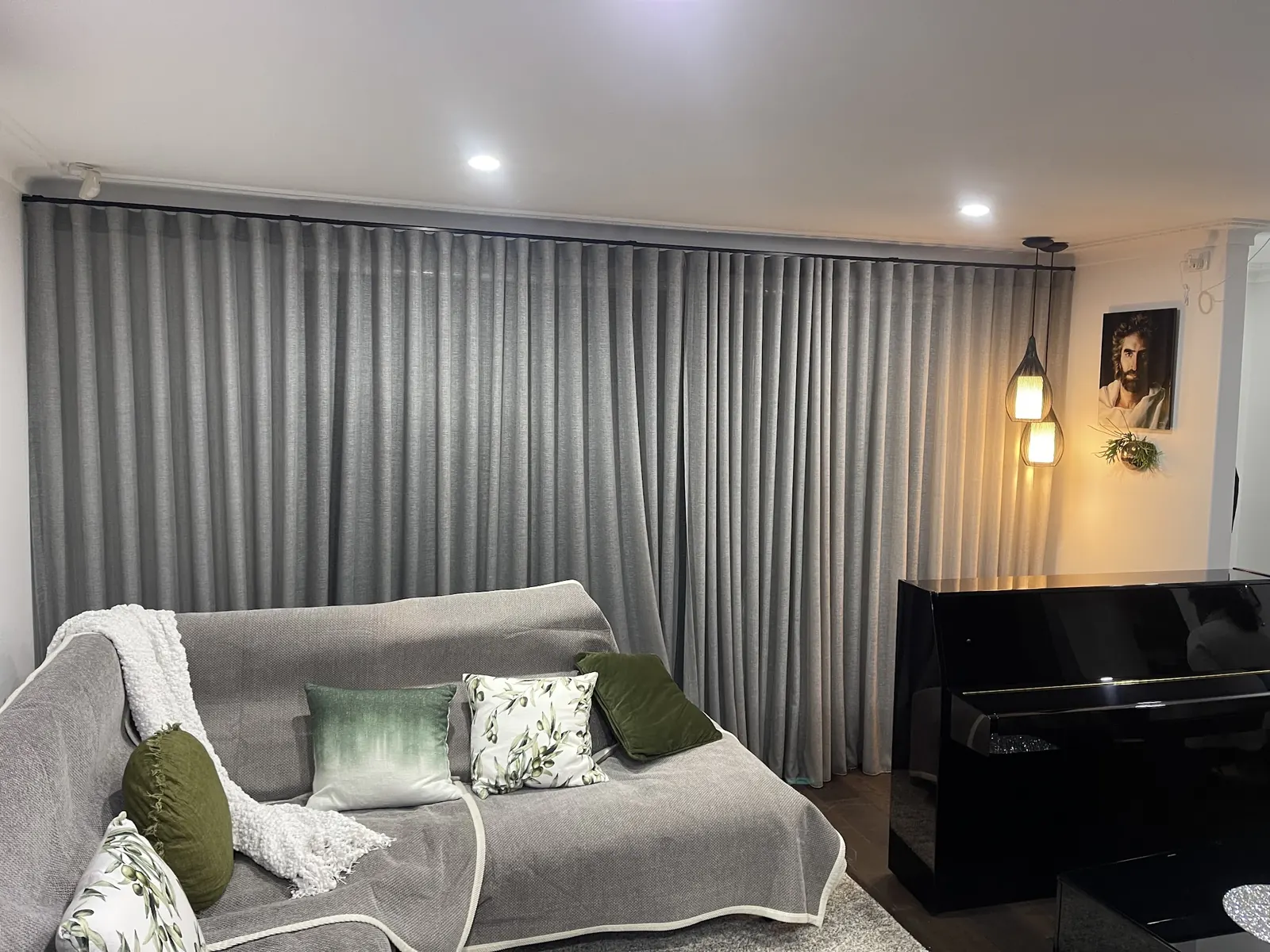
Mould & Stains
How to Get Water Stains Out of Curtains
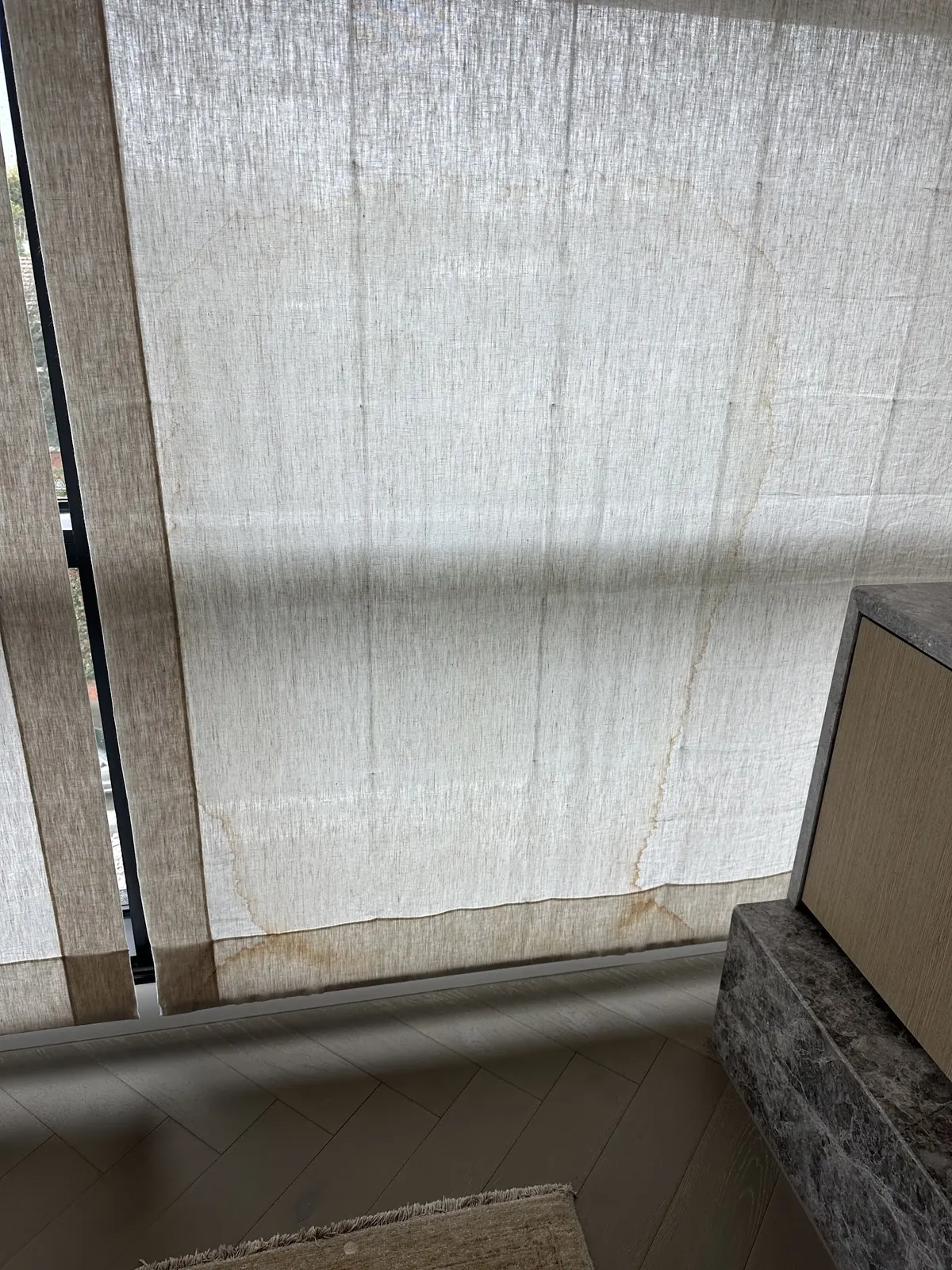
A water stain on a curtain is rarely the water itself. It's the dirt, minerals and dye that the water picked up and carried to the edge of the wet patch as it dried, leaving a brown or grey tide line. So, how to get water stains out of curtains? You re-wet the area evenly, past the edge of the ring, rinse the residue out and dry it quickly, so nothing gets pushed to a new edge. Dabbing only the mark usually makes a bigger ring.
That works on many washable fabrics. Linen, lined drapes and anything labelled dry clean only are less forgiving, and that's where our curtain mould and stain removal service comes in.
Find out where the water came from first
Before you clean anything, work out the source. Otherwise the stain comes back next time it rains.
- Condensation running off the glass on cold mornings, pooling on the sill and wicking up the hem. Very common in single-glazed Melbourne homes from May to September.
- A leaking window frame or seal, often showing as a stain on one side or along the lining.
- Roof or gutter leaks running down the wall behind the curtain, which tend to leave a darker, rust-coloured line.
- Pot plants and spills, usually a single ring at hem height.
- A curtain that was wet-cleaned badly, where water was applied unevenly and the dirt migrated.
If the stain has black spots in it or smells musty, it isn't just water. Our guide on why curtains get mouldy explains what's going on.
How to get water stains out of washable curtains
Check the care label first. If it says the fabric can be washed in water, this method is a reasonable place to start. If it says dry clean only, skip to the professional section below.
- Test a hidden corner. Dampen a spot on the back of the hem with cool water and blot with a white cloth. If dye comes off, or the fabric puckers as it dries, stop there.
- Use distilled or cooled boiled water if your tap water is hard, so you're not adding minerals.
- Wet beyond the ring. With a spray bottle or sponge, dampen the stain and a few centimetres around it evenly. The goal is no dry edge for residue to collect against.
- Add a little mild detergent, such as a drop of wool wash, and dab gently with a clean white cloth. Work from the outside of the wet area inwards.
- Rinse with plain water, again past the edge, and blot with a dry towel.
- Dry it fast. A hair dryer on cool, held well back, or a fan, helps the whole area dry at the same rate. Slow drying is what creates the ring in the first place.
For a curtain that's fully washable, washing the whole panel on a cold, gentle cycle is often easier than spot treating, because the whole thing gets wet at once and there's no edge.
Water stains by fabric
| Fabric | What to expect | Take care with |
|---|---|---|
| Polyester and sheers | Tide lines usually lift with even re-wetting or a gentle wash | Fragile, sun-damaged sheers that may split |
| Cotton | Often good results with careful treatment | Shrinkage with warm water; lined cotton is harder |
| Linen | Water marks easily, and shrinks | Home spot cleaning often adds new rings |
| Silk, velvet, viscose | Water itself can mark these | Leave to a professional |
| Lined or blockout drapes | Stain may be in the lining, the face, or both | Different shrink rates; coating damage |
Linen curtains: a special case
Linen is where we see the most home attempts that went wrong. It drinks water fast, dries unevenly and is prone to shrinkage, so a dab of water on a small mark can leave a larger, paler ring around it. Our guide to cleaning linen curtains covers this in more depth, and whether curtains shrink when cleaned explains why linen is the fabric most likely to.
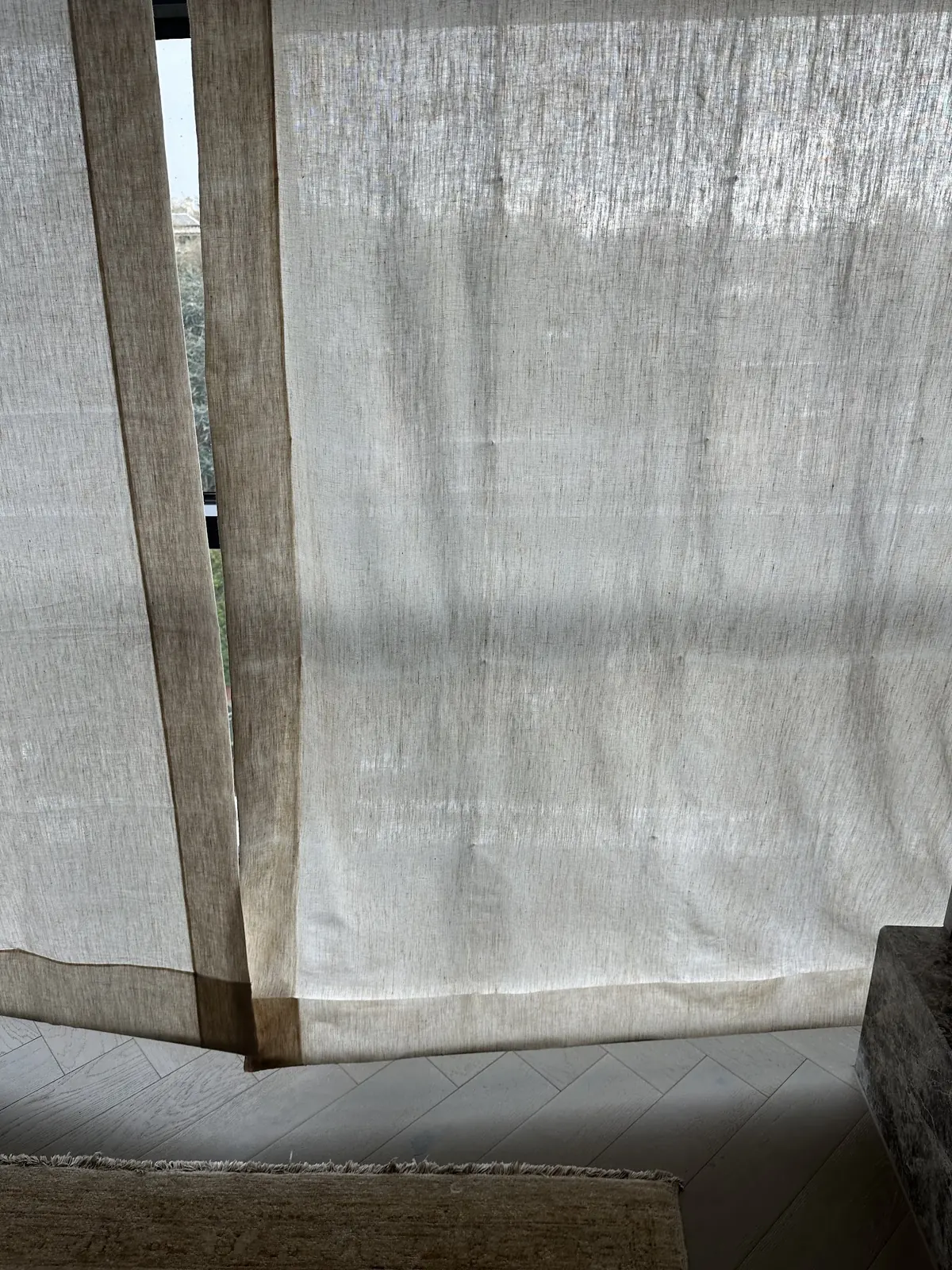
The photo above this post shows a real job: a linen curtain with a brown tide line that the customer was sure was permanent. It came out completely, and they posted the before and after.
When it's not just water
Some stains look like water marks but have something else behind them:
- Rust-coloured lines from roof leaks or metal window frames may contain rust or tannins from timber. These often lighten a lot but don't always vanish.
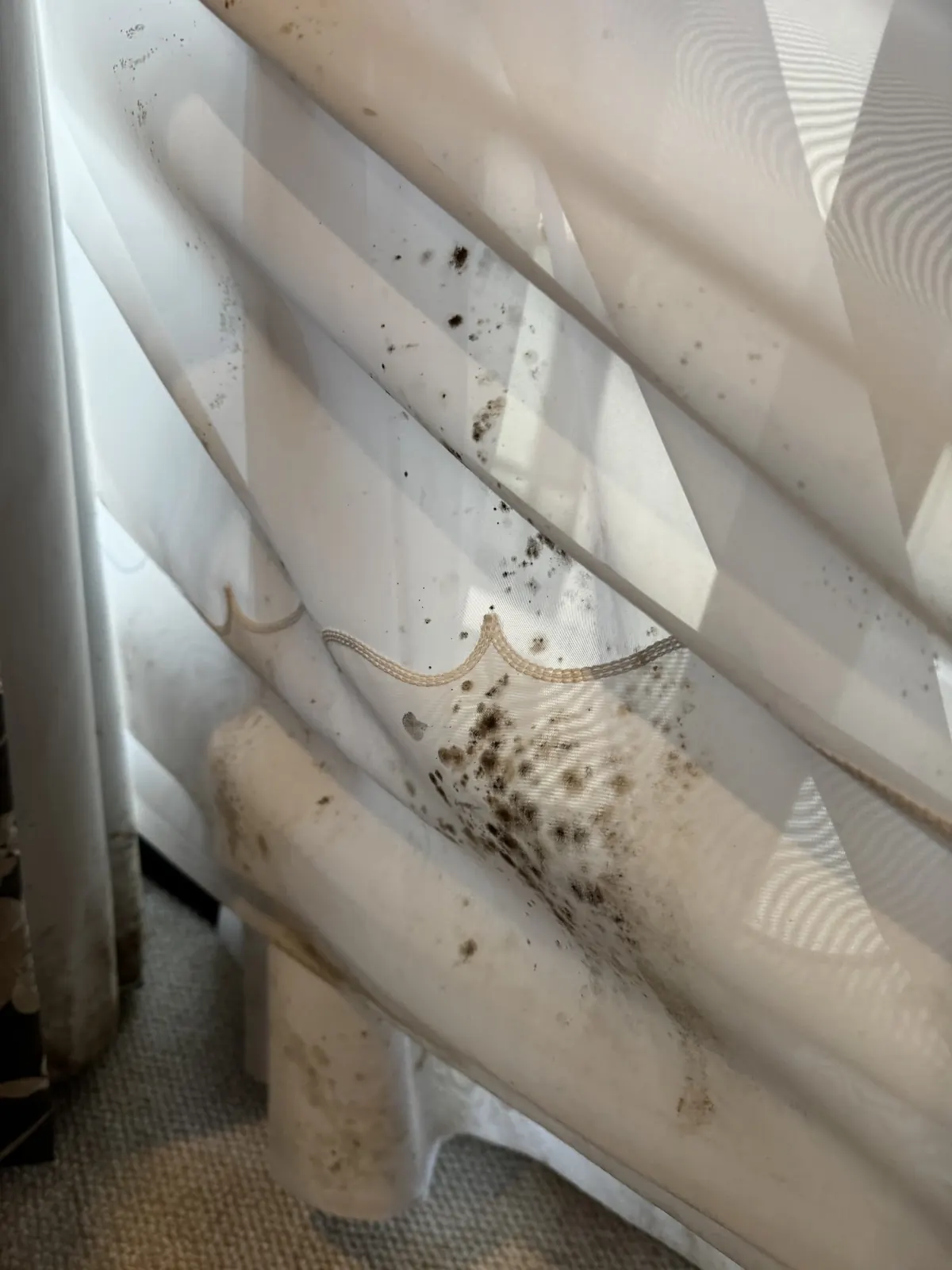
- Grey or black speckling in the stain is mould. Wear gloves and a P2 mask, ventilate, and don't brush it dry indoors. Read how to remove mould from curtains before treating it.
- Yellow rings on old sheers can be a mix of water, sun damage and fibre breakdown. Cleaning brightens them, but brittle fabric can split.
Avoid bleach on any of these. It strips colour and weakens fibres, and never mix bleach with vinegar or ammonia.
Preventing water stains on curtains
Once a curtain is clean, a few small changes keep it that way through the next wet season:
- Wipe condensation off the glass and sill first thing on cold mornings, before it soaks into the hem.
- Leave a gap of a centimetre or two between the hem and a window sill, or between the hem and the floor near a balcony door that lets rain in.
- Open curtains during the day so air can reach the window and dry it out.
- Move pot plants away from the curtain, or put a saucer under them that's deep enough not to overflow.
- Get leaking frames, seals and gutters repaired. A curtain that keeps getting wet from the same leak will keep staining, and the damp encourages mould.
Renters who find a leak causing the stain should report it to the landlord or agent in writing. Consumer Affairs Victoria has guidance on repairs, so check your lease and their advice rather than paying for something that isn't your responsibility.
When to call a professional
DIY is fine for a small, fresh ring on a washable synthetic. Get help when:
- the curtain is linen, silk, velvet or labelled dry clean only;
- the stain is on a lined or blockout drape;
- it's large, old, or you've already tried and the ring got bigger;
- there's mould or rust in the mark.
Old stains with mould or rust in them may lighten rather than disappear completely, and we'll say that upfront. Plenty come out fully, though: one customer had heavy stains on their curtains completely removed. Pricing depends on size, fabric and condition, and you can see how curtain cleaning is priced before you ask.
Got a tide line you can't shift? Ring (03) 7066 4644 or get a free quote. A photo of the stain and the care label helps us tell you what's realistic.