DIY Curtain Care
Curtains, Dust Mites and Allergies: What Cleaning Actually Helps
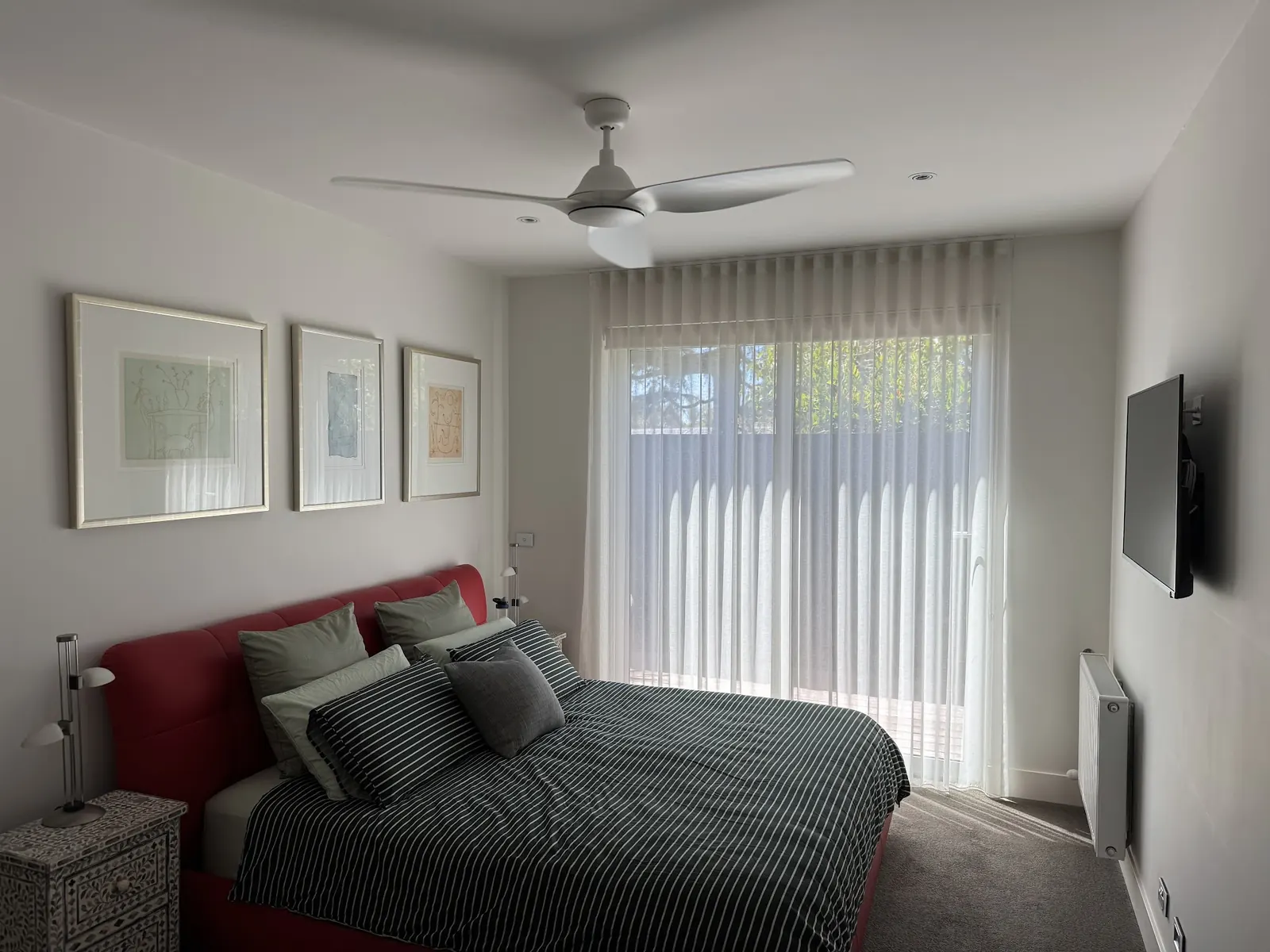
Curtains collect household dust, and that dust can carry dust-mite allergen, pollen, pet dander and mould spores. Dust mites themselves mostly live in bedding, mattresses, pillows and carpet rather than curtains, but heavy fabric that's rarely cleaned can still hold a lot of what they leave behind. Regular vacuuming and an occasional full clean of curtains may help reduce dust and allergens in a room. They won't treat an allergy, so if you have symptoms, talk to your GP.
Here's what's actually in curtain dust, the routine that makes a real difference, and where curtains fit among everything else in the house. For a deeper clean without taking anything down, our on-site curtain and blind steam cleaning cleans the fabric where it hangs.
What's actually in the dust on your curtains
When we vacuum the hem and folds of curtains that haven't been touched in years, what comes out is a mix of:
- general house dust, including skin flakes and fabric fibres;
- dust-mite droppings and fragments, which are the main allergen people react to;
- pollen, especially after Melbourne's spring, when grass pollen comes through open windows;
- pet hair and dander;
- soot and fine particles from traffic, wood heaters and bushfire smoke;
- mould spores, particularly where curtains touch cold, wet glass in winter.
Curtains sit right where outside air comes in, and their folds and pleats give dust somewhere to settle. Every time you draw them, some of it goes back into the air.
Do dust mites live in curtains?
Some can, but curtains generally aren't their favourite spot. Dust mites need humidity and a steady food supply of skin flakes, which is why bedding and mattresses are the usual focus of allergy advice. Curtains are more of a collector: they hold allergen-laden dust that drifts in from the rest of the room.
That matters for priorities. If someone at home has a dust-mite allergy, curtains are worth cleaning, but they're one part of a bigger picture. The Australasian Society of Clinical Immunology and Allergy, ASCIA, publishes general guidance on reducing dust mites at home, and it's a sensible place to start alongside a chat with your doctor.
A curtain cleaning routine that may help
Every week or two: vacuum
Use a vacuum with a good filter and the soft brush attachment. Go top to bottom, open the pleats, and do both sides. Pay most attention to the hem and the top of the track, where dust is thickest.
Every month: blinds and sills
Wipe blinds with a damp microfibre cloth rather than dry dusting, which just moves dust around. Wipe the window sill and the frame too. Our guide to cleaning roller blinds covers the method.
Once or twice a year: a full clean
Vacuuming removes surface dust, but not what's worked into the weave. A full clean, washed, dry cleaned or steam cleaned depending on the fabric, deals with that. Our guide on how often to clean curtains goes into timing by room and fabric.
Washing versus steam cleaning for allergy-prone homes
Allergy advice for bedding often talks about hot washing. Most curtains can't take that: hot water shrinks linings, cracks blockout coatings and damages many sheers. So for curtains, the choice is usually between:
| Curtain type | Practical option | Watch out for |
|---|---|---|
| Unlined polyester sheers | Gentle cold wash if the label allows, or steam cleaning | Tumble drying; sun-weakened fabric |
| Lined cotton or linen | Professional dry cleaning or on-site steam extraction | Shrinkage if washed at home |
| Blockout curtains | On-site steam extraction | Machine washing and heat on the coating |
| Fabric blinds | Vacuum and on-site cleaning | Soaking, which can warp them |
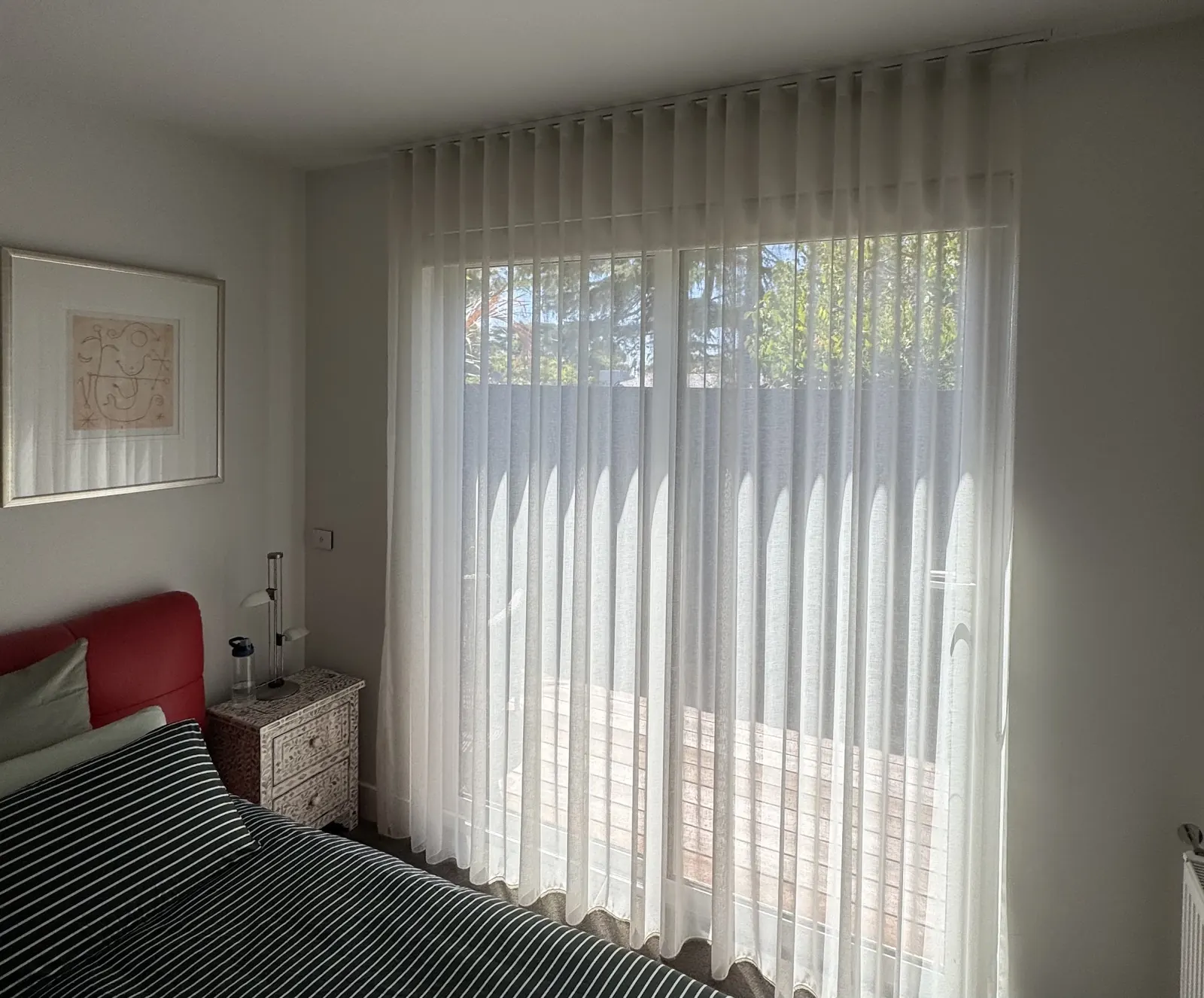
Sheers are the most common curtain in Melbourne bedrooms and the most delicate. See how to clean sheer curtains before you put them in the machine.
Other things that make a bigger difference than curtains
Being honest about this helps you spend your effort well:
- Bedding, pillows and mattress protectors usually come first for dust mites.
- Keeping indoor humidity down helps with both dust mites and mould. Run exhaust fans, air the house on dry days and deal with condensation on windows.
- Close windows on high-pollen days in spring and when there's smoke about.
- Pets shed dander onto every fabric surface. Our guide to getting pet hair out of curtains has practical tips.
- After building work, fine dust settles everywhere, including curtains and blinds.
Melbourne seasons and curtain dust
What builds up on your curtains changes through the year here, and that's worth planning around.
Spring brings grass pollen, often at high levels on hot, windy days. Curtains next to windows that are open for the warm weather catch plenty of it. A vacuum once the worst of the pollen season eases is a sensible habit, and keeping windows shut on forecast high-pollen days helps.
Summer can bring bushfire smoke from fires well outside the city. Fine smoke particles settle into sheers and linings and leave a stale smell. If the house filled with smoke, vacuum the curtains and blinds once the air clears.
Autumn and winter are the damp months. Heaters run, windows stay closed and condensation runs down single-glazed glass every morning. That's when mould shows up on hems and the backs of curtains, especially in bedrooms. CBD and Southbank apartments with little cross-ventilation can be the worst for it.
Better Health Channel, at betterhealth.vic.gov.au, has general Victorian information on mould and allergies in the home if you want to read further.
When to bring in a professional
If your curtains are washable and you're keeping up with vacuuming, you may not need anyone. A professional clean is worth it when curtains are heavy, lined or blockout and can't go in a home machine, when they haven't been cleaned in years, when there's mould on the hems, or when you'd simply rather not be up a ladder taking them down.
When Danny cleaned one customer's mouldy curtains, he also explained that the mould was coming from condensation and poor airflow, and gave advice on stopping it coming back. The customer said the room felt fresher afterwards. That's the kind of reset a full clean, plus fixing the cause, gives a room. It's a cleaning result, not a health treatment, and we'd always point you to your GP or an allergist for symptoms.
Want the curtains and blinds in your bedrooms properly cleaned? Call (03) 7066 4644 or book a free measure and quote, and let us know if anyone in the house is sensitive to dust or fragrance.