Mould & Stains
How to Get Grease Out of Kitchen Curtains and Blinds
To get grease off kitchen curtains and blinds, use a warm solution of dishwashing liquid, which is made to break up cooking oil, rather than plain water or a dry duster. Work it into fabric gently and rinse it out, or wipe hard blinds slat by slat, then dry them quickly. The longer the film sits, the harder it gets, because airborne cooking oil slowly oxidises into a sticky, yellow-brown layer that grabs dust and smells.
Hard blinds near the cooktop are a reasonable DIY job. Grease that has soaked into fabric curtains, holland blinds or anything with a dry clean label is where our curtain stain and odour removal service earns its keep.
Why kitchen grease is different from ordinary dust
Every time you fry, roast or stir-fry, tiny droplets of oil float off the pan with the steam. Most land within a couple of metres of the cooktop: on the rangehood, the splashback, the cupboards and whatever is hanging over the nearest window.
Fresh, that oil is soft and wipes away. Over weeks it reacts with air and goes tacky. Dust sticks to it, more oil lands on top, and after a year or two you have a layered film that turns fabric dingy and blinds faintly yellow. That's why the same blind can wipe clean easily one month and need serious work after a neglected winter.
The tissue test
Press a clean white tissue or paper towel flat against the curtain or a blind slat for a few seconds, then peel it off. If it lifts loose grey dust, you've got ordinary dust and can vacuum. If it comes away with a yellowish smear, or sticks slightly, there's grease, and dry dusting will only push the dust deeper into the film.
How to get grease out of kitchen curtains
Check the care label first. These steps suit washable polyester and cotton curtains.
- Take them down and remove the hooks. Kitchen curtains are usually short, which makes them one of the easier panels to wash.
- Pre-treat the greasy zones. The side nearest the stove and the bottom third usually carry the most. Mix a teaspoon of dishwashing liquid into a cup of warm water, dab it on with a sponge and work it in gently with your fingertips. Leave it for 10 to 15 minutes.
- Wash at the warmest temperature the label allows. Grease lifts better with some warmth, but don't exceed the label, and keep polyester and coloured fabrics lukewarm.
- Check before drying. Hold the damp panel up to the light. A darker, translucent patch means oil is still there. Treat again before it dries, because drying, and especially heat, makes leftover grease harder to remove.
- Rehang damp. Skip the dryer, which can bake the remaining oil in and shrink the fabric.
If the smell is more of a problem than the look, for example after years of deep frying, getting smoke smell out of curtains covers odour that has soaked into the fibres.
Cleaning greasy blinds, type by type
| Blind type | What works on grease | Avoid |
|---|---|---|
| Aluminium venetian | Warm water and dishwashing liquid, slat by slat; sugar soap for heavy build-up | Abrasive pads that scratch the finish |
| Timber or timber-look venetian | A barely damp cloth with a drop of detergent, then dry straight away | Soaking, sugar soap on real timber |
| PVC vertical or venetian | Warm detergent solution and a soft cloth | Solvents that cloud or soften plastic |
| Sunscreen or PVC roller blind | Soft sponge with mild detergent, both sides, then wipe with clean water | Creasing the fabric while you work |
| Holland blind | Professional clean | Water, sprays and scrubbing |
The glove trick for venetians
Put a rubber glove on, then a cotton glove over the top. Dip your fingers in warm soapy water, squeeze out the excess, and pinch each slat between thumb and fingers, running from one end to the other. You clean both sides in one pass and can feel exactly where the sticky patches are. Rinse the cotton glove often. How to clean venetian blinds has more on each material.
Roller blinds need a lighter hand: work while the blind is pulled fully down, support it with your free hand so it doesn't crease, and let it dry completely before rolling it up. Our roller blind cleaning guide covers the full method.
Why hollands are a special case
Holland blinds have a stiffened finish that water can soften or mark. Grease on a holland is very hard to shift at home without leaving a ring or a limp patch, which is why we suggest leaving them to a professional. How to clean holland blinds explains what is safe to try.
Mistakes that make grease worse
- Dry dusting a sticky surface. It grinds dust into the oil and leaves grey streaks.
- Reaching for oven cleaner. It's caustic, can strip colour from fabric and damage blind finishes, and isn't made for textiles.
- Magic erasers on blinds. They're mildly abrasive and can leave dull, rubbed patches on painted slats and coated roller fabric.
- Solvents without testing. Eucalyptus oil and similar products can help with a sticky spot on some fabrics, but they can also mark finishes or soften plastic. Test on a hidden area first.
Keep grease off in the first place
Most grease problems are really ventilation problems. In many Melbourne apartments, especially newer open-plan units in places like Southbank and the CBD, the rangehood recirculates rather than venting outside. A clogged recirculating filter sends cooking vapour straight back into the room, and the nearest sheer curtain becomes the filter.
- Turn the rangehood on before you start cooking, not halfway through, and leave it running for a few minutes after.
- Clean or replace rangehood filters as the manufacturer recommends.
- Use lids when frying.
- Keep any fabric window covering well clear of a gas cooktop, for fire safety as much as cleanliness. A wipeable blind is a better choice right beside the stove.
As for how often: kitchen blinds near a busy cooktop usually need a wipe far more often than the rest of the house. How often blinds should be cleaned sets out a realistic schedule.
When to call a professional
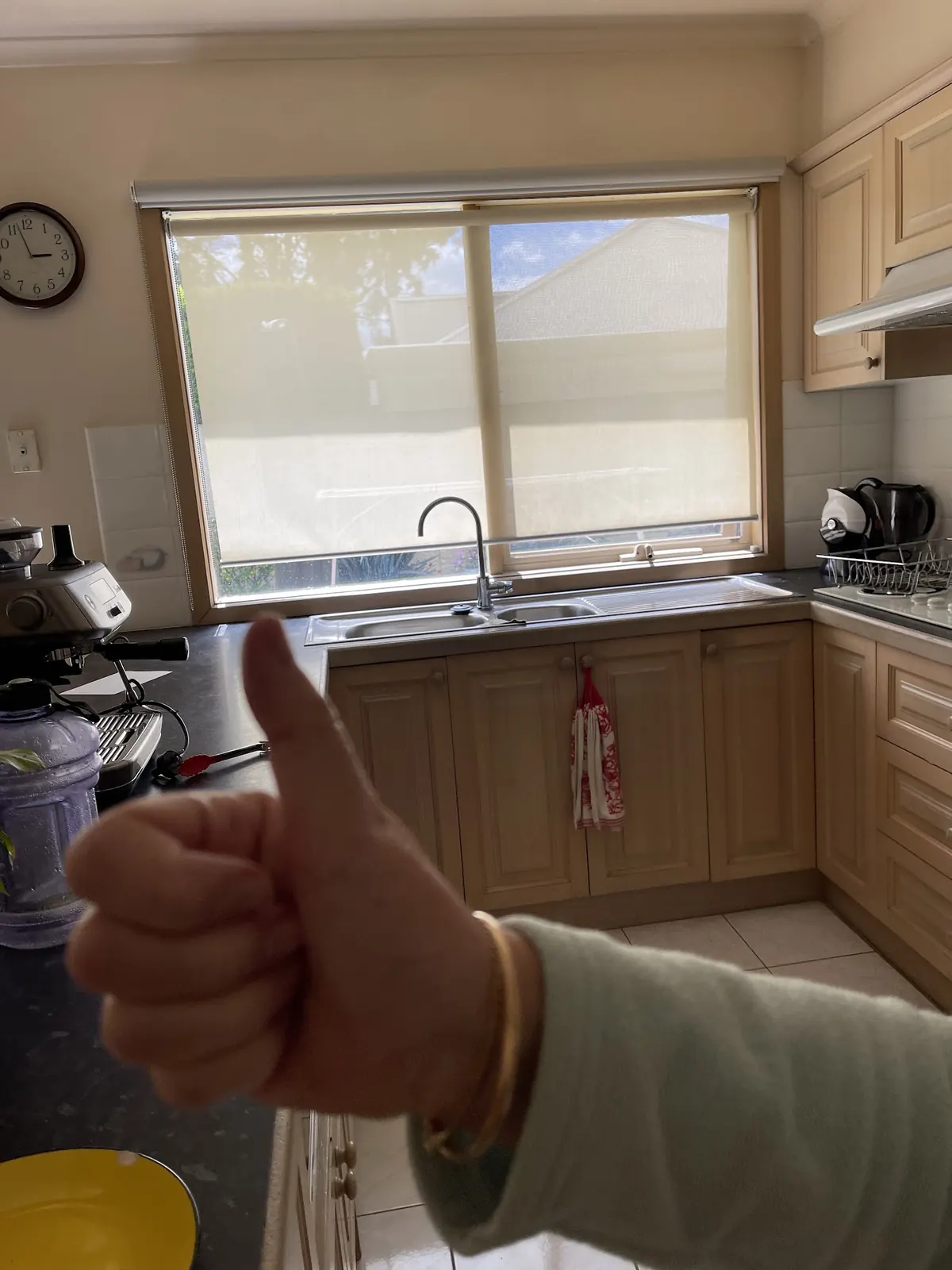
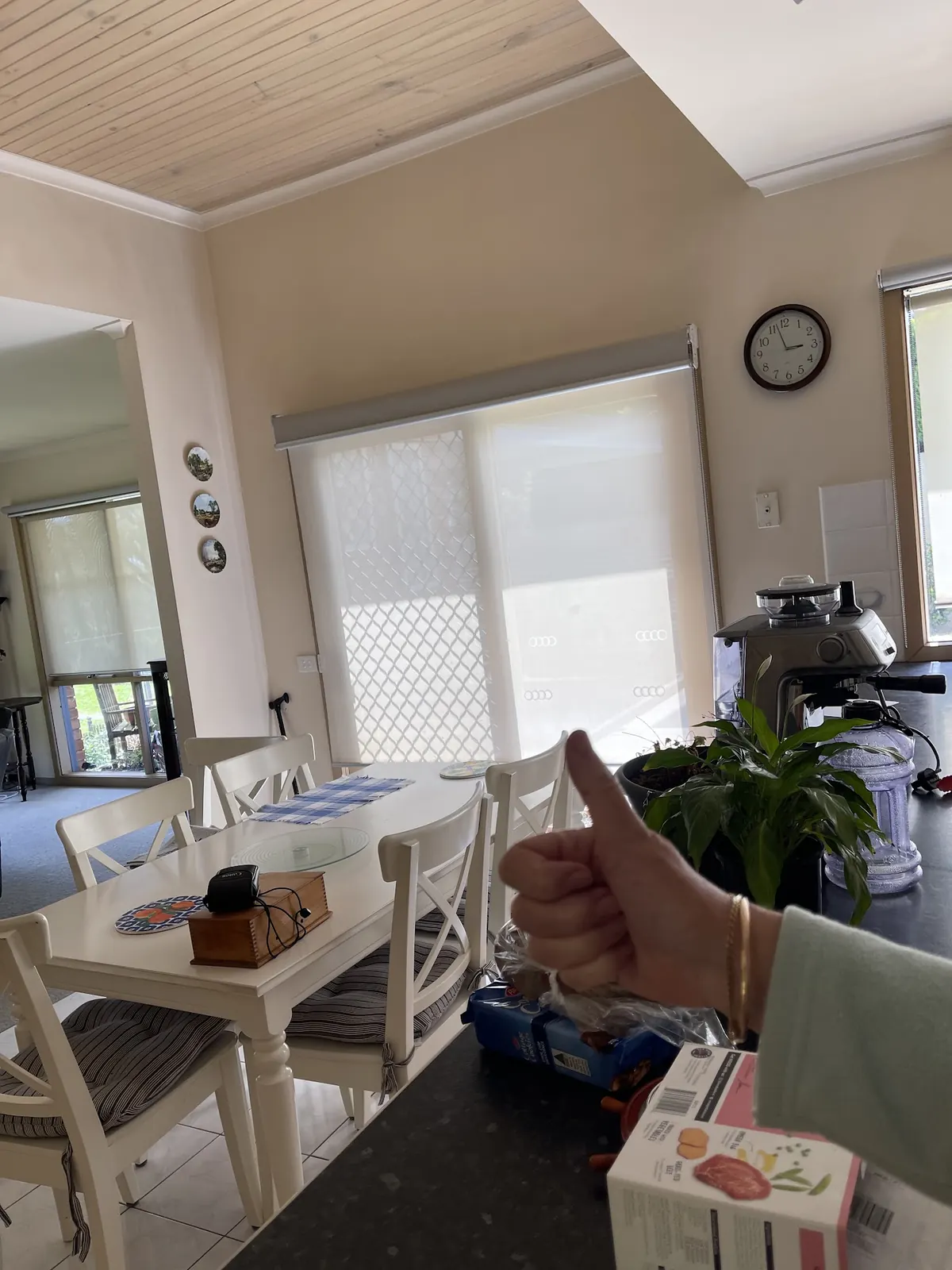
Light grease on aluminium or PVC blinds is a good DIY job. It's worth getting help when grease has soaked into fabric curtains, holland or roman blinds, when the film is old and hardened, or when the kitchen opens onto a living area and the sheers there have picked up a film too. The photo at the top of this guide is a kitchen roller blind we cleaned on site. Heavily aged grease can leave faint discolouration even after a thorough clean, and we'll tell you if we expect that.
Sticky blinds or greasy kitchen curtains? Call (03) 7066 4644, or get a free quote and let us know which rooms open onto the kitchen.