DIY Curtain Care
How to Clean Curtain Tracks, Rods and Gliders
Here's how to clean curtain tracks quickly: slide the curtains to one end, vacuum the channel with a crevice tool, wipe it with a barely damp microfibre cloth and a drop of dishwashing liquid, then dry it straight away. Rods get the same wipe along their length and inside the rings. Skip oil sprays: they attract dust and can leave grey marks on the heading tape.
It's a ten-minute job most people never think about, yet the track decides how much grit drops onto freshly cleaned fabric and how hard the curtain is pulled every time it opens. When we do on-site curtain steam cleaning, the track gets dusted first, before the fabric, so that loose dirt doesn't fall onto a clean panel.
Why dirty tracks wear out curtains
Dust settles on the top of a track and inside the channel, where it mixes with cooking film and winter condensation into a sticky grey paste. Gliders then drag instead of rolling. You compensate by tugging the curtain harder, usually from the leading edge, and all of that force goes into the heading tape and the stitching that holds the hooks.
On a sturdy lined drape you might not notice for years. On an older sheer, that repeated strain is often where the first split appears, just below the heading. A smooth track is one of the cheapest ways to make fragile curtains last.
The one-finger glide test
Close the curtain, then push it open with one finger placed at the top of the leading edge. It should travel smoothly to the stack. If it stutters, jams at a joint or needs a second hand at the top, the problem is the track or the gliders, not the curtain. Note where it catches, because that's the spot to clean and check first.
What kind of hardware do you have?
Different systems need slightly different handling, so identify yours before you start.
- Rods with rings. Timber, metal or acrylic poles with rings, eyelets or tab tops sliding over them. Dirt builds on the top of the pole and inside each ring.
- Standard tracks. Aluminium or plastic channels, wall or ceiling mounted, with small gliders running inside and hooks clipped into them.
- Corded tracks. Common on heavy drapes. A cord drives master carriers that overlap in the middle. Don't pull on the curtain itself with these.
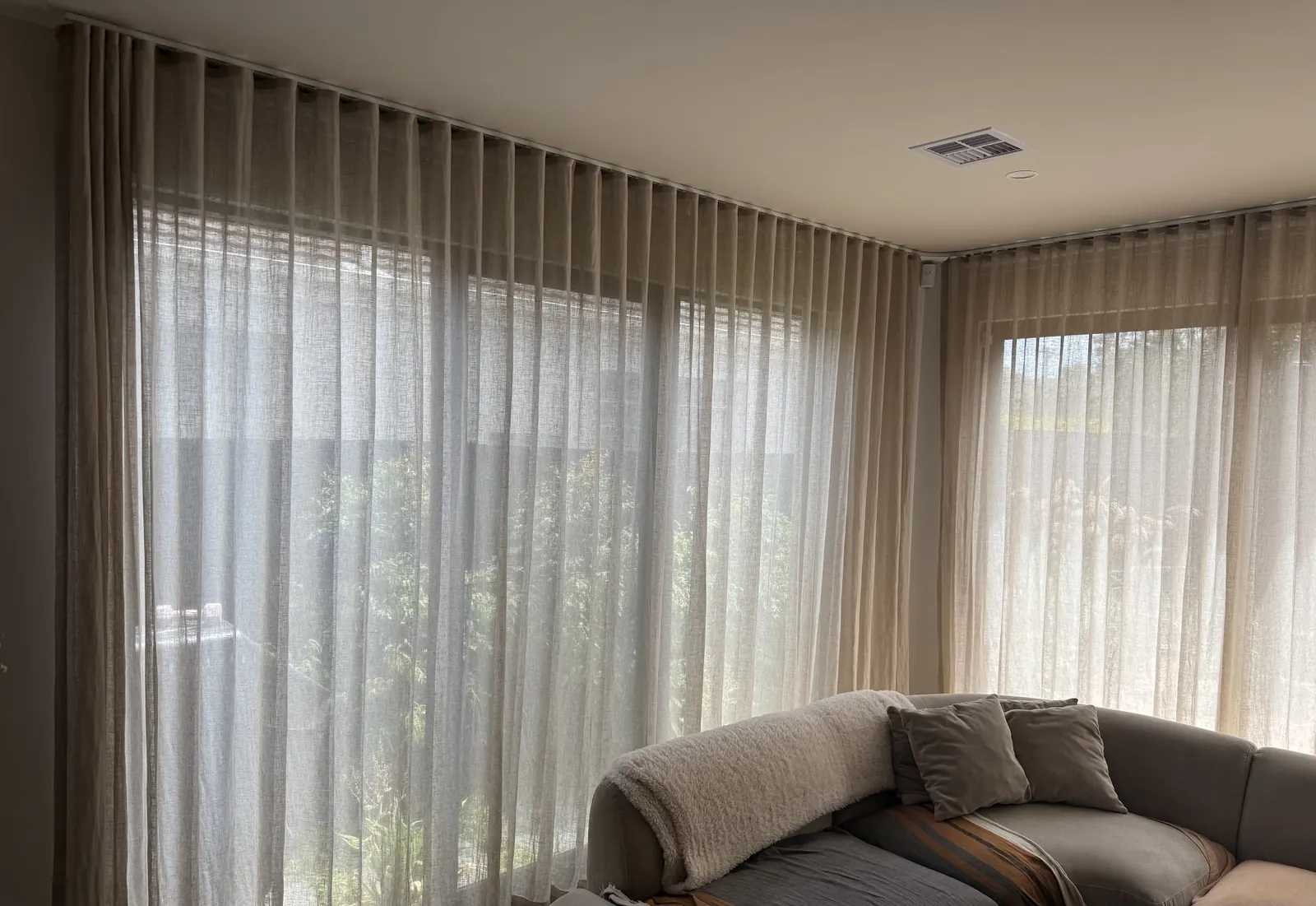
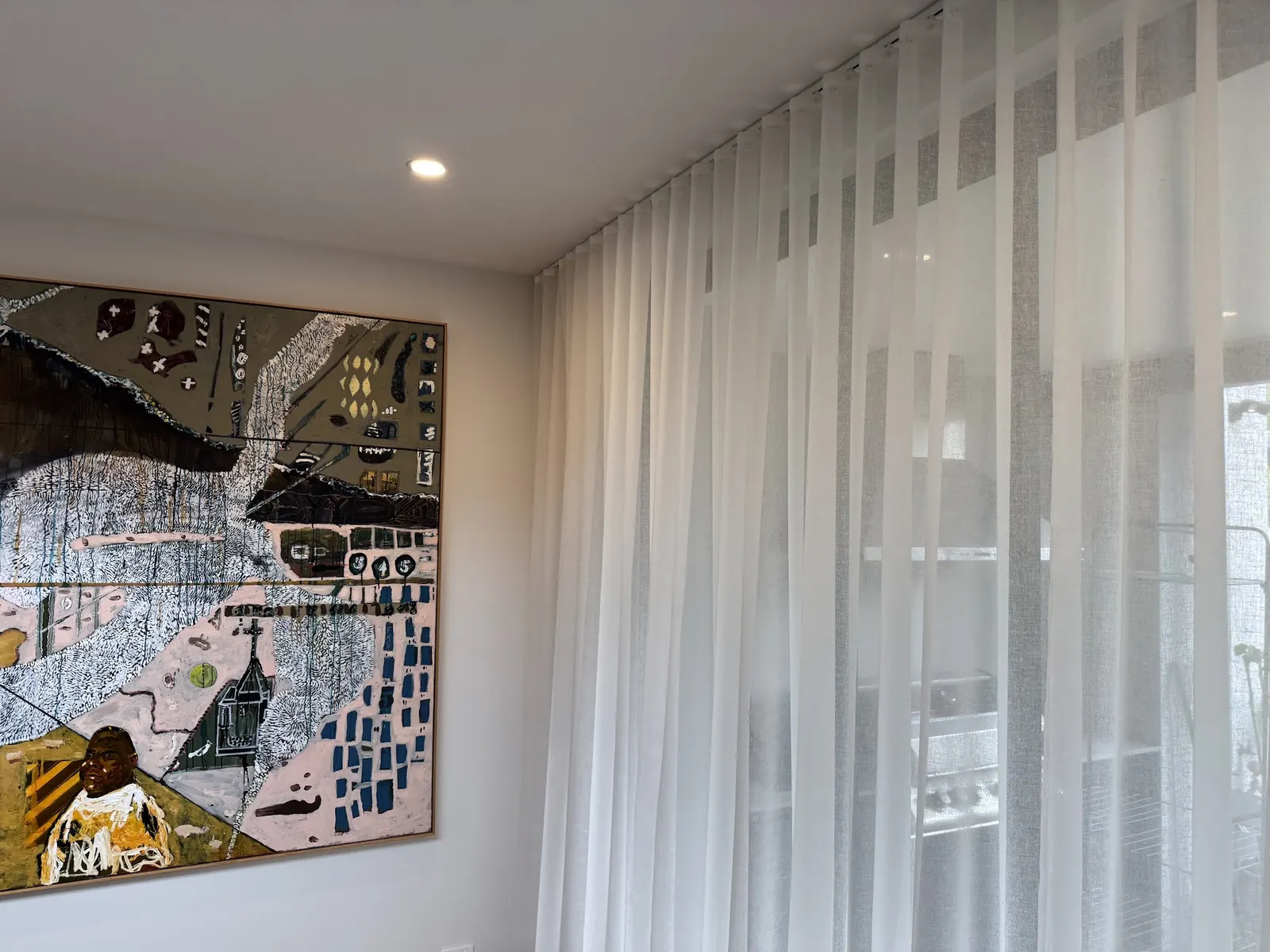
- Wave fold tracks. Carriers linked by a spacing cord, with the curtain snapped on using press studs. Our guide to cleaning wave fold curtains covers the fabric side.
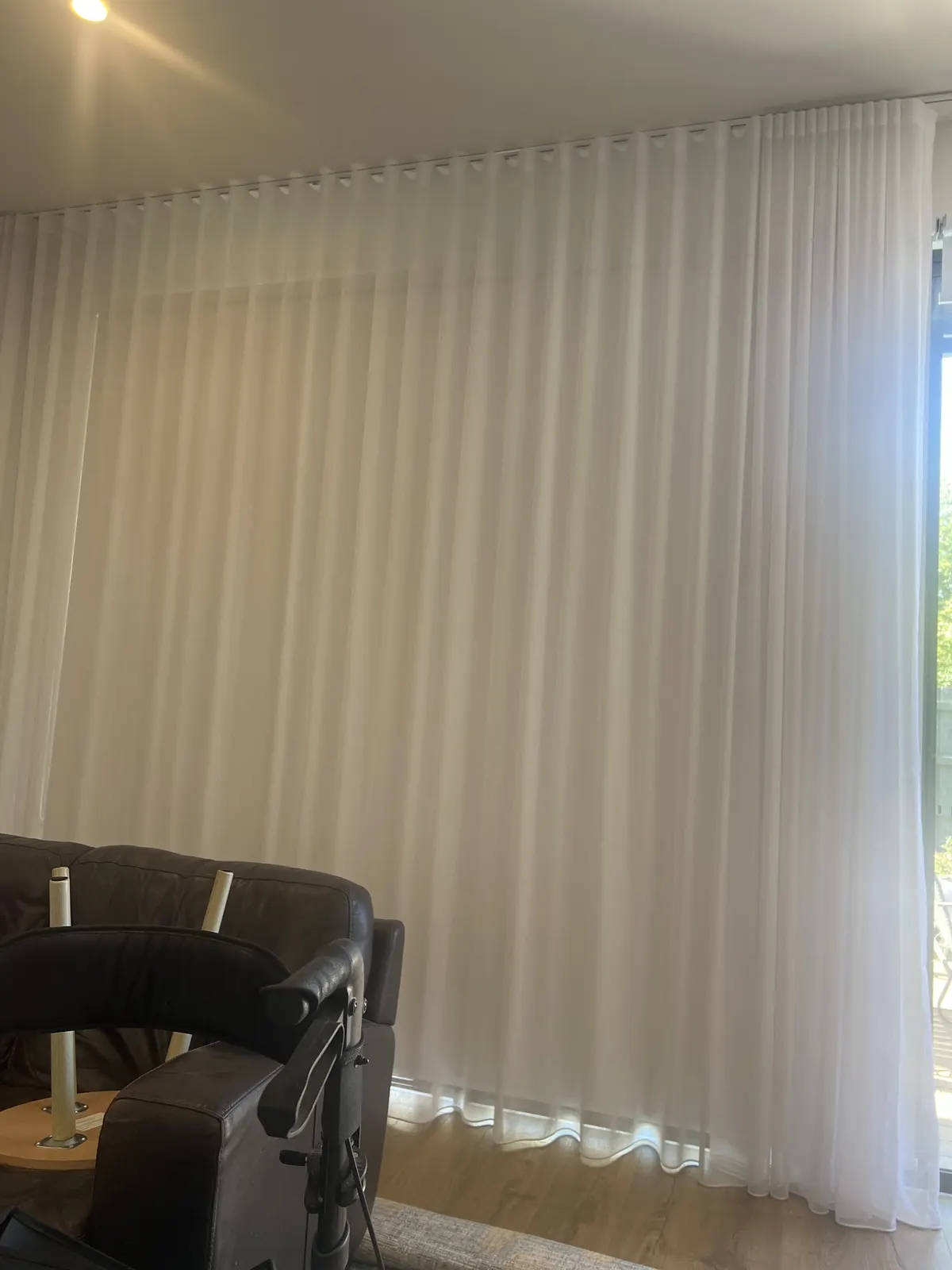
- Recessed ceiling tracks. Set into a pocket in the ceiling, common in newer apartments. Dust collects in the pocket above the track as well as on it.
- Motorised tracks. A motor head at one end drives a belt inside the track.
How to clean curtain tracks step by step
- Set up safely. Use a stable step ladder rather than a chair, and move furniture away from the window so you're not leaning over a couch. For motorised tracks, switch off and unplug or isolate the motor first.
- Move the curtains out of the way. Slide them into a tight stack at one end and clip or tie them so they don't drift back. If the curtains are coming down anyway, now is the time; our guide on taking down and rehanging curtains explains how to label panels and count gliders.
- Dust the top surface. Run a dry microfibre cloth or a soft duster along the top of the track or pole. Work towards yourself so dust doesn't fall onto the stacked fabric.
- Vacuum the channel. Use the crevice tool along the open slot of the track. For recessed ceiling tracks, vacuum the pocket too.
- Wipe with a barely damp cloth. A cup of warm water with a couple of drops of dishwashing liquid is enough. Wring the cloth until it's almost dry. Water dripping into the channel is what you're trying to avoid.
- Dry immediately. Follow with a dry cloth. Moisture left inside an aluminium track mixes with dust and makes the next build-up worse.
- Clean the gliders in place. Wipe each one as you slide the curtain back across, a section at a time. Check for cracked or missing gliders and broken hooks as you go.
- Do the glide test again. If it still drags, the track may be bent, a bracket may have dropped, or it may need a dry lubricant.
Cleaning rods, poles and rings
Poles are simpler, but the finish matters.
| Finish | Clean with | Avoid |
|---|---|---|
| Painted or stained timber | Dry duster, then a well-wrung damp cloth | Soaking, furniture oils that leave a film for dust |
| Brushed or chrome metal | Damp cloth with a drop of detergent, dry straight away | Scourers and abrasive creams |
| Antique brass look | Dry or barely damp cloth only | Metal polish, which can strip the coating |
| Acrylic or plastic | Mild soapy cloth | Solvents, which can cloud the surface |
Don't forget the inside of the rings. That's where grime transfers back onto the fabric, and it's the cause of the faint grey band you sometimes see just below eyelet tops. Run a cloth through each ring, or slide them to one end and wipe the pole beneath.
Rust on rods and tracks
Bathroom windows and bayside homes are hard on metal hardware. Rust marks from a damp rod or a corroded hook can transfer onto wet fabric and leave orange-brown spots. If you find any, deal with the hardware before the curtain goes back up, and see removing rust stains from curtains for the fabric.
Common mistakes with curtain tracks
- Spraying penetrating oil into the channel. It frees things up for a week, then holds dust like glue and can stain heading tape. If a track needs lubricating, apply a little dry silicone spray to a cloth, away from the fabric, and wipe it on.
- Pulling corded drapes by hand. It drags the master carriers out of position and wears the cord. Use the cord or the draw rod.
- Cleaning the curtains and forgetting the track. Freshly cleaned sheers drawn along a dusty track pick up a grey line along the heading within days.
- Wetting a motor head. Keep moisture well away from the motor end, and check the manufacturer's instructions.
- Ignoring the pelmet. If there is a pelmet above the track, its top is often the dustiest surface in the room. Our guide to cleaning pelmets covers fabric and timber types.
When to call a professional
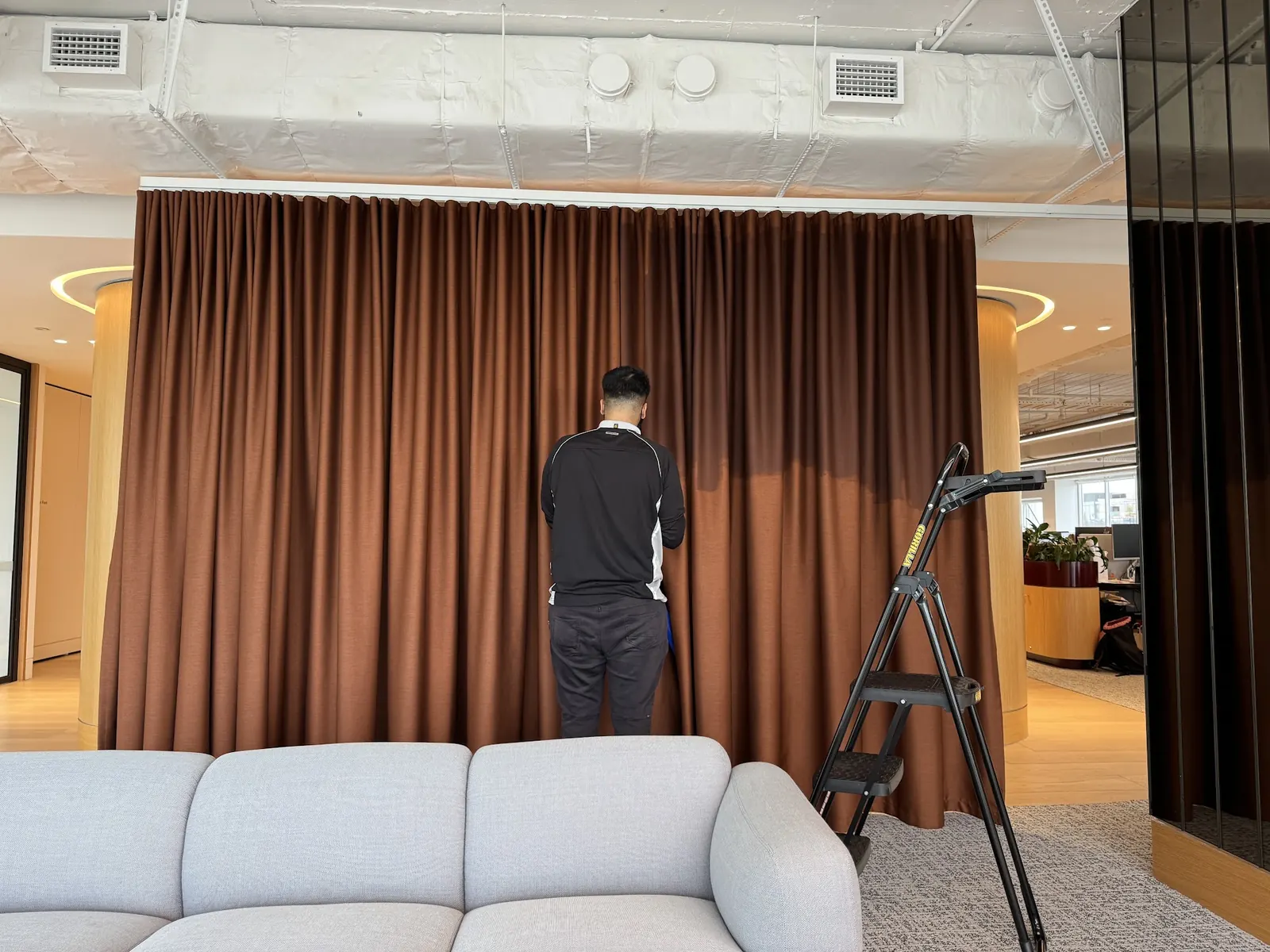
Dusting and wiping a track is a DIY job for almost anyone who is comfortable on a ladder. Call in help when the track is high above a stairwell or a double-height void, when brackets have pulled loose from the plaster, when a corded or motorised system has stopped working properly, or when the curtains themselves are heavy, delicate or overdue for a clean. A repair is a job for a curtain installer; the cleaning side is where we come in. Pelmets can be cleaned at the same on-site visit as the curtains, and on one job Danny put plastic guards on the wall edges so the hoses wouldn't rub the plaster.
Want the curtains, tracks and pelmets done in one visit without anything coming down? Call (03) 7066 4644 or ask for a free quote online and tell us what kind of track you have.