DIY Curtain Care
How to Make Curtains Hang Straight and Fall Evenly
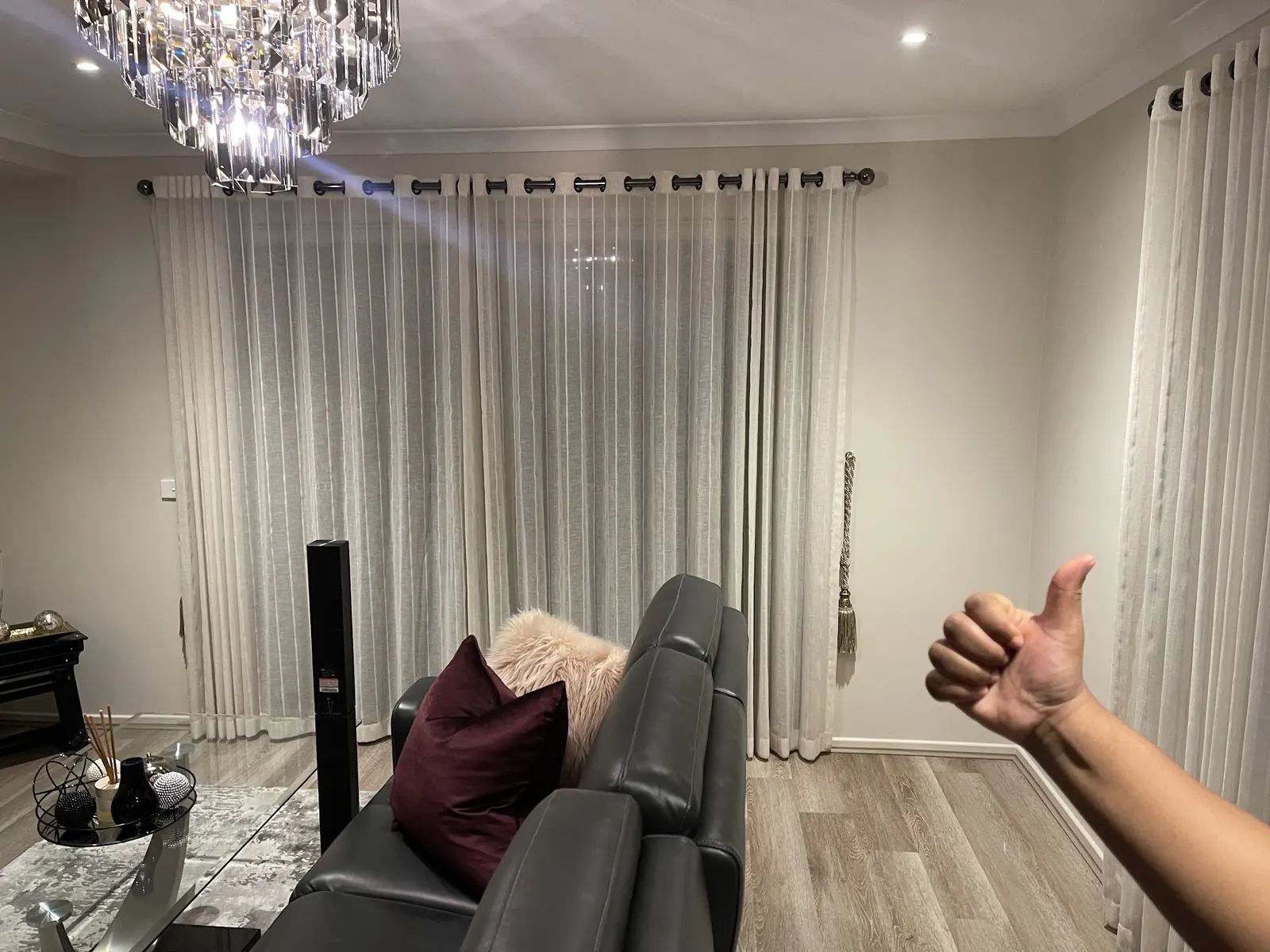
Wondering how to make curtains hang straight? Fix what's above and below the fabric first: a level track with no missing gliders, every hook at the same height in the heading tape, and enough weight in the hem to pull the folds down. Then "dress" the curtains by setting the folds by hand and tying them loosely for a couple of days. Most curtains that flare, twist or hang crooked have a hardware or hooking problem, not a fabric one.
Creases are a separate issue, and our guide on getting wrinkles out of curtains deals with them. This one is about the shape of the whole curtain: why it fans out at the bottom, swings to one side, or hangs lower at one end, and how to get even folds from top to floor. When that needs a professional finish, our curtain pressing service is there for it.
Diagnose it first: what the symptom tells you
Close the curtains, step back to the far side of the room and look at the shape. Different faults leave different signatures.
| What you see | Likely cause | Where to start |
|---|---|---|
| Curtain fans out into a triangle at the bottom | Not enough hem weight, or fabric still settling after cleaning or unpacking | Dressing and hem weights |
| Hem higher at one end | Track not level, or floor not level | Measure track height at each bracket |
| Scalloped or wavy top edge | Hooks at different heights in the heading tape, or a missing glider | Count hooks and gliders, check the pocket row |
| One panel longer than its partner | Panels swapped, uneven shrinkage, or hooked in a different row | Measure both drops |
| Puckered or pulled face fabric | Lining shrank more than the face | A size problem; see below |
| Folds lean diagonally | Fabric twisted when rehung, or gliders bunched unevenly | Re-space gliders and re-dress |
| Bulge where two panels meet | Master carriers not overlapping, or hooks skipped at the leading edge | Check the overlap arm |
Start at the top: the track or rod
Check it's level
Measure from the ceiling or cornice down to the track at every bracket. If the numbers differ by more than a few millimetres, the curtain will hang unevenly no matter what you do to the fabric. A spirit level helps, but in older homes the ceiling itself may not be level, so the floor is the real reference: what matters is that the hem ends up the same distance from the floor all the way along.
Check for sagging and gaps
Long tracks with too few brackets sag in the middle under heavy drapes. Pull the curtains across and watch the track: if it dips, it needs another bracket. Then count the gliders. A missing or broken glider leaves one hook with nowhere to sit, and the heading drops in a dip. Our guide on cleaning curtain tracks and gliders covers sticky runners, which also cause bunching.
The heading: where most crooked curtains go wrong
Most curtain heading tape has two or three rows of hook pockets. Which row you use sets how high the curtain sits. Use the top row and the heading hides the track; use the bottom row and the curtain hangs lower.
- Every hook must be in the same row. One hook in the wrong pocket creates a visible dip or peak. This is the single most common fault we see after people rehang curtains themselves.
- Count hooks against gliders. The hooks for each panel should match the gliders on that side, with one extra spare at most. If the numbers don't match, something is skipped.
- Space hooks evenly. On pencil-pleat tape, uneven gathering makes some sections fuller than others, and those sections hang differently.
- Anchor the ends. The outer end hook usually goes into the fixed end of the track or the return bracket, so the curtain wraps neatly toward the wall. The leading-edge hook goes on the master carrier so the two panels overlap at the centre.
If you've taken curtains down for cleaning, label panels and photograph the hook positions before they come off. Our guide on taking down and rehanging curtains has more on that.
Wave fold and pinch pleat curtains
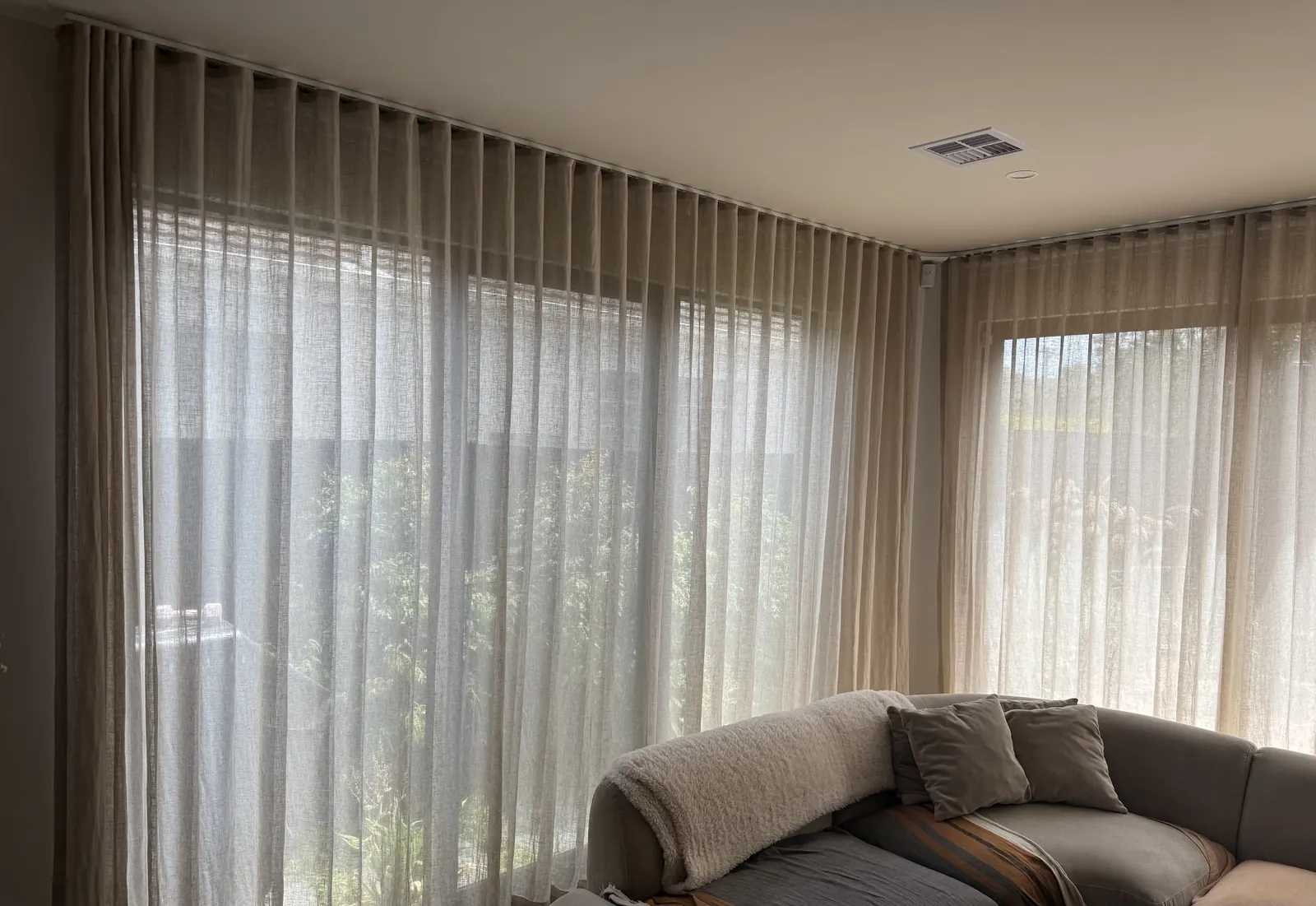
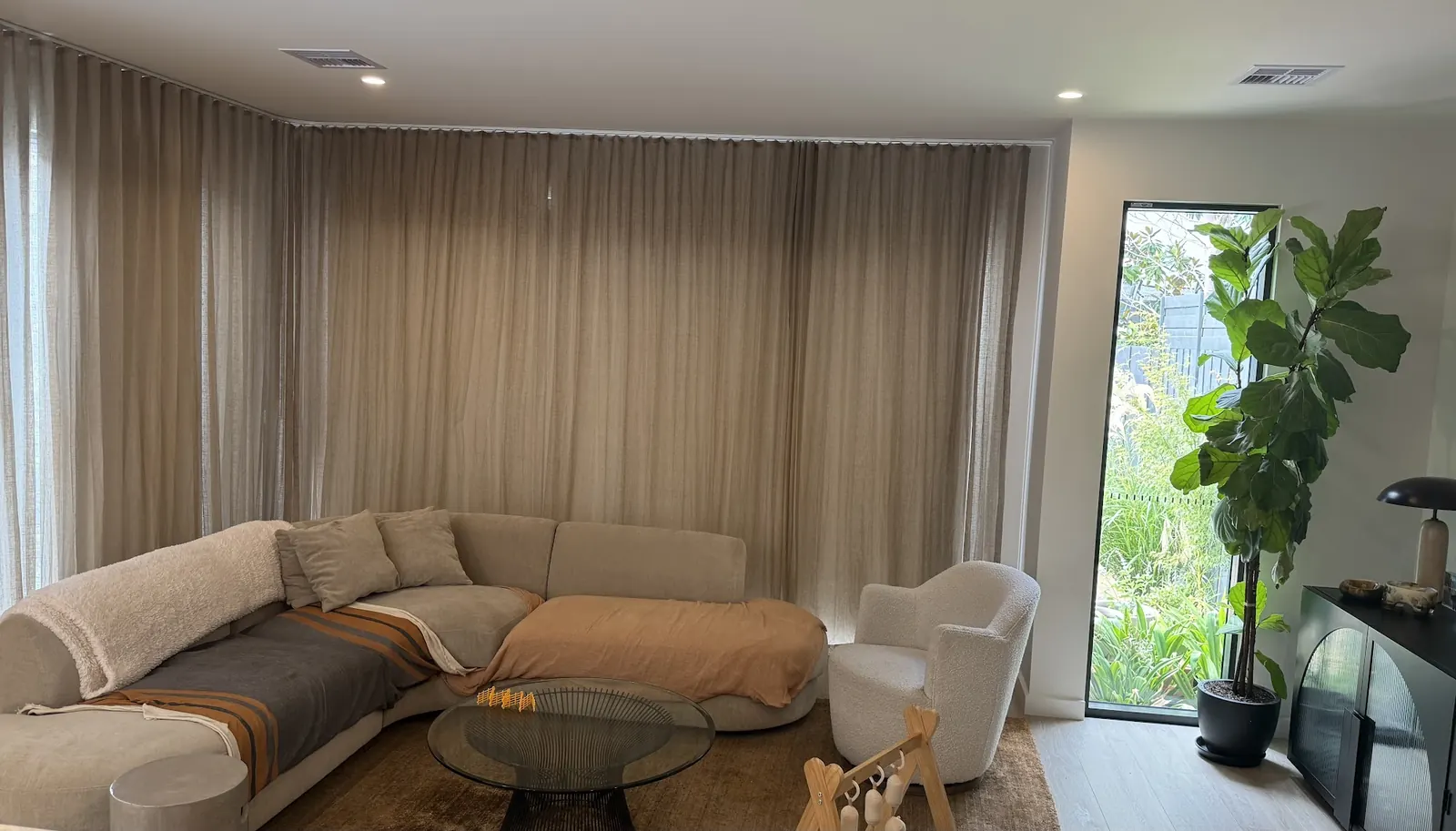
Wave fold curtains rely on carriers spaced at a fixed distance by a cord or tape. If a carrier has slipped out of sequence, the wave goes flat in one section and too deep in the next. For pleated drapes, each pleat should sit on its own hook in line with its neighbours. Our guide to wave fold curtains has more type-specific detail.
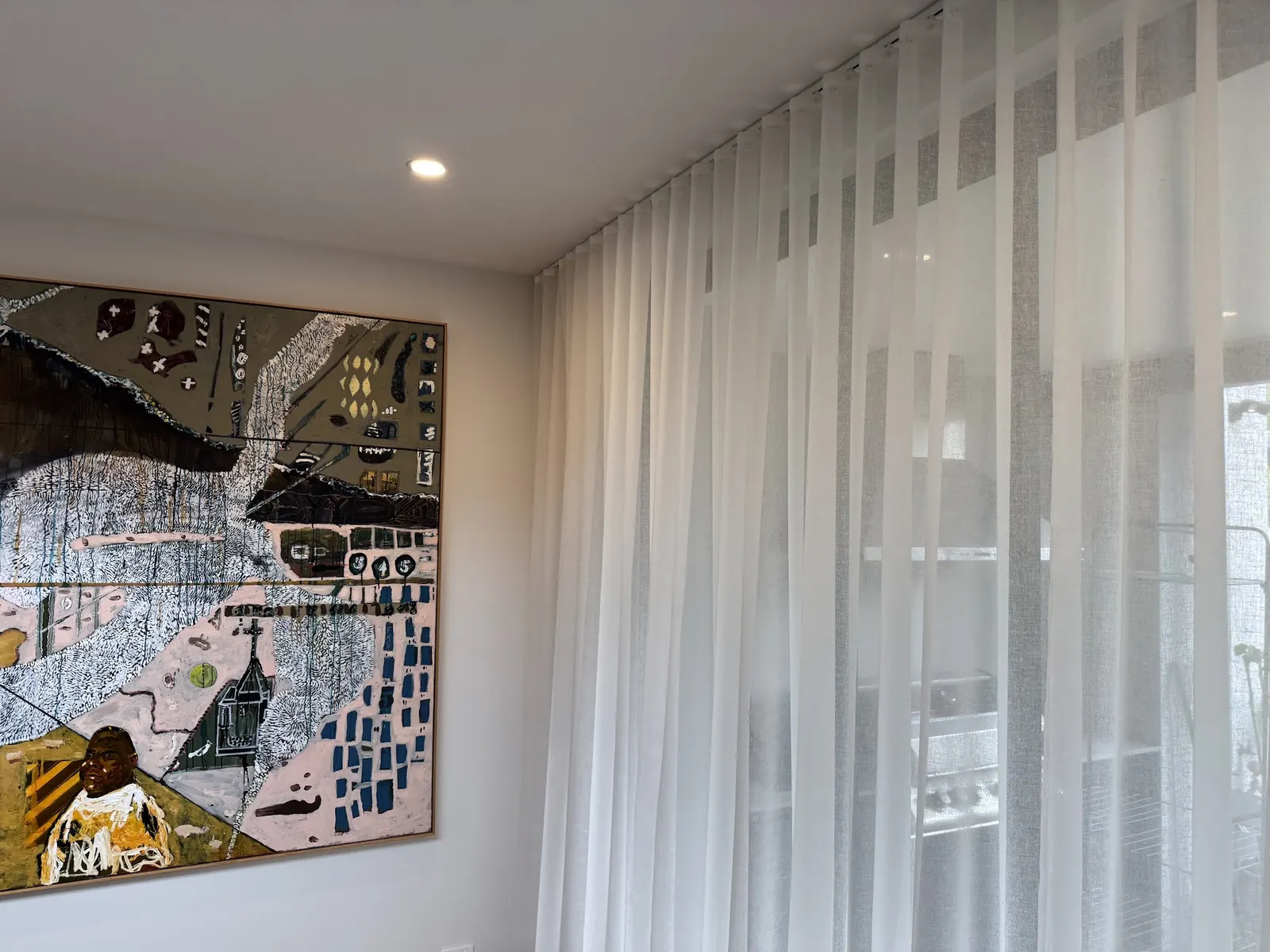
The hem: weight and length
A curtain hangs because gravity pulls it. Light sheers and unlined curtains often don't have enough weight in the bottom to drop straight, so they flare at the hem.
- Weighted tape. Many sheers have a chain or beaded weight sewn into the bottom hem. If yours doesn't, a sewer or curtain maker can add one.
- Corner weights. Small weights sewn into the bottom corners of lined curtains keep the leading edge and the return hanging plumb.
- Length. Curtains that just kiss the floor, or sit a centimetre above it, hang straightest. Ones that pool heavily look fine when still but lose their shape as soon as they're moved.
Melbourne has a particular trap here. Plenty of Victorian and Edwardian homes have floors that have settled over a century, so a hem cut perfectly level can look crooked against a sloping floor. If the gap changes from one end to the other but your track is level, the floor is the culprit, and the fix is a hem that follows the floor rather than the spirit level.
Natural fibres add another wrinkle. Linen and some cotton curtains lengthen slightly in damp weather and shorten again when it's dry, so a hem that was perfect in a Melbourne July may sit higher by February. Allow for that before shortening anything.
Dressing curtains so they hang straight
Curtain makers "dress" new curtains so the folds set in the right place. You can do it at home after a clean or a rehang.
- Open the curtain fully so it's stacked at the side.
- Starting at the heading, push each fold back so the pleats sit evenly, alternating in and out.
- Run your hands down each fold to the hem, keeping them in line, like folding a paper fan.
- Loosely tie the stacked curtain at two or three heights with soft fabric strips or ribbon, never tight cord.
- Leave it tied for two to three days, longer for heavy or freshly cleaned fabric.
- Untie, draw the curtain and check the folds fall in line.
If curtains were cleaned on the track, let them dry fully before dressing. Damp fabric dressed and tied can mark, and some fabrics need extra time. For freshly washed curtains, rehanging slightly damp lets their own weight help straighten them.
When straightening won't fix it
Some problems are about size, not hanging. If a lining shrank more than the face fabric, the curtain puckers and pulls however carefully it's dressed; our guide on whether curtains shrink explains why. Fabric cut off-grain twists permanently. Sun-weakened sheers can stretch unevenly. A curtain maker can sometimes re-hem or release a lining.
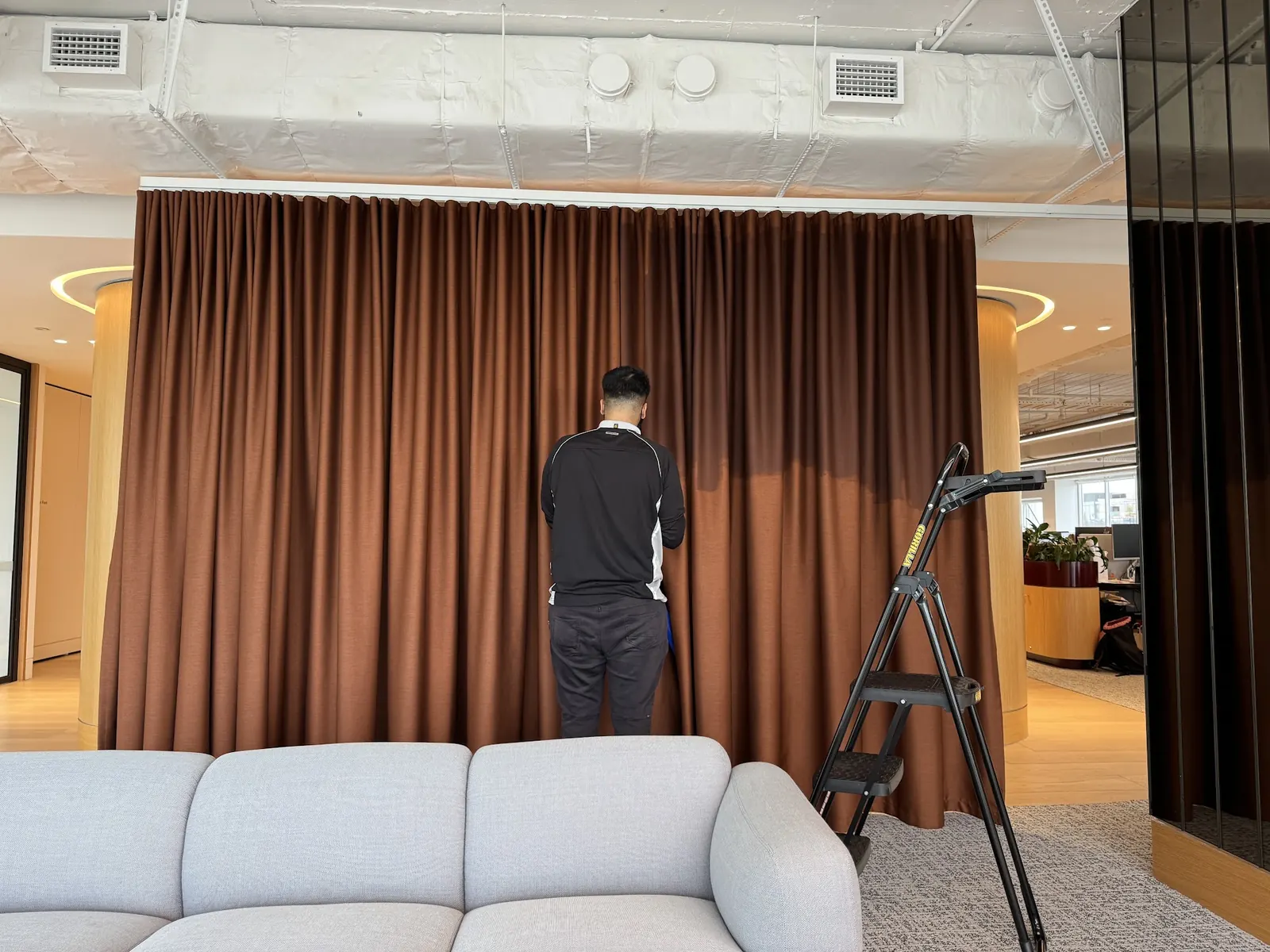
Professional pressing and dressing are worth it for heavy lined drapes, silk, velvet and long runs where you can't safely reach the heading. One customer noted that the amount paid for cleaning their heavy curtains matched the quote, which is what you want from any pressing or rehanging job too: a clear scope agreed up front.
Curtains still refusing to sit right? Call (03) 7066 4644 or ask for a free quote on cleaning, pressing and rehanging, and we'll tell you whether it's the fabric, the hooks or the track.