DIY Curtain Care
How to Get Wrinkles and Creases Out of Curtains
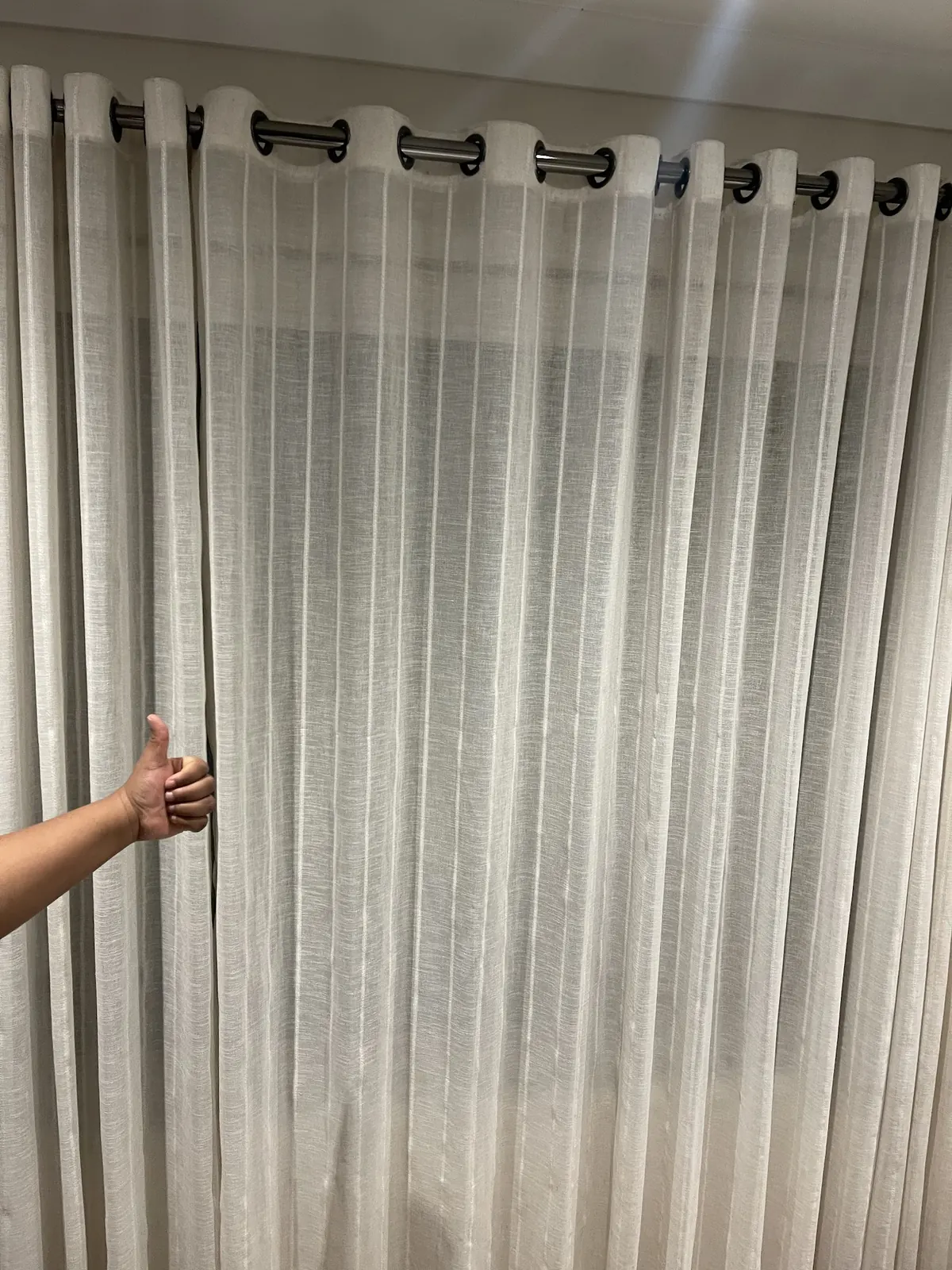
The easiest answer to how to get wrinkles out of curtains: hang them up and let gravity do most of the work, then go over any remaining creases with a handheld steamer from the top down while they hang. For stubborn fold lines, iron on the reverse side at the temperature the care label allows, using a pressing cloth. Keep heat off blockout coatings and the face of velvet.
That covers most curtains. Big, heavy or delicate ones are a lot of work to press evenly by hand, which is what our curtain pressing service is for.
Why curtains crease in the first place
Knowing where the creases came from tells you how hard they'll be to remove.
- New curtains come folded tight in packaging. Those sharp grid lines are the most common complaint, and usually the easiest to fix.
- Machine washing, especially a full spin, twists fabric into deep, random wrinkles.
- Tumble drying sets creases with heat. It can also shrink linings and damage blockout, so skip it.
- Storage: curtains folded in a cupboard for months develop set lines that take longer to drop.
- Years on the window: tie-back lines and hem creases where fabric has sat bunched on the floor.
If yours creased in the wash, our guide on putting curtains in the washing machine has tips to stop it next time, mainly a low spin and rehanging straight away.
Method 1: hang them and let them drop
This is the gentlest option, and with lightweight curtains it's often all you need.
- Hang the curtains on the track or rod as soon as possible after washing or unpacking.
- If they're washable and the label allows, lightly mist the creased areas with water, or hang them slightly damp straight from a gentle wash.
- Smooth the fabric down with your hands and straighten the hem.
- Leave them closed for a day or two so the weight pulls the creases out evenly.
Rehanging damp is the trick most people miss. A slightly damp curtain on the track dries straight; a dry, crumpled one just hangs crumpled. If you need help getting them back up, see how to take down and rehang curtains.
Method 2: a handheld steamer on the track
A garment steamer is the best tool for most curtain creases, because you don't have to take anything down or wrestle metres of fabric onto an ironing board.
How to steam curtains properly
- Fill the steamer with distilled or cooled boiled water if your water is hard, to avoid spitting and spots.
- Test on the back of a hem first.
- Start at the top and work down in vertical strokes, holding the nozzle a few centimetres from the fabric.
- Pull the hem gently with your free hand to put tension on the fabric as you go.
- Let each section dry before you touch it or close the curtains.
Take care on a ladder, and keep the hot head away from your hands and face. Don't hold steam in one spot on sheers or thin synthetics, which can pucker or shine.
Method 3: ironing, done carefully
Ironing gives the crispest finish on cotton and linen, but it's slow with full-length curtains, and it's the method most likely to cause damage. If you iron:
- Iron on the reverse side, with a pressing cloth (a clean cotton tea towel works) between the iron and the fabric.
- Support the length on a clean sheet over a table so the weight doesn't drag and stretch the fabric.
- Do the heading and hem last, and never press over hooks, gliders or eyelets.
- Keep the iron moving.
| Fabric | Best method | Heat and cautions |
|---|---|---|
| Polyester sheers | Hang damp or steam lightly | Low heat only; high heat can melt or shine |
| Cotton | Steam or iron on reverse | Medium to medium-high per label |
| Linen | Iron slightly damp, reverse side | Higher heat per label; expect some natural crinkle |
| Velvet | Steam from the back only | Never press the pile; it crushes and leaves shiny marks |
| Blockout-backed | Hang and let drop, or steam the face from a distance | No iron on the coating; heat can soften or crack it |
| Silk | Professional pressing | Water spots easily |
Linen deserves its own warning: it creases easily and also shrinks easily. Our guide to cleaning linen curtains covers both.
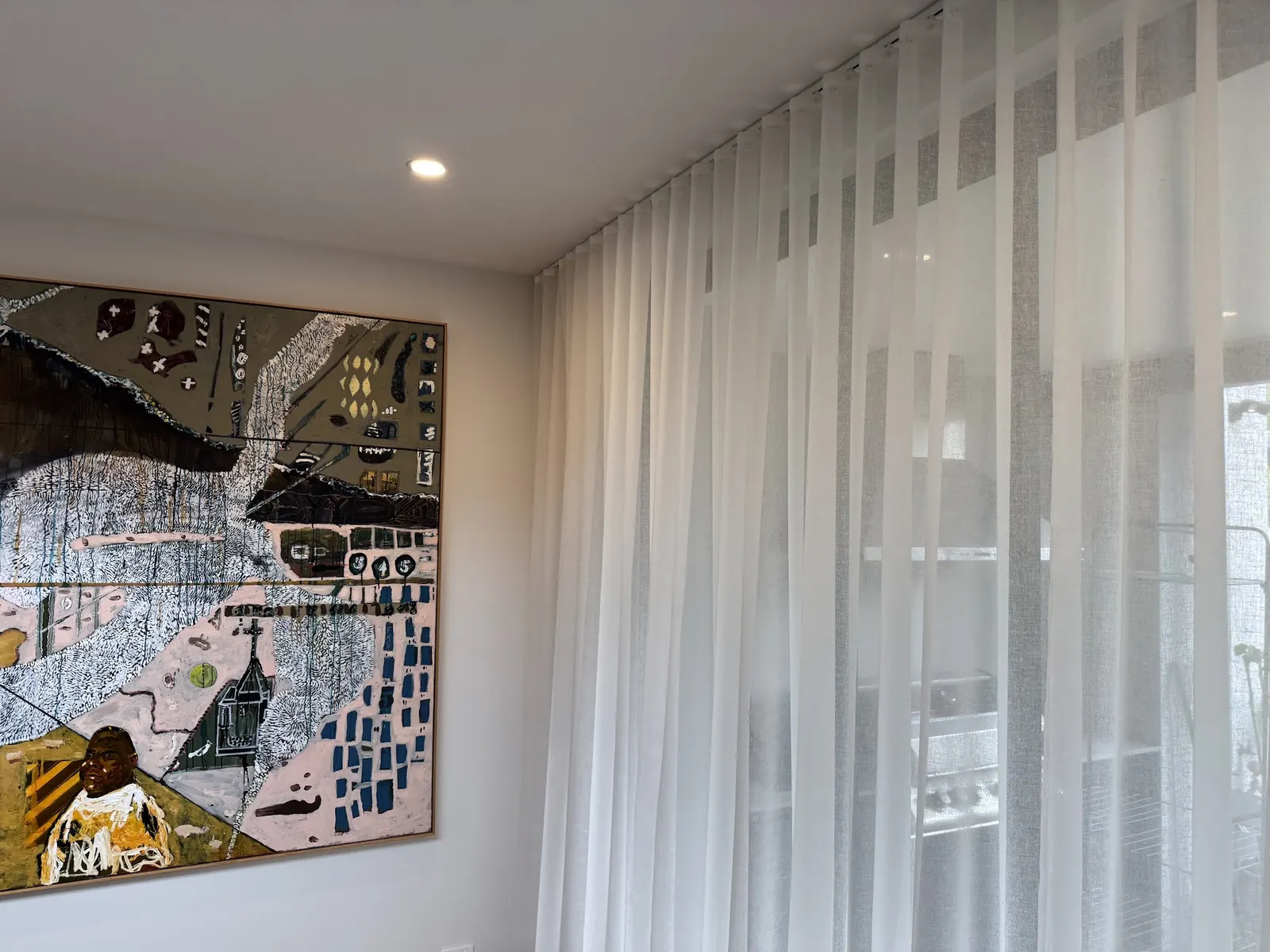
Creases that won't come out
Some lines are there to stay, and it's better to know before you spend an afternoon steaming.
- Sun-faded fold lines. If a curtain sat folded or bunched in sunlight, the fold may be a line of faded colour, not a crease. No pressing fixes fading.
- Heat-set creases from a hot tumble dryer in synthetics can be permanent.
- Cracked blockout backing shows as lines or crazing that look like creases. That's coating damage.
- Puckering from shrinkage, where the lining shrank more than the face, looks wrinkled but is a size problem. See whether curtains shrink when cleaned for why it happens.
Keeping curtains from creasing again
A few habits stop the creases coming back once you've got the curtains hanging straight:
- Close the curtains fully every so often, even if you normally keep them open. Curtains bunched at the side of the window for months develop vertical set lines.
- Don't fold curtains for storage if you can avoid it. Roll them loosely around a cardboard tube, or hang them over a padded hanger in a wardrobe.
- Avoid tight tie-backs on delicate fabric. A loose tie-back, moved a few centimetres now and then, leaves less of a mark.
- Check the hem length. Curtains that pool heavily on the floor crease at the bottom and pick up dust. If yours puddle more than you'd like, a shorter hem may suit them better.
- After any wash or clean, rehang promptly and leave the curtains closed for a day so they settle.
Humidity plays a part too. In damp Melbourne winters, curtains can hang a little limp and wavy, then straighten out again as the air dries in spring. That's normal, not damage.
When professional pressing is worth it
For a couple of sheer panels, a steamer and some patience is plenty. Pressing is worth paying for when curtains are very long or heavy, lined, pinch-pleated or made of linen or silk, when they've just been cleaned and need a proper finish, or when you've got a house full of new curtains with packaging folds and no time. It's priced like the rest of our work, after measuring, based on size, fabric and condition.
Curtains still looking crumpled after a week on the track? Give us a call on (03) 7066 4644 or ask for a free pressing quote, and tell us the fabric if you know it.