Sheers & Fabrics
How to Clean Blockout Curtains Without Cracking the Coating
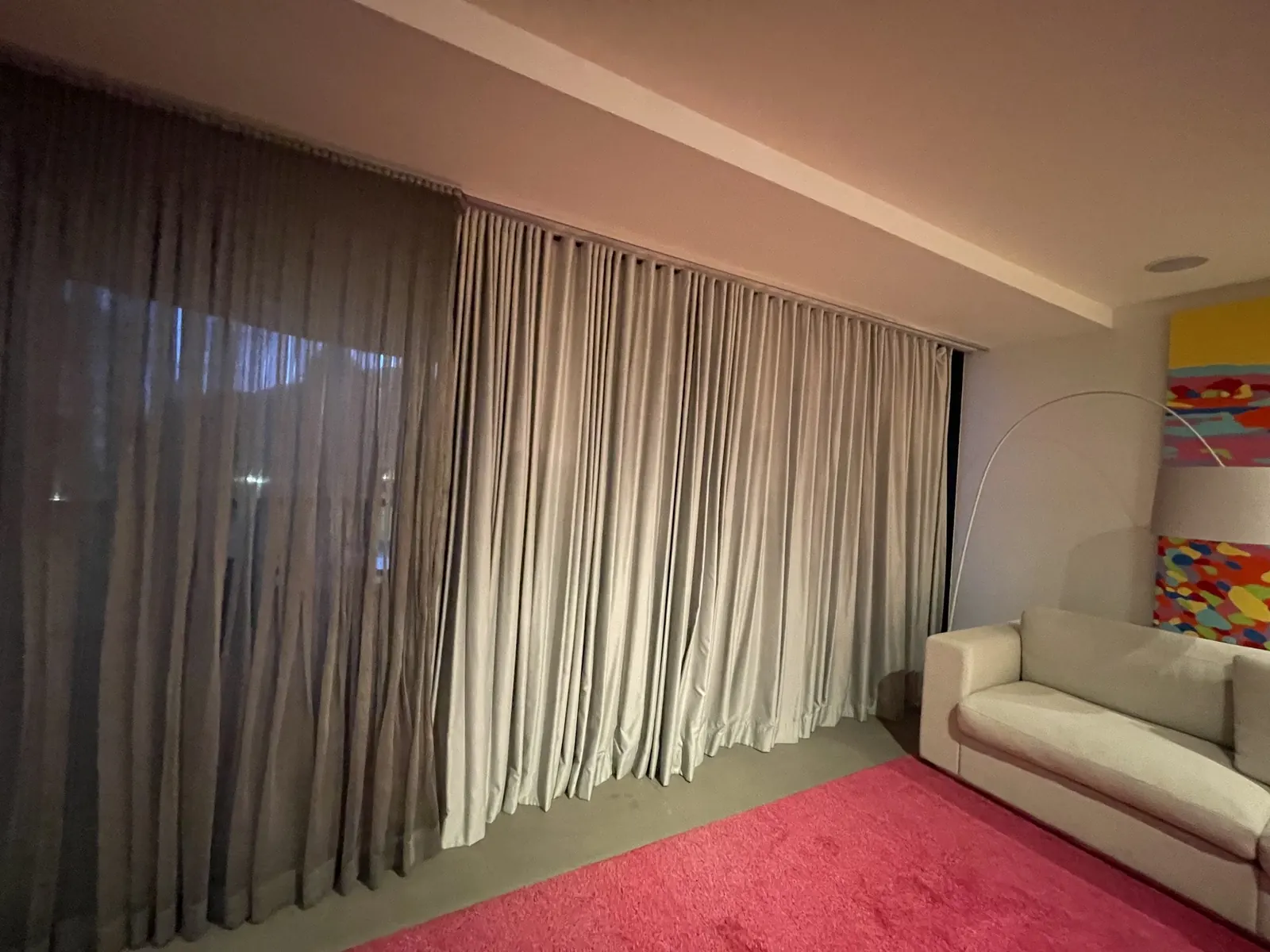
Here's how to clean blockout curtains safely: vacuum both sides on the track, spot clean the face fabric with a mild detergent, and wipe the backing with a damp, well-wrung cloth. Avoid hot water, harsh agitation, the dryer and the iron: those are what crack and peel a coated blockout backing.
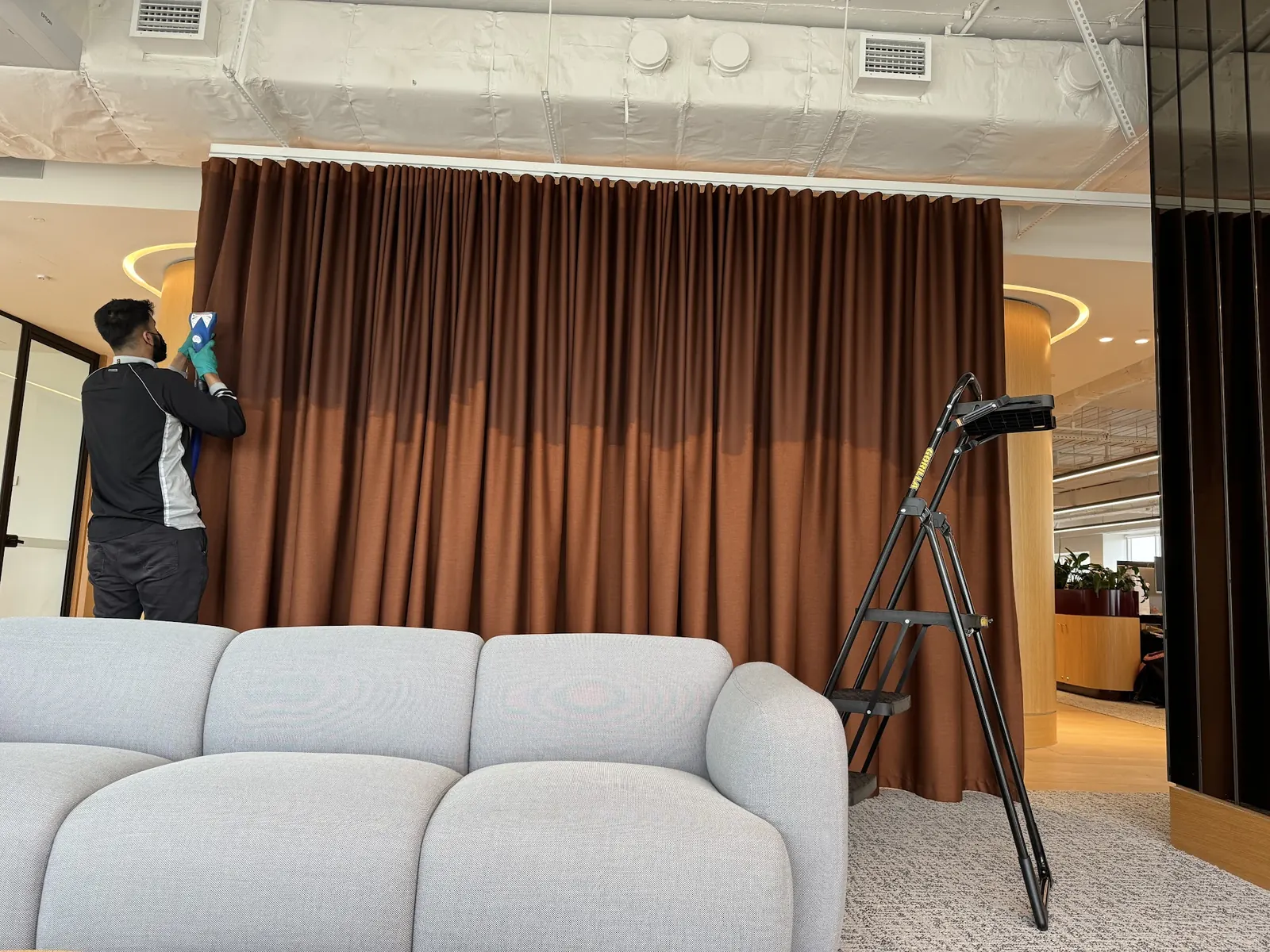
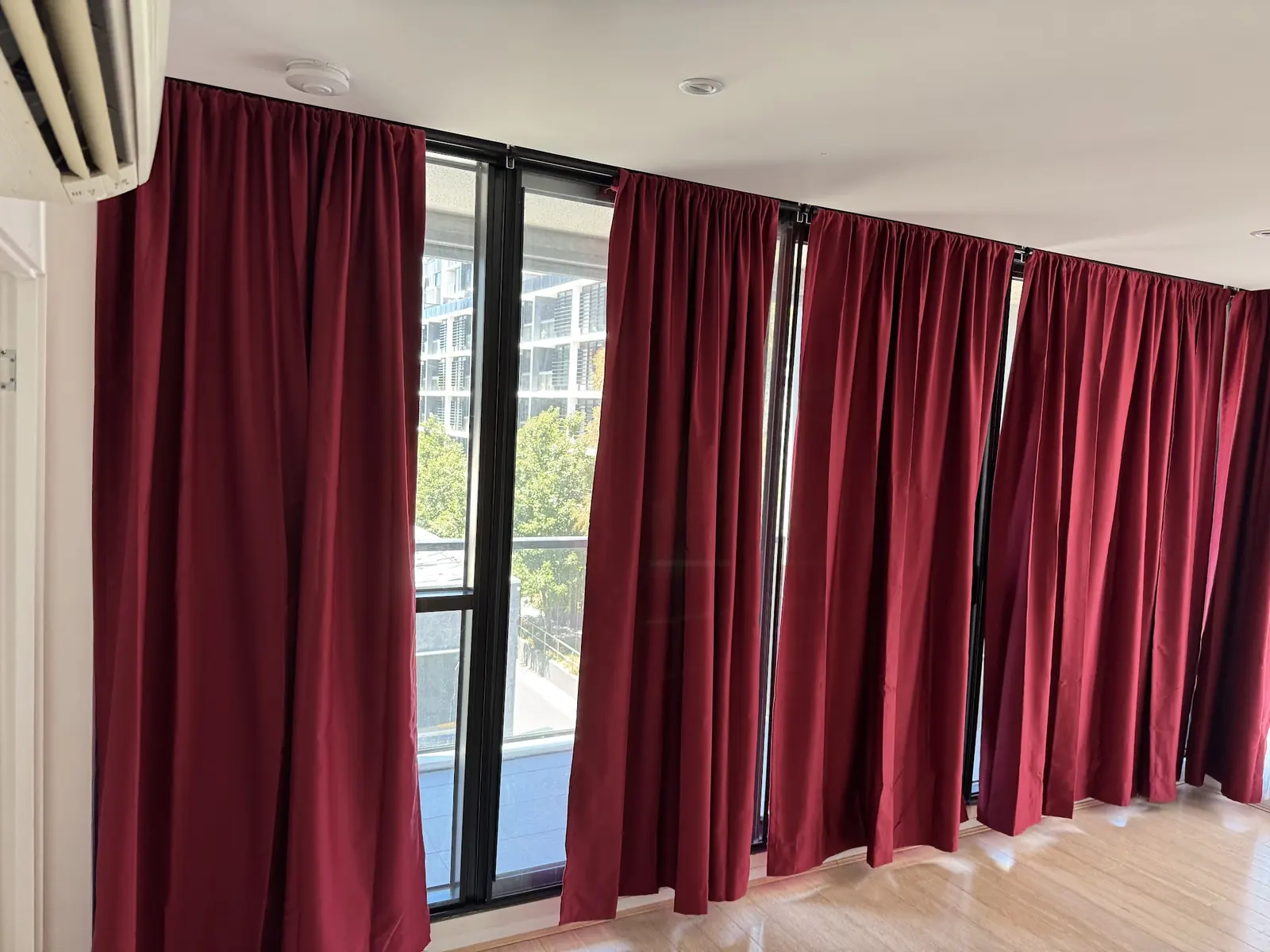
If your blockouts are large, mouldy or simply overdue, on-site curtain steam cleaning is usually the safest deep clean, because the curtains stay on the track and the backing is never folded, twisted or tumbled.
Most people put off cleaning blockouts because they're heavy and awkward to take down. The good news is that for most of them, you shouldn't take them down at all. The method below works with the curtains hanging, and it's the same order we follow on a job: dust first, then the backing, then any marks on the face.
Which kind of blockout do you have?
"Blockout" describes what the curtain does, not one fabric. How you clean it depends on how the light is being blocked.
| Type | How to tell | Cleaning notes |
|---|---|---|
| Coated back | Rubbery white, grey or cream backing that crinkles when you fold it | Dust and wipe only at home; no machine washing, no heat |
| Triple-weave blockout | Fabric feels soft and similar on both sides, with a dark middle layer woven in | More tolerant; follow the label, cold and gentle if washable |
| Separate blockout lining | A second curtain hooked behind the face fabric | Unhook and treat each layer by its own label |
Hold the curtain up to a bright window. If you see pinpricks of light through a coated backing, the coating has already started to break down. Cleaning won't cause that, but it won't fix it either, and it's worth knowing before you start.
How to clean blockout curtains on the track
This is the method we'd suggest for most coated blockouts. It takes about half an hour per window and needs nothing special.
- Vacuum the face fabric. Close the curtains and go top to bottom with an upholstery brush. Blockout fabric is often a heavy weave that holds a surprising amount of dust.
- Vacuum or dust the backing. Open the curtains, step behind them and run the brush lightly down the coated side. Don't press hard; the coating can scuff.
- Wipe the back with a damp cloth. Use lukewarm water with a few drops of dishwashing liquid. Wring the microfibre cloth until it's barely damp and wipe in long downward strokes.
- Spot clean the face. Test on a hidden area first. Blot stains with a damp cloth and mild detergent; never scrub.
- Leave them drawn open to dry. Give them airflow, open a window if you can, and don't bunch them up until both sides are dry.
Ladders and heavy drapes don't mix well, so work the top section with a sturdy step ladder rather than standing on a chair.
Why blockout coatings crack, and how to avoid it
The coating on the back of most blockout curtains is a thin layer of acrylic or foam. It's flexible when new, but it stiffens with age and sun, especially on north- and west-facing windows. Once it's brittle, three things finish it off:
- Heat. Hot washes, tumble dryers and irons soften and distort the coating. Never tumble-dry blockout curtains.
- Folding and twisting. A washing machine drum folds the backing hundreds of times. Each fold is a potential crack line.
- Harsh chemicals. Bleach and solvent stain removers can eat into the coating and leave sticky or flaking patches.
If the label says machine washable, take that seriously but carefully: one panel, cold, the gentlest cycle, no spin if you can avoid it, and rehang damp. Our guide on whether you can put curtains in the washing machine covers the risks in more detail, and will curtains shrink when cleaned explains why the face fabric and backing can shrink differently.
Some coatings are simply past it. If yours is already peeling or flaking, any cleaning method may shed a few more flakes. A cleaner should point that out before starting, not afterwards.
Mould on the back of blockout curtains
Blockout curtains sit close to the glass and trap cold, moist air against the window. In a Melbourne winter that means condensation runs down the glass and soaks into the hem and backing. Black or grey spotting along the bottom of the coated side is very common, particularly in bedrooms and in Southbank and CBD apartments with little airflow.
If you're tackling mould yourself, wear gloves and a P2 mask, ventilate the room, and don't dry-brush mould indoors because it spreads spores. Never mix bleach with ammonia or vinegar. Bleach will also strip colour from the face fabric. Our step-by-step on how to remove mould from curtains goes through the safer options.
Cleaning only deals with what's already there. Unless the condensation and airflow problem is fixed, the spots come back. Why curtains get mouldy explains the causes and the simple changes that help, like opening the curtains every morning and wiping the glass.
When to call a professional
Regular vacuuming and the occasional wipe of the backing are genuinely enough for most blockout curtains for a year or more. Call in a professional when:
- there's mould spotting on the backing or hem
- the curtains are floor-to-ceiling, heavy or on a hard-to-reach track
- the label says dry clean only or doesn't exist
- you've got stains you can't shift without scrubbing
- you're moving out and want them presentable; our end of lease curtain checklist covers what to check
With our on-site service, blockouts stay on the track the whole time. We clean the face and backing from the top down with steam and extraction, controlling moisture so the coating isn't soaked or folded, and the curtains dry hanging straight. Mould staining that has soaked deep into the fabric may lighten rather than disappear, and we'll say so up front.
Quotes are based on the size of the curtains, the fabric and their condition. Here's how curtain cleaning is priced.
Want your blockouts cleaned without taking them down? Ring (03) 7066 4644 to talk it through, or send us a quote request and we'll get back to you with a free quote.