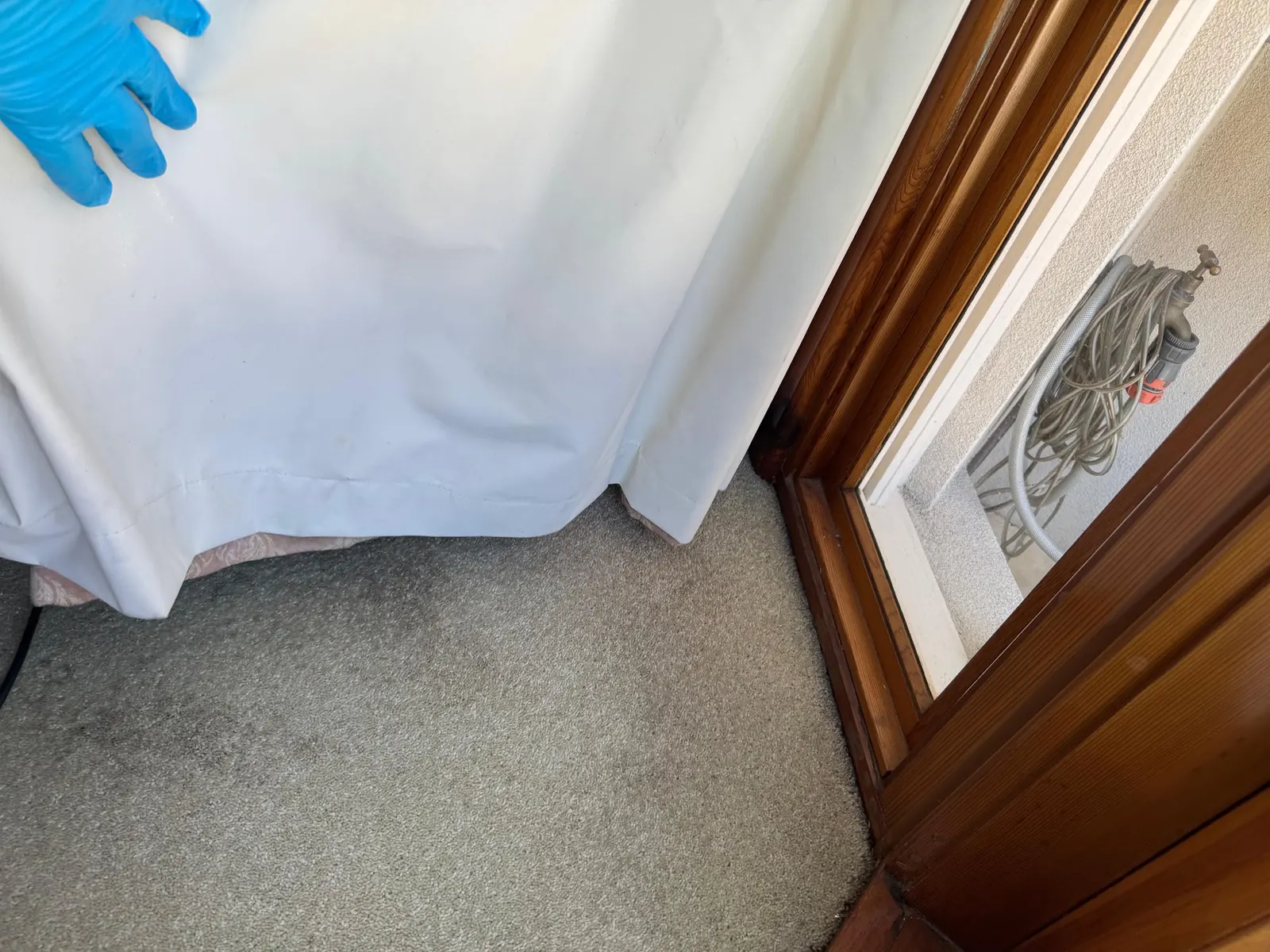
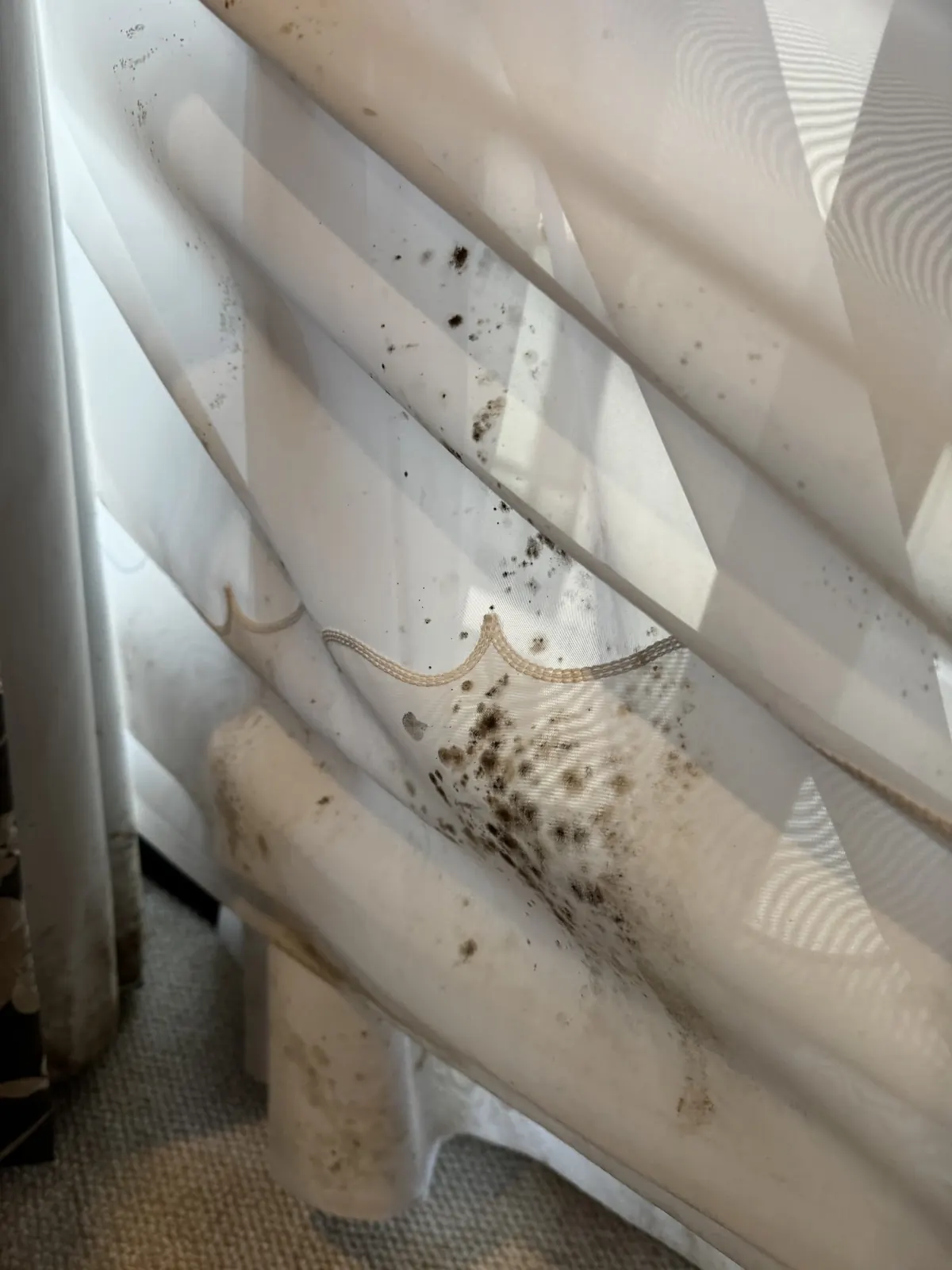
Mould & Stains
Curtains After a Water Leak or Flood: What to Do First
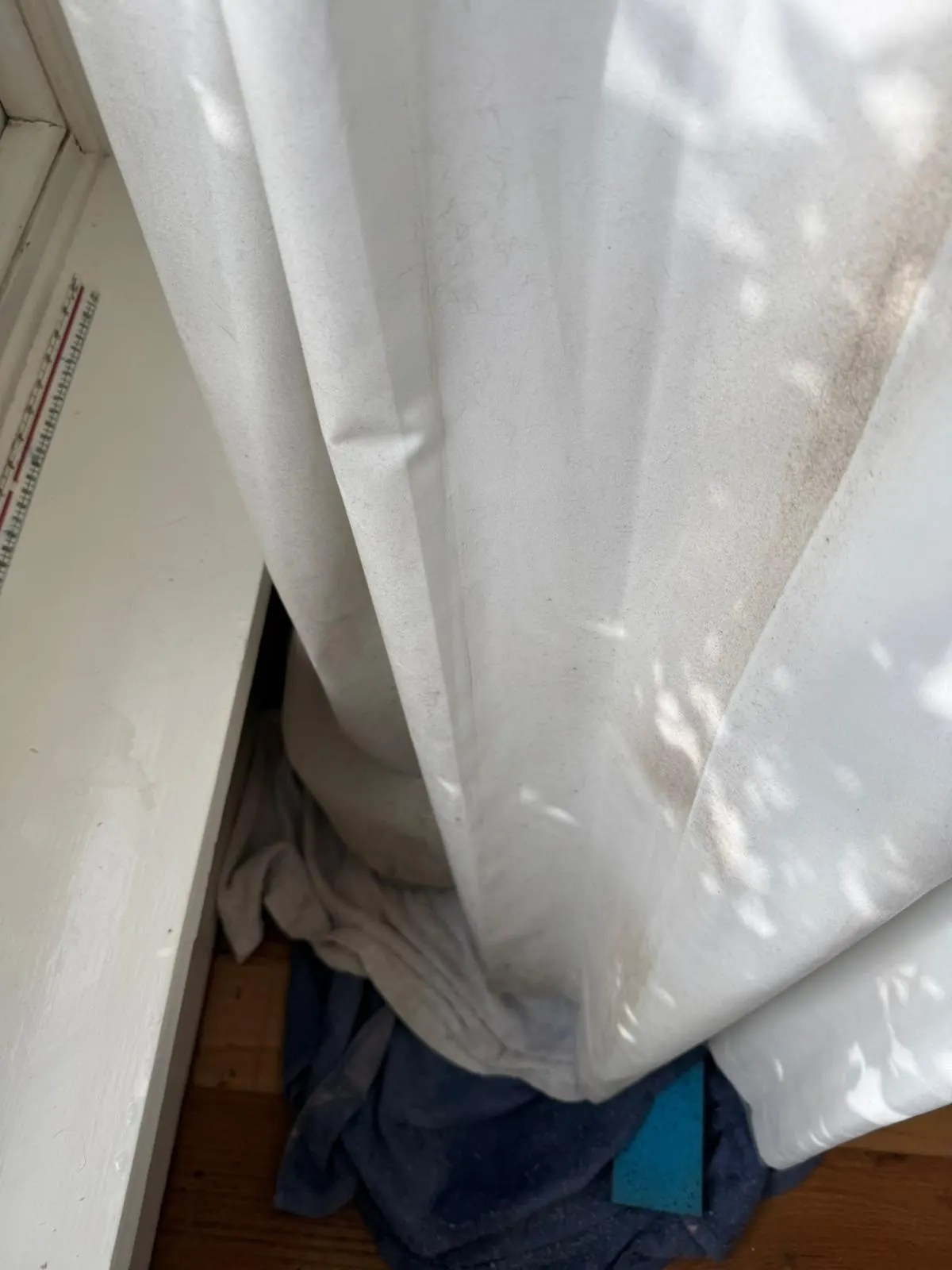
Dealing with wet curtains after a water leak? Get them out of the water and drying within a day if you can. Photograph the damage first, lift the hems clear of wet carpet, separate dark fabrics from light ones so dye can't bleed, and open the curtains right out so air reaches both sides. Clean water from a burst pipe is usually recoverable; floodwater or sewage is a different situation, covered below.
Speed matters because wet fabric does two things as it sits: it starts to smell and grow mould, and it forms brown tide lines as the water dries from the edges inwards. The first few hours decide how much of that you'll be dealing with later, and how much our curtain stain and odour removal can still reverse.
First, make the area safe
- Power and water near each other. If water has reached power points, light fittings or appliances, turn the power off at the switchboard if it's safe to reach, and call an electrician.
- Sagging ceilings. A bulging, water-filled ceiling can come down without warning. Keep people out from underneath it.
- Storm damage. For storm or flood emergencies in Victoria, the VICSES number is 132 500. Call 000 if life is at risk.
- Stop the source. Turn the water off at the mains for a burst pipe or leaking appliance.
The curtains can wait the few minutes these take. Climbing a ladder near live wiring or under a wet ceiling isn't worth it for any fabric.
What kind of water was it?
The source decides whether you're cleaning curtains or replacing them.
| Water source | Examples | What it usually means for curtains |
|---|---|---|
| Clean | Burst supply pipe, leaking hot water service, overflowing sink of clean water | Usually recoverable if dried quickly; watch for tide lines and shrinkage |
| Grey | Washing machine or dishwasher overflow, roof leak carrying dirt and plaster | Often recoverable with prompt cleaning; more staining and odour risk |
| Contaminated | Floodwater, sewage, stormwater through the house | Soft furnishings soaked in this are often safest discarded; check with your insurer first |
For floodwater and sewage, wear gloves, sturdy shoes and a P2 mask, and keep children and pets away. The Better Health Channel has general guidance on cleaning up safely after a flood.
Wet curtains after a water leak: the first 24 hours
- Photograph everything before moving it. Take wide shots of the room and close-ups of the curtains, hems and any labels. Insurers usually want to see damage before it's cleaned up.
- Get the hems out of the water. If carpet or floor is wet, lift the curtain so the hem sits clear. Loosely knotting the bottom of the panel, or draping the hem back over a chair, stops it wicking more water up the fabric.
- Separate colours. Wet dark drapes pressed against white sheers or a pale carpet can leave dye marks within hours. Pull the layers apart.
- Open the curtains fully. Spread them along the track so each fold is exposed to air, rather than leaving them bunched in a wet stack.
- Get air moving. Open windows if the weather allows, run fans across the room, and use a dehumidifier if you have one.
- Take down what's soaked through. Heavy lined curtains that are saturated can be heavy enough to strain the track. Take them down carefully, with help, and lay them flat or drape them over a clean surface.
- Keep the hooks and tracks dry. Wet metal hooks rust quickly and can mark fabric. Our guide on removing rust stains from curtains explains what to do if they already have.
Why tide lines form, and how not to make them worse
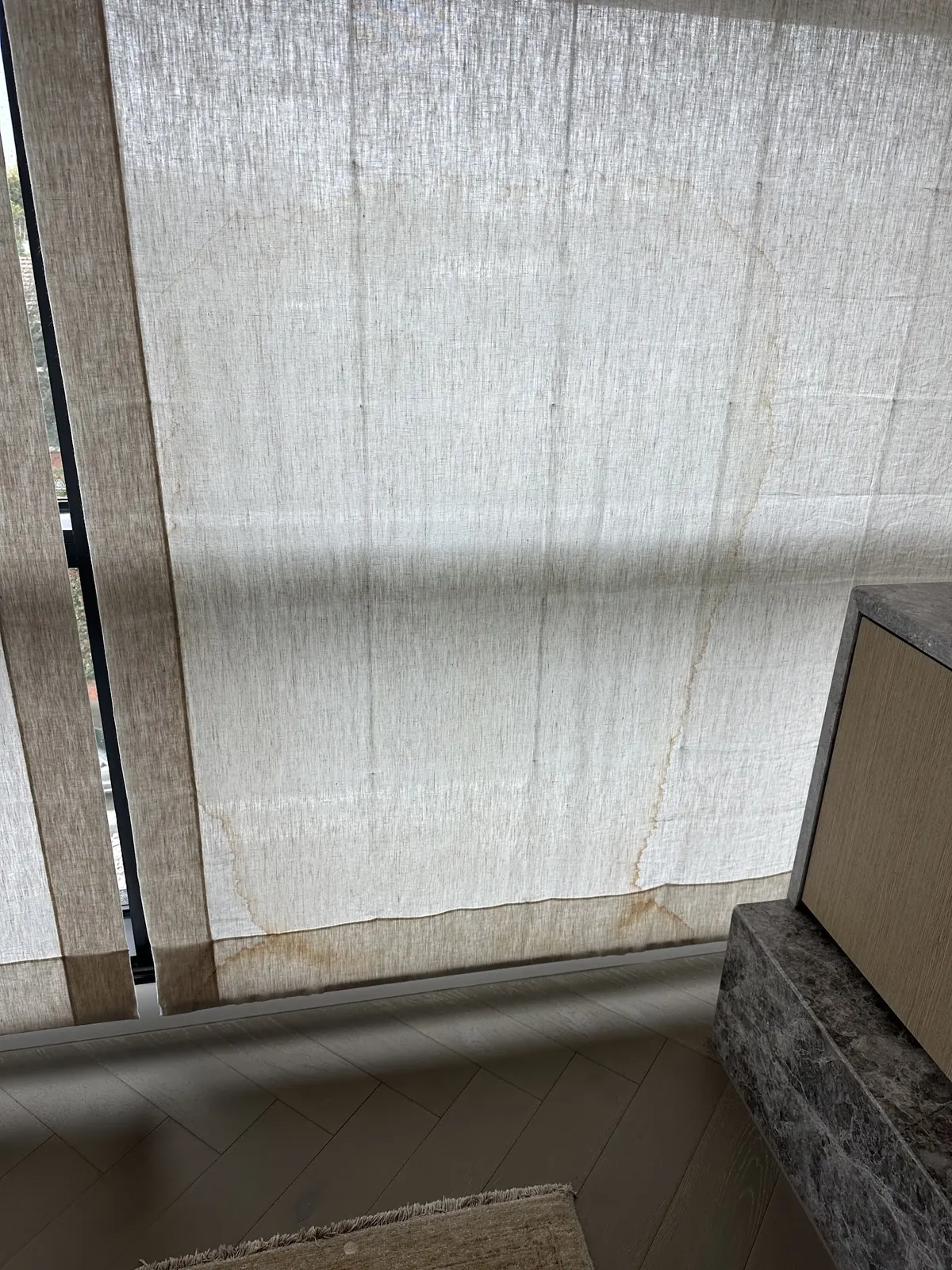
When part of a curtain gets wet, the water picks up dust, dissolved dirt and sometimes tannins from timber or plaster. As the fabric dries, water evaporates fastest at the edge of the wet patch, and everything it was carrying is left behind in a brown ring.
That's why spot-drying with a hair dryer often makes things worse. Heating one patch concentrates the line in a sharper, darker ring. It is better to let the whole curtain dry evenly, and then have the tide line treated as part of a full clean. For linen in particular, we've had good results: one customer posted before and after photos of a water stain removed from a linen curtain. Our guide on getting water stains out of curtains explains the home method and its limits.
Mistakes that make water damage worse
- Tumble drying. High heat can shrink natural fibres, crack blockout coatings and set stains. Never tumble-dry sheers or blockout.
- Leaving them bunched up. A folded wet curtain can smell musty within a day or two, and mould may follow.
- Rolling up a wet roller blind. Leave it fully down until it is completely dry. Rolled up damp, it can come out spotted with mould.
- Throwing everything in the wash. Lined, blockout and dry clean only curtains can shrink unevenly or pucker if washed in water. Check the label first.
- Bleaching the marks. Bleach strips colour and weakens fibres, and it won't reliably remove tide lines. Never mix it with vinegar or ammonia.
Mould is the main risk if fabric stays damp. If spots do appear, see how to remove mould from curtains, and handle mouldy fabric with gloves and a P2 mask, outdoors where possible.
Insurance and rentals
Whether curtains and blinds are covered depends entirely on your policy, the cause of the leak and whether they belong to you or the property owner. Contact your insurer early, keep the damaged items until they tell you otherwise, and ask whether they want a cleaning quote before you go ahead.
If you rent, tell your landlord or agent in writing straight away, with photos, as a burst pipe or roof leak may be an urgent repair. Check your lease and Consumer Affairs Victoria guidance. Our article on who is responsible for curtains in a rental covers the curtain side.
When to call a professional
A washable polyester sheer splashed with clean water can usually be rinsed and rehung at home. Get professional help when curtains are lined, blockout, velvet, silk or dry clean only, when a tide line or musty smell remains after drying, when mould has started, or when the panels are too heavy to handle safely. Some water damage can't be fully reversed, especially old tide lines on delicate fabric or shrinkage that has already happened, and an honest assessment will tell you that before any work starts.
Dealing with curtains after a leak? Once the area is safe, call (03) 7066 4644 or send us photos for a free quote, and we'll tell you what we think can be saved.