Blinds
How to Clean Roman Blinds
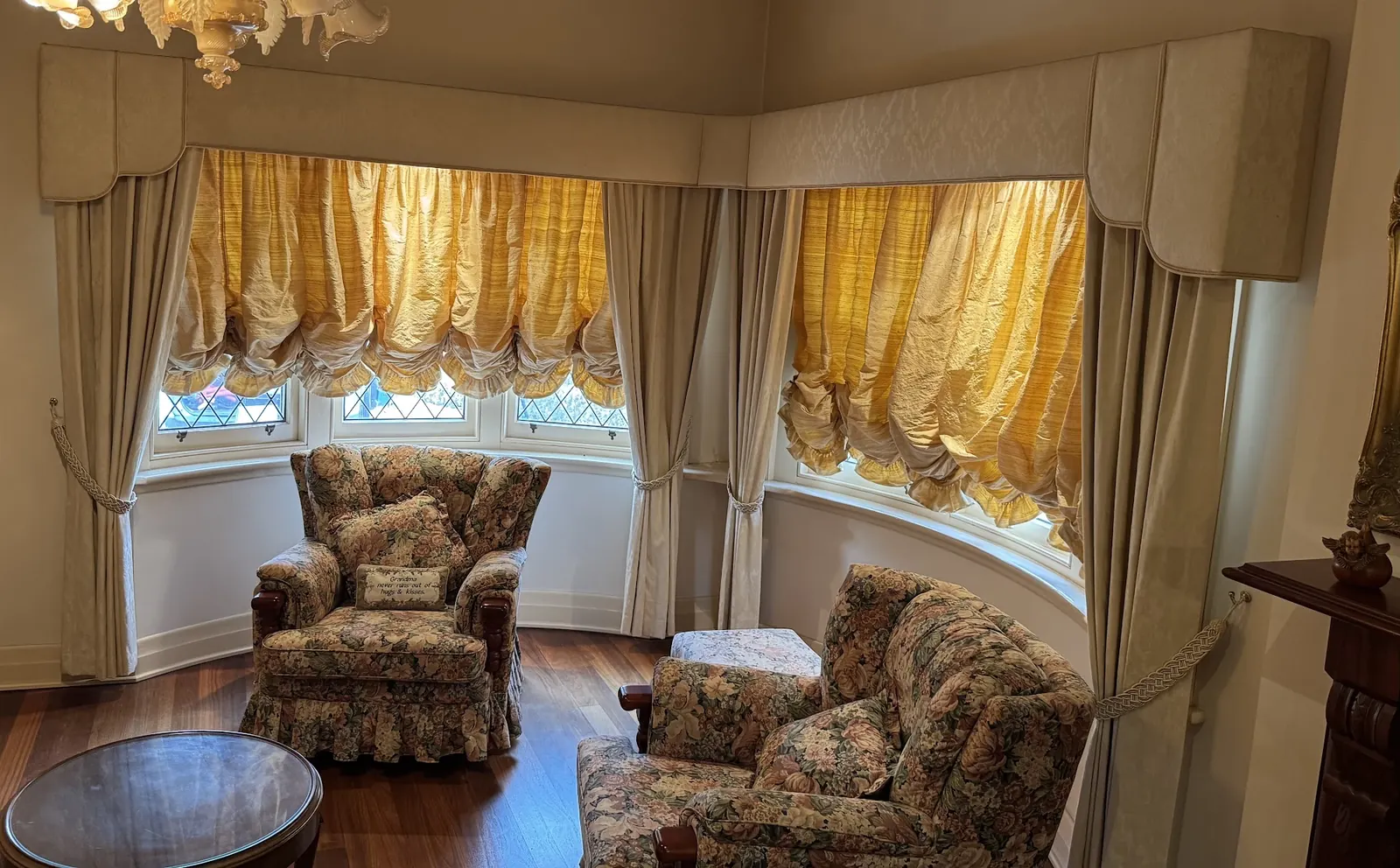
The safest way to clean roman blinds is to vacuum them on the window with a soft brush attachment, spot clean marks with a barely damp cloth and a mild detergent, and leave a full wash to a professional unless the care label clearly says the fabric can go in water. A roman blind is a stitched assembly, not a single sheet of fabric, and soaking it is how folds go crooked and linings shrink away from the face.
Below is how to clean roman blinds step by step, what each common fabric will put up with, and how to tell when a spot clean won't cut it. If you'd rather skip straight to help, our blind cleaning service in Melbourne covers roman blinds along with roller, holland, venetian, vertical and sunscreen styles.
Why roman blinds need a gentler approach
A roller blind is one piece of fabric on a tube. A roman blind is face fabric, usually a lining, horizontal rods or battens sewn into pockets, rings, lift cords and a headrail fixed to a board. Every one of those layers reacts differently to water and heat.
When we look at roman blinds in Melbourne homes, the same problems keep turning up: a band of dust along the top folds where the fabric stacks when raised, sun fading on the lowest pleat, and mould spotting along the bottom edge where the blind sits against cold glass through winter. Water marks from leaky frames in older single-glazed Victorian and Edwardian houses are common too.
So the rule is simple. Clean it gently where it hangs, and only take it down when you have a good reason.
How to clean roman blinds on the window
1. Lower the blind all the way
Let it down so the fabric is flat. Folded sections hide fine lines of dust, and if those get wet they turn into grey stripes.
2. Vacuum from the top down
Use the upholstery brush on low suction. Work in horizontal strokes along each panel between the rods, then do the lining side if you can reach it. Give the headrail a going-over, because that's where dust and cobwebs settle.
3. Spot clean marks, don't scrub them
Add a few drops of wool wash or pH-neutral detergent to a bowl of cool water. Dampen a white microfibre cloth, wring it out hard and dab the mark, working from the outside in so you don't push a ring outwards. Test first on a hidden spot, such as the back of the bottom pleat.
4. Blot and let it dry down
Press a dry towel against the area to lift moisture. Leave the blind lowered with a window open or a fan running until it's completely dry. Raising a damp roman blind presses wet folds together, which is a reliable way to get watermarks or mildew.
5. Check the cords while you're there
Look for frayed lift cords and make sure the cord cleat or tensioner is still fixed firmly to the wall, especially in rooms where kids play.
Roman blind fabrics and what they tolerate
| Fabric | Safe approach | Avoid |
|---|---|---|
| Lined cotton or cotton blend | Vacuum, light spot cleaning, professional clean for the whole blind | Machine washing: face and lining can shrink at different rates |
| Linen or linen-look | Vacuum, cool damp dabbing, professional dry cleaning | Hot water and wringing; linen shrinks and watermarks easily |
| Polyester | Vacuum and spot clean; some are washable if the label allows and the rods come out | High heat, which can set creases |
| Blockout-backed | Vacuum, gentle spot cleaning on the face side | Scrubbing or sharply folding the coating; older coatings crack |
| Silk, velvet or embellished | Vacuum only, then professional cleaning | Any water at home |
Should you take a roman blind down to wash it?
Only when three things line up: the care label says it's washable, the rods and battens slide out easily, and you're confident you can thread the cords and rings back exactly where they were. Plenty of roman blinds were made by local workrooms with no care label at all, and that usually means the maker never expected them to be wet-washed.
If you go ahead, photograph the back of the blind before you start, remove every rod, hand wash in cool water, and never tumble-dry. Refit it while it's still slightly damp so it dries flat at the window. Even a small amount of shrinkage in the lining makes the face pucker and the folds sit unevenly, and that can't be undone.
Plainer blinds are a lot more forgiving. Our guides to cleaning roller blinds and cleaning holland blinds cover those simpler styles if you have a mix around the house.
Mould and water marks on roman blinds
The bottom fold sits closest to the glass and the sill, which is exactly where condensation pools on cold Melbourne mornings. Black or grey spotting there is almost always mould. Treat it carefully: gloves, a P2 mask, a window open, and no dry brushing indoors, because that spreads spores around the room.
Light mould on synthetics often responds to careful cleaning. On cotton and linen it frequently leaves a stain that lightens rather than disappears. Skip the bleach, which strips colour and weakens fibres, and never mix it with vinegar or ammonia. Our guide on how to remove mould from curtains walks through the safe method, and the same rules apply to roman blind fabric.
The lasting fix is airflow. Raise the blind fully during the day, wipe condensation off the glass in winter, and if mould keeps coming back to the same window, the cause is the room, not the blind.
Keeping roman blinds clean for longer
- Vacuum every few weeks, more often near busy roads or in homes with pets.
- Raise and lower the blind regularly so dust doesn't bake into the same fold lines.
- Keep it away from steam: a roman blind right beside a shower or kettle will mark faster.
- Consider a lining if the face fabric is fading; sun damage is permanent and cleaning can't restore lost colour.
For a sense of how often a full clean makes sense, our guide on how often to clean curtains applies just as well to fabric blinds.
When to call a professional blind cleaner
Routine vacuuming and the occasional small mark are well within DIY territory. It's worth getting help when:
- the whole blind looks grey or dingy rather than marked in one spot;
- mould has spread beyond a small patch, or keeps returning;
- a water mark or tide line is visible from across the room;
- the fabric is silk, velvet or linen, or has no care label;
- the blind is very wide, mounted high, or motorised.
Blind cleaning is quoted after we measure, priced by area along with the fabric, its condition and the method. You can read more about how curtain and blind cleaning is priced, and quotes are free.
Roman blinds looking tired, marked or spotted with mould? Call (03) 7066 4644 or request a free quote online, and we'll take a look at the fabric before recommending anything.