DIY Curtain Care
How to Take Down and Rehang Curtains (Hooks, Gliders and Wave Tracks)
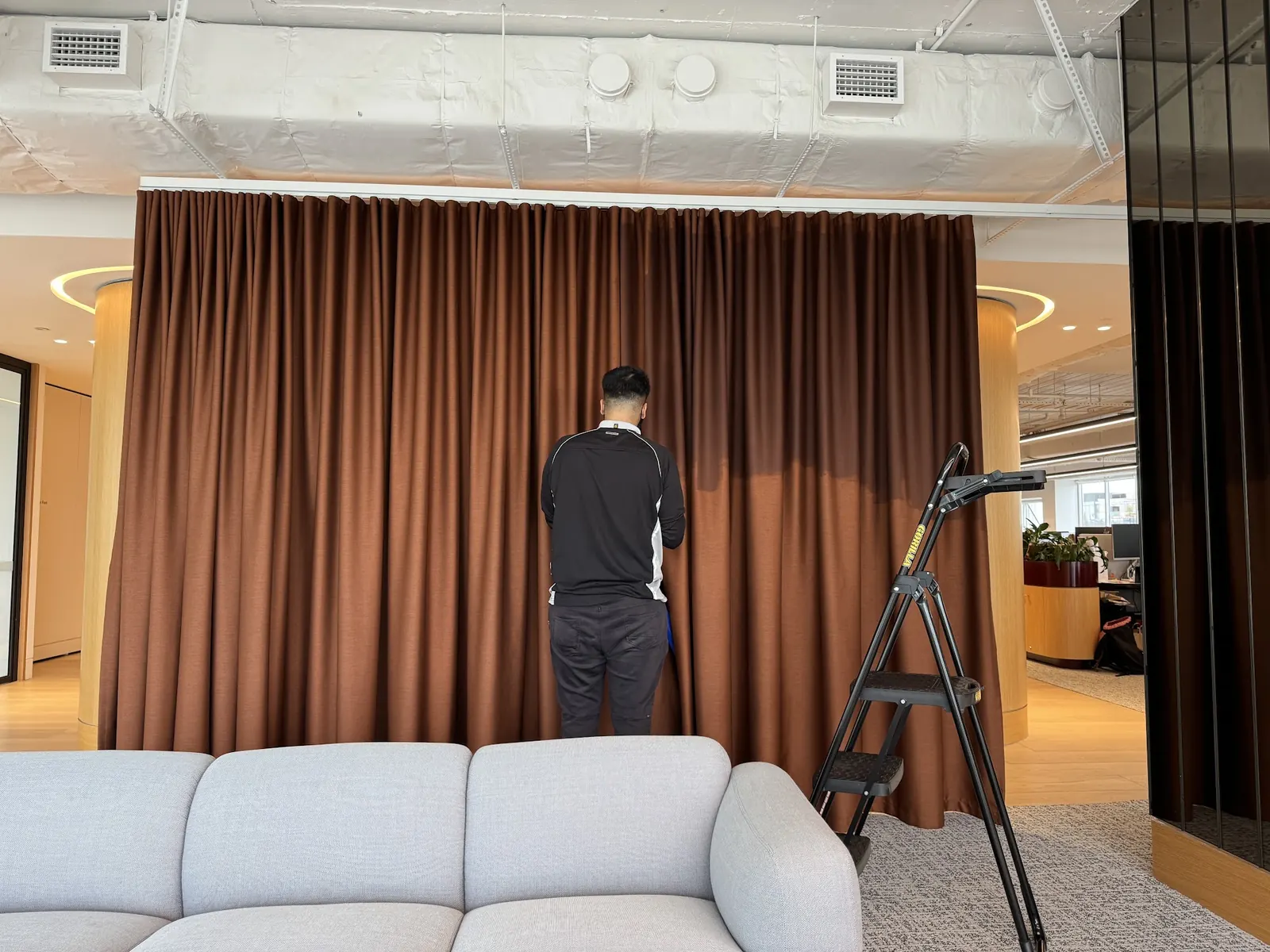
Here's how to take down and rehang curtains safely: open them fully, unhook or unclip them from the track one carrier at a time while someone takes the weight, then lay them flat and roll them rather than folding hard creases in. To rehang, work from the centre or from the fixed end, match every hook to its own glider, and hang them slightly damp if they've been washed so the creases drop out. The details change with the heading type, so it pays to identify yours before you climb the ladder.
If you'd rather not handle the ladder work at all, our off-site curtain cleaning with take-down and rehang covers removing them, cleaning them away from the house and putting them back up. Either way, the steps below are what we do on every job.
First, work out what's holding your curtains up
Most Melbourne homes have one of four set-ups. Look closely at the top of the curtain before you touch anything.
- Pinch pleat or pencil pleat with hooks: metal or plastic hooks pushed into the heading tape, sitting in gliders (small runners) inside a track, or in rings on a rod.
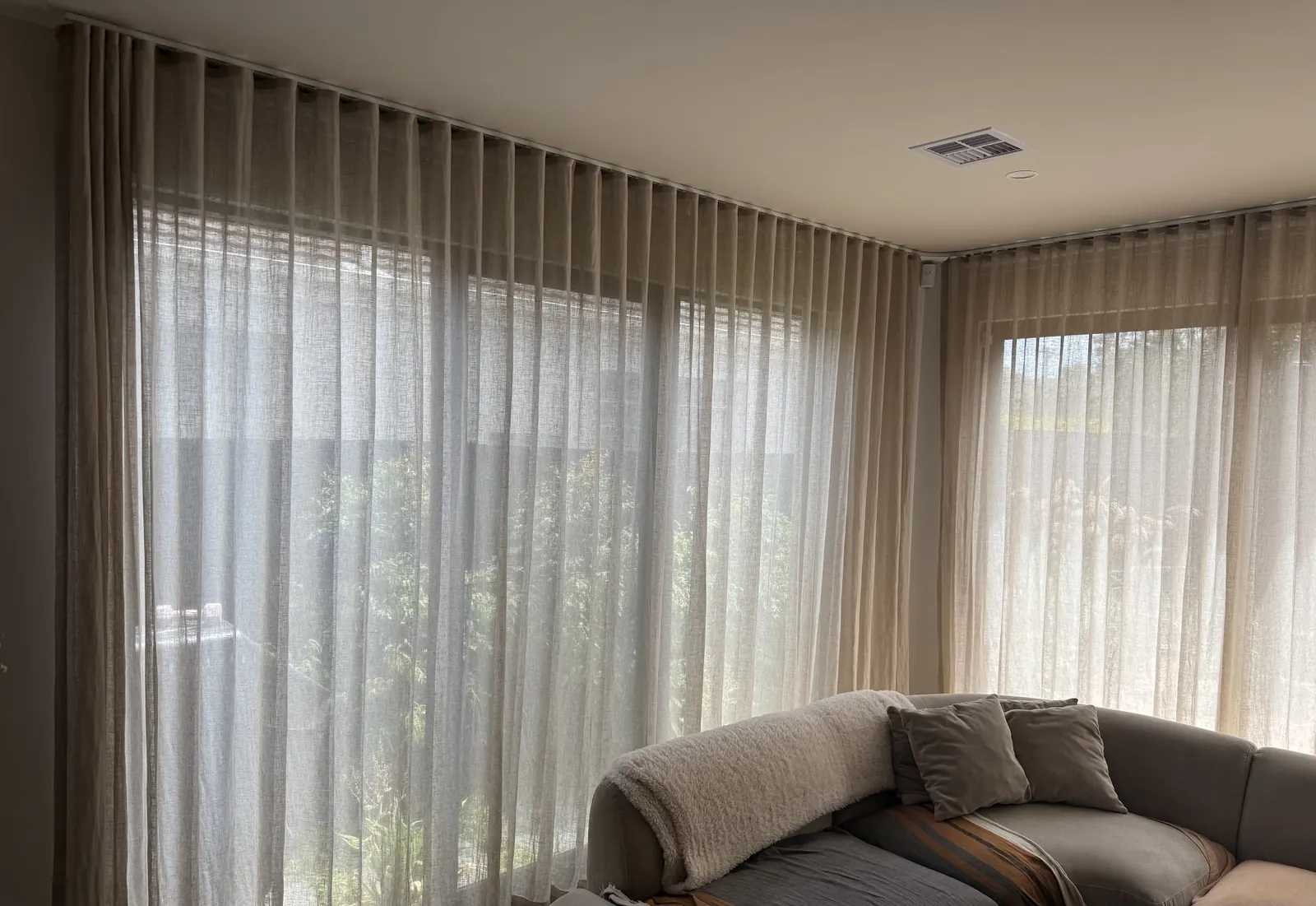
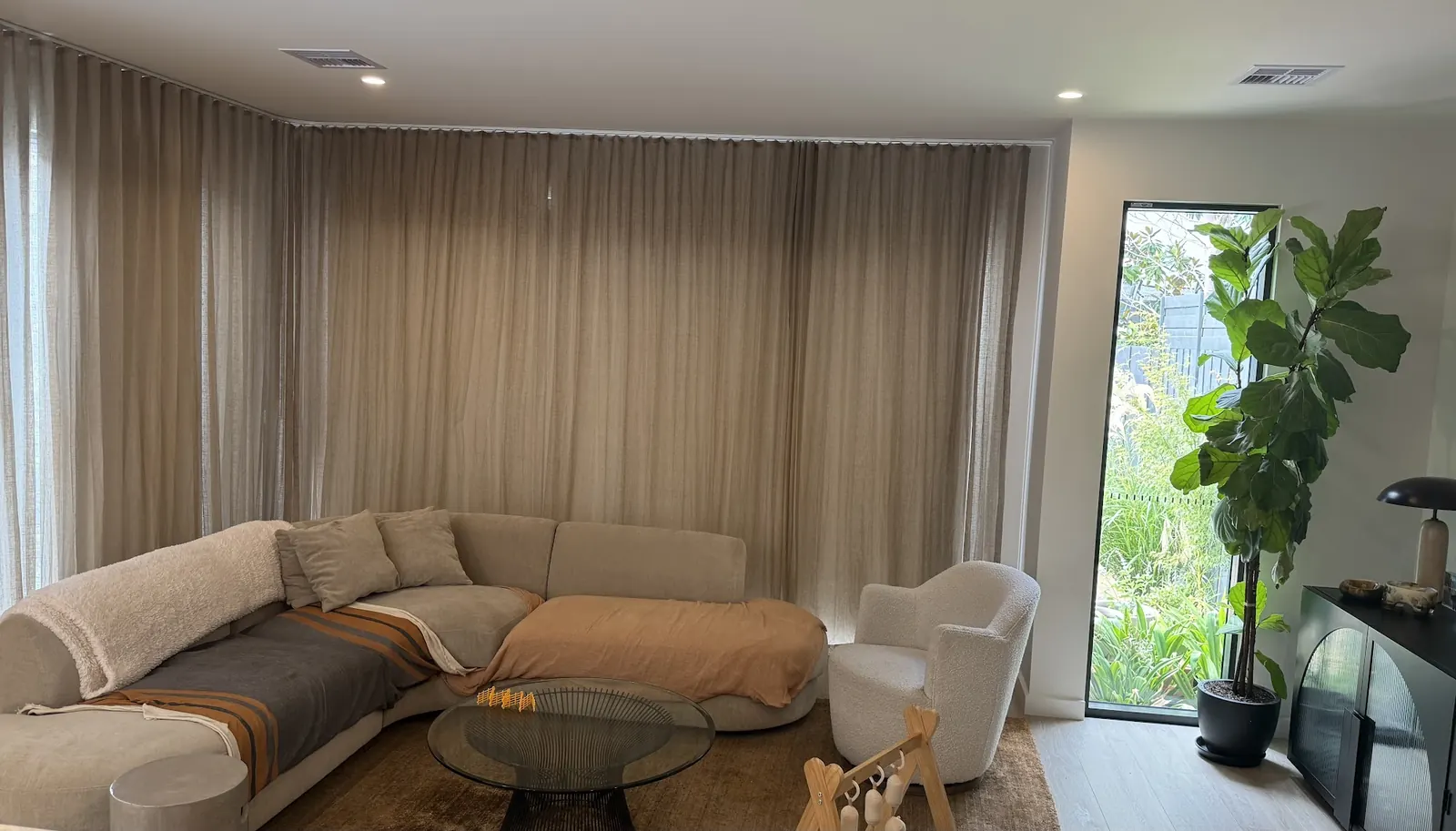
- Wave fold (S-fold): a flat heading with press studs or clips that snap onto carriers joined by a cord or tape inside the track. Common in newer apartments.
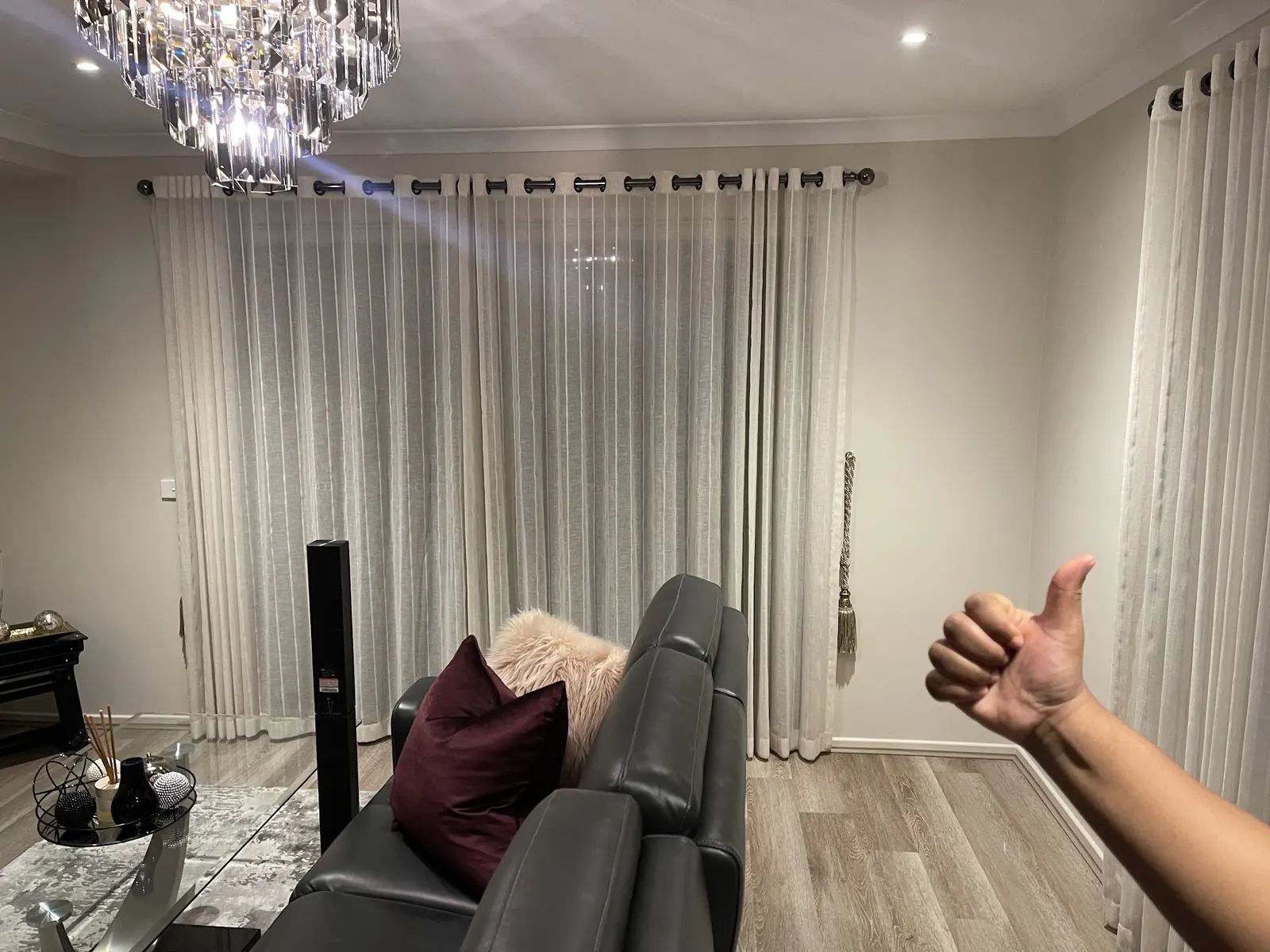
- Eyelet: metal rings punched through the fabric, threaded straight onto a rod.
- Rod pocket or tab top: a sleeve or loops that slide over a rod. Usually on sheers and lighter curtains.
Also check for a pelmet or valance. Some boxed pelmets hide the track entirely, so you'll be working by feel. If yours is upholstered, see our guide on how to clean pelmets and valances while you've got the curtains off.
How to take down and rehang curtains: start with a careful take-down
- Set up properly. Use a stable step ladder on a flat floor, not a chair. For long or heavy drapes, get a second person to hold the weight of the fabric.
- Open the curtains fully so the heading is bunched near the end of the track. This takes tension off the carriers.
- Release one hook or stud at a time. Lift each hook up and out of its glider; don't yank downwards, or you'll snap gliders and pull the heading tape. With wave fold, unsnap each stud from its carrier.
- Leave the hooks in the curtain if you're hanging them back the same day, or bag and label them if the curtains are being cleaned.
- Take the weight as you go. Lined and blockout curtains are heavier than they look, and the fabric dragging on the last few hooks is what tears heading tape.
- Roll, don't fold. Lay the curtain over a clean sheet and roll it loosely from the hem up. Hard folds in velvet or linen can set.
Label everything
This is the step people skip and regret. Pin a note or a strip of masking tape on the back of each heading: which window, left or right panel, and which way it faces. Windows that look identical are often a few centimetres different, and a swapped panel won't sit right.
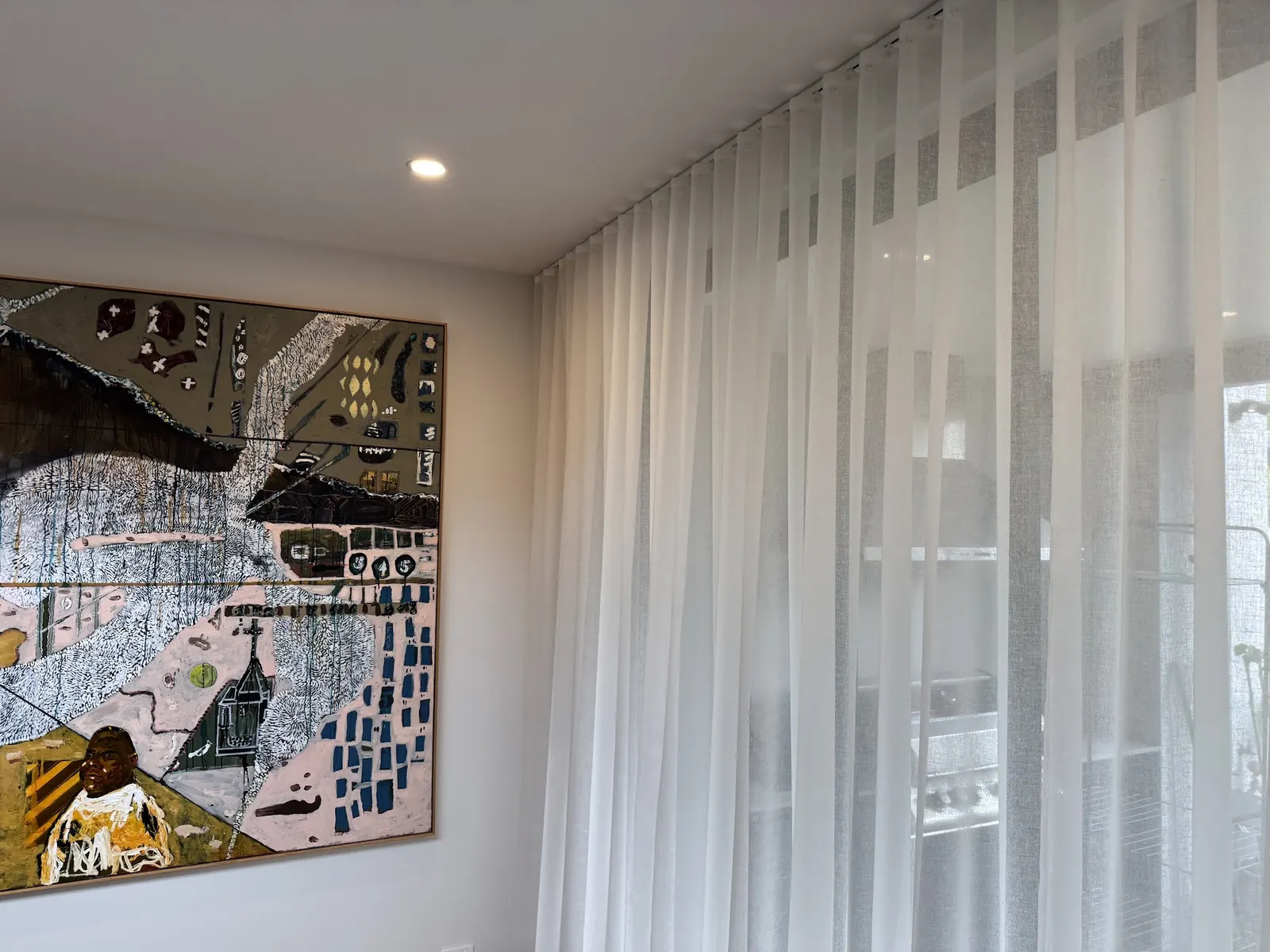
Hooks, gliders and wave tracks: rehanging each type
| Heading type | How to rehang | Watch out for |
|---|---|---|
| Pinch or pencil pleat (hooks) | Start at the fixed end and put one hook in each glider, in order | Skipped gliders cause bunching; hooks set at the wrong height in the tape |
| Wave fold (studs) | Snap studs onto carriers one by one; the fold should alternate in and out | Missed carriers break the wave; the end stud usually clips to a fixed point |
| Eyelet | Slide eyelets onto the rod, alternating front and back folds | Rod finials must come off first; don't force eyelets over brackets |
| Rod pocket or tab top | Feed the rod through slowly, easing the fabric along | Snagging delicate sheers on rough rod ends |
Getting the height right
Pleated headings use a hook position in the tape that controls how high the curtain sits. If your curtains drag on the floor or show a gap after cleaning, check this first before blaming shrinkage. Moving every hook up or down one pocket is often all it takes.
Counting gliders
Before you start, count the hooks on the curtain and the gliders in the track. If there are fewer gliders than hooks, you've likely lost some. Spares are available from hardware and curtain suppliers, and it's easier to add them before the curtain goes up.
Rehanging after washing or cleaning
Washing machine users: rehang while the curtain is still slightly damp. The weight of the fabric pulls most creases out as it dries, and it's gentler than ironing a three-metre drop. Never tumble-dry sheers or blockout; heat is what shrinks and cracks them. Our guide to whether you can put curtains in the washing machine covers cycles, temperatures and what to avoid.
If the hem now sits higher than it did, don't panic straight away. Some fabrics relax back a little once hanging. If they've genuinely shrunk, our article on whether curtains shrink when cleaned explains why it happens and what can and can't be done.
For stubborn creases that hanging won't drop out, see how to get wrinkles out of curtains. A handheld steamer on the hanging curtain is usually safer than an iron.
When taking curtains down isn't worth it
Plenty of curtains don't need to come down at all. On-site steam cleaning works on the track, so very long drapes, high windows over stairwells and curtains with fiddly old tracks can stay where they are. If you're weighing this up, read can curtains be cleaned while hanging first.
Older Victorian and Edwardian homes in Melbourne often have original tracks or rods with brittle plastic gliders. Every take-down risks snapping a few. That's not a reason to leave curtains dirty, but it is a reason to choose your method with the hardware in mind.
When to call a professional
DIY is fine for light sheers on a reachable track and a stable floor. Consider getting help when:
- The drop is above a stairwell, over furniture you can't move, or needs an extension ladder.
- The curtains are heavy lined, interlined or blockout drapes that need two people.
- The label says dry clean only, so washing at home isn't an option anyway.
- Sheers are old and sun-weakened. Brittle fabric can split during handling no matter who does it, and it's better to have that assessed than discovered halfway up a ladder.
- You simply don't have the time. In one recent off-site job, the curtains went out one day and were back, cleaned, the following day.
When we do take-down and rehang, we label panels, check the hooks and gliders, and hang everything back so it falls evenly. Cost depends on the size, fabric and condition, and the quote is free.
Want the curtains cleaned without wrestling them off the track yourself? Call Danny on (03) 7066 4644 or request a free quote and tell us what kind of heading you have.