Sheers & Fabrics
What Does 'Dry Clean Only' Mean for Curtains?
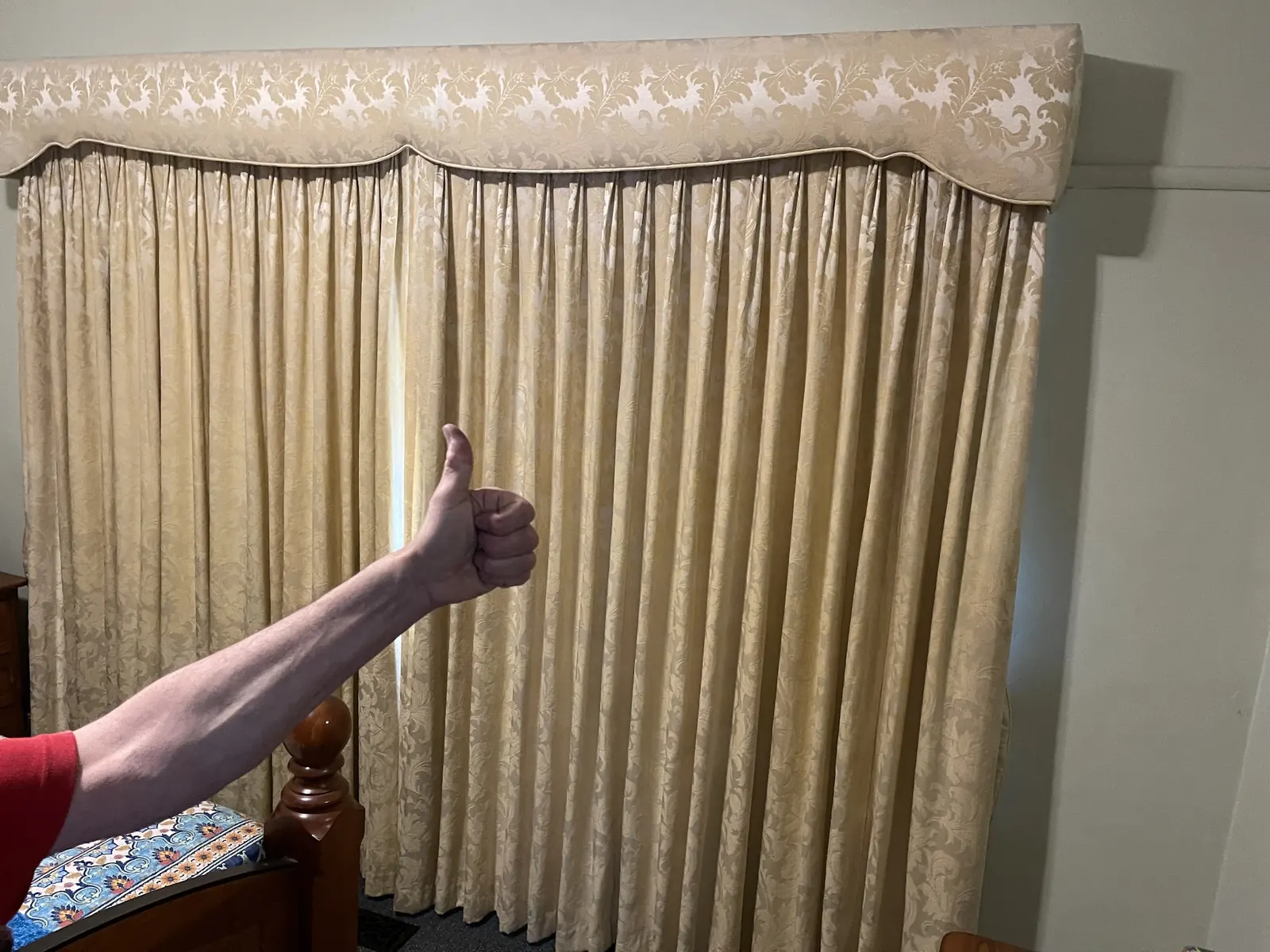
"Dry clean only" on a curtain label means the maker has tested the fabric and decided water washing risks damaging it, usually through shrinkage, colour run, puckered linings or a distorted heading. It doesn't mean the curtain can never be cleaned; it means it should be cleaned with a solvent process or a controlled professional method, not the washing machine.
With dry clean only curtains, the safest path is a professional who knows curtains, like our curtain dry cleaning service in Melbourne. But it helps to understand why the label is there, what the symbols mean, and the small amount you can safely do yourself.
Why some curtains are labelled dry clean only
A curtain is rarely just one fabric. A lined pinch-pleat drape might combine a face fabric, a cotton lining, an interlining for warmth, stiff buckram in the heading and weights sewn into the hem. Each of those can react differently to water and agitation.
The usual reasons for the label:
- Shrinkage. Linen, cotton, viscose and some blends tighten when wet and tumbled. A few percent on a 2.7-metre drop is enough to leave a gap above the floor.
- Uneven shrinking. The face fabric and lining shrink at different rates, so the curtain puckers or the lining hangs below the hem.
- Colour run. Deep reds, navies and printed fabrics may bleed, especially into a pale lining.
- Texture and finish. Velvet pile can crush, silk can water-mark, and some fabrics have finishes that wash out.
- Construction. Buckram headings can soften and lose their pleats, and coated blockout backing can crack with machine washing.
For more on the shrinkage side, see will my curtains shrink when they're cleaned.
Reading the care symbols on dry clean only curtains
Labels are usually stitched into a side seam near the hem, or into the lining. The dry-cleaning symbols are circles.
| Symbol | What it means | What to do |
|---|---|---|
| Plain circle | Can be professionally dry cleaned | Professional cleaning; home washing may still be possible if a washtub symbol also appears |
| Circle with P | Dry clean with common solvents | Professional dry cleaning |
| Circle with F | Dry clean with gentler solvents only | Professional; tell the cleaner it's a delicate fabric |
| Circle with a line under it | Gentle professional process | Professional, mild treatment |
| Circle with W | Professional wet cleaning is acceptable | Professional controlled wet cleaning, not your machine |
| Crossed-out circle | Do not dry clean | Follow the washing instructions instead |
| Crossed-out washtub | Do not wash with water | Don't machine or hand wash |
"Dry clean" versus "dry clean only"
These aren't quite the same. "Dry clean" often means it's the recommended method, and some of those fabrics tolerate careful hand washing. "Dry clean only" is a firmer warning. If the label says "only" and you wash it anyway, you take on the risk.
No label at all?
Older or custom-made curtains often have no label. Treat them as dry clean only until proven otherwise, especially if they're lined, pleated or heavy. Our guide on putting curtains in the washing machine explains how to test a hidden corner if you're considering it.
What you can safely do at home
A dry clean only label doesn't stop you looking after your curtains between cleans.
- Vacuum regularly. A soft brush attachment on low suction, top to bottom, every month or two. This is the single best thing you can do.
- Air them. On a dry, breezy day, open the windows and let fresh air move through. It helps with stale smells.
- Blot spills immediately. Use a clean white cloth and blot; don't rub, and don't add water to a dry clean only fabric. A small water mark on silk or viscose can be harder to fix than the original spill.
- Keep them dry. Pull them clear of wet windows in winter. Condensation on single-glazed Melbourne windows is a common cause of mould on curtain hems.
- Rotate if you can. Swapping left and right panels evens out sun fading over time.
What to avoid
- Washing in the machine, even on a gentle or wool cycle.
- Home dry-cleaning kits on large, lined curtains; they're designed for small garments.
- Steaming with a domestic steamer on fabrics that water-mark, without testing first.
- Tumble drying, which is risky for almost any curtain.
Your professional options
There's more than one way to clean a dry clean only curtain properly.
Off-site dry cleaning
The curtains are taken down, cleaned with a process that suits the label, then rehung. This is the most faithful way to follow a "P" or "F" label, and it's the right call for heavily soiled or delicate fabrics. In one review, a customer's curtains were handed over one day and delivered back cleaned the next. Our article on whether dry cleaners can clean curtains explains why curtain specialists handle them differently from clothing.
On-site cleaning on the track
Some curtains labelled for dry cleaning can be cleaned where they hang with a controlled, low-moisture approach, after the fabric is tested. Whether yours can depends on the fibre, lining and colour stability. It's a decision to make after inspection, not before.
Velvet and linen each have their quirks; see how to clean velvet curtains and how to clean linen curtains for fabric-specific advice.
What to tell whoever cleans them
The more a cleaner knows up front, the better the decision on method. Pass on:
- The exact wording and symbols on the label, or a photo of it.
- Whether the curtains are lined or interlined, and whether the lining is sewn in or detachable.
- Any previous cleaning, especially if they've been washed before and changed length.
- Marks you want treated, and what caused them if you know: water, wine, mould, pets.
- How old they are. Curtains that have hung in a sunny north-facing window for fifteen years may be weaker than they look.
When DIY is enough, and when it isn't
Regular vacuuming and airing are enough for curtains that are just a little dusty. Book a professional when there's visible grime on the hem, a spill or stain, mould, smoke smell, or when you're moving out of a rental. Be realistic that old stains on dry clean only fabrics may lighten rather than disappear, and sun-weakened fabric can split when handled. Pricing depends on the size, fabric, condition and method; our curtain cleaning cost page explains it.
Not sure what your label allows? Keep a photo of it handy and call (03) 7066 4644 or get a free quote and we'll recommend the safest method for that fabric.