Mould & Stains
How to Remove Mould From Roman Blinds
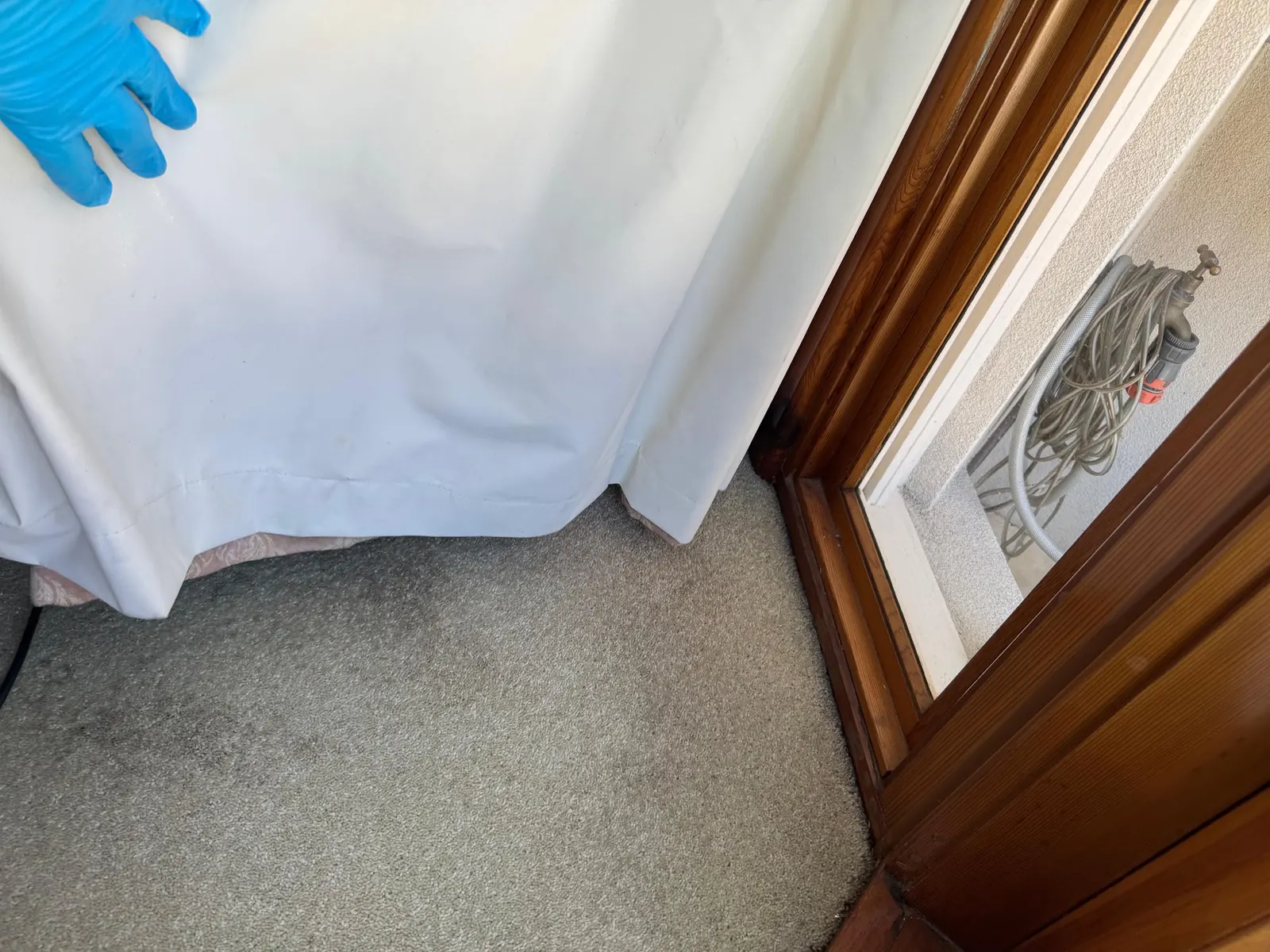
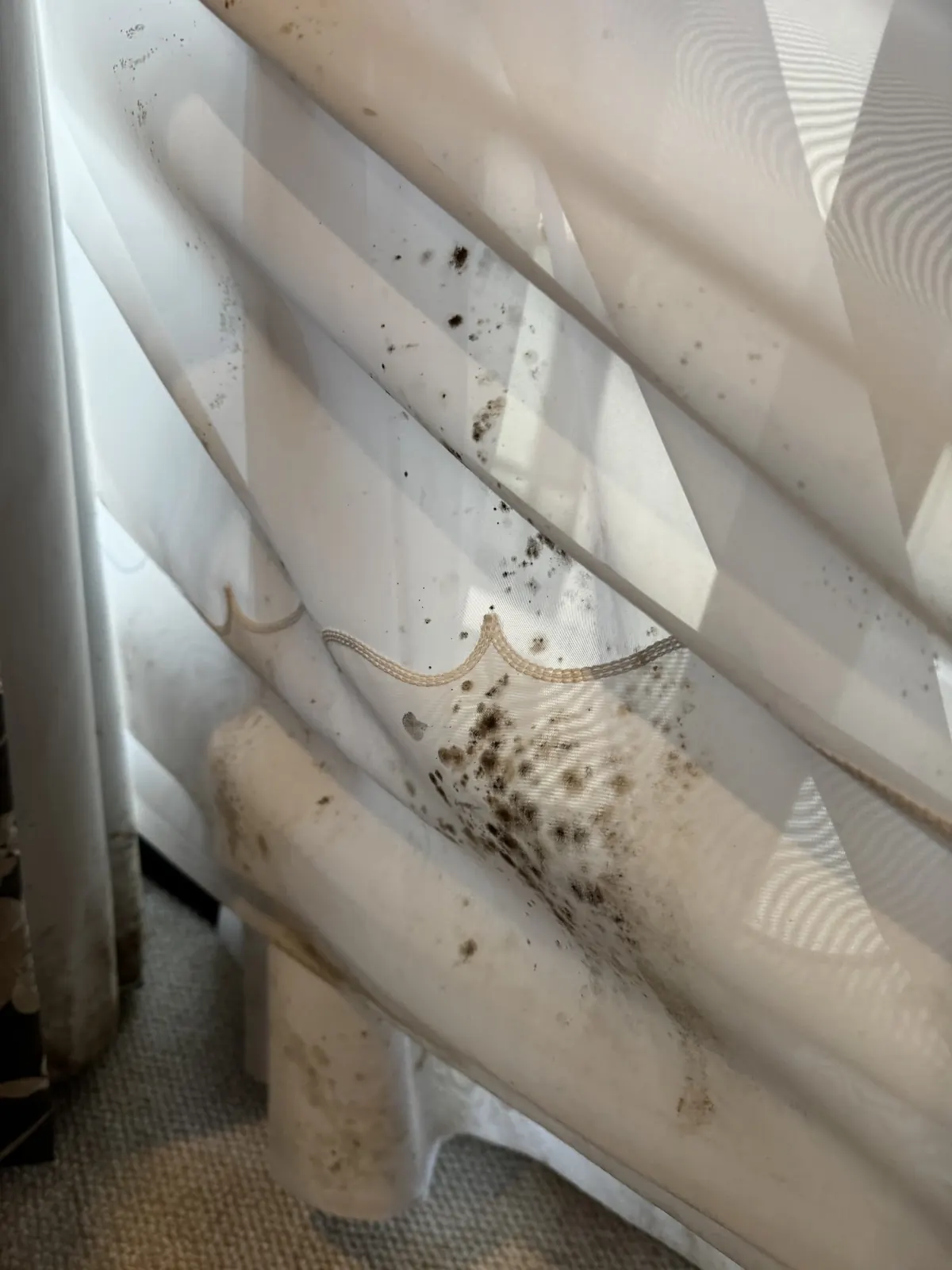
Mould on roman blinds almost always starts on the window side, in the bottom folds, because that's where the fabric sits against cold, wet glass overnight. Light spotting on a polyester blind can often be cleaned off carefully at home, with gloves, a P2 mask and a barely damp cloth. Mould that has soaked into a cotton or linen face, or through to the lining, usually needs professional roman blind cleaning, and some staining may lighten rather than disappear.
The important part is what you do before you clean anything: find out how far the mould goes. A roman blind is two or three layers stitched together, and what you see from the room is often the least of it.
Why mould on roman blinds is different from mould on curtains
A curtain hangs in one layer, and air can reach both sides. A roman blind is built to fold up into a stack, with rods or battens sewn into pockets across the back. That design creates three mould traps a curtain doesn't have.
- The air pocket behind it. Lowered at night inside a window recess, a roman blind seals off a thin layer of air against the glass. That air cools, its moisture condenses on the glass, and the lining sits right in it.
- The stacked folds. When you raise a damp blind in the morning, the wettest bottom section is pressed into the folds above it and stays wet for hours.
- The rod pockets. Stitched channels hold moisture and dust together, which is ideal for mould. You'll often see a neat horizontal line of spots exactly where a rod sits.
That's also why the general advice in how to clean roman blinds is gentle and dry, and why the reasons curtains get mouldy apply even more strongly to romans.
Check how far the mould on your roman blind goes
Lower the blind fully and look at it from the window side with a torch held flat against the fabric, so the light skims across the surface. Mould spots show up as raised specks or dull patches. Then check these three places:
- The lining, bottom 20 to 30 cm. This is where it starts in most homes.
- Each rod pocket line. Run the torch along every seam.
- The face fabric, held up to daylight. If spots show through from the back, the mould has gone through both layers.
| What you find | What it usually means | Next step |
|---|---|---|
| A few spots on the lining only, synthetic fabric | Early growth, often treatable | Careful home clean, then fix the condensation |
| Spots along rod pockets | Moisture is sitting in the seams | Professional clean; the pockets are hard to dry at home |
| Spots showing through to the face | Mould has penetrated both layers | Professional assessment |
| Grey or brown staining across cotton or linen | Long-term growth; staining may be permanent | Ask whether relining or replacement makes more sense |
| Musty smell but no visible spots | Damp inside the layers | Dry thoroughly, improve airflow, then reassess |
How to treat light mould on a roman blind at home
Protect yourself and the room
Wear disposable gloves and a P2 mask, and open the window. Don't brush or shake mould off indoors; that throws spores into the air and onto everything else. For general guidance on mould and health, the Better Health Channel is a good starting point, and if anyone has breathing symptoms, talk to a GP.
Take the fabric outside if you can
Here's a tip many people don't know: a lot of roman blinds are attached to their headrail with a strip of hook-and-loop tape. Photograph the cords and rings first, then peel the fabric off the headrail and take it outside to work on it. If yours is stapled or screwed to a timber board, leave it up and work in place with the window open.
Clean gently
- Outdoors, lightly vacuum the affected area through a piece of fine mesh or old stocking over the nozzle, so the fabric isn't sucked in. Empty the vacuum outside afterwards.
- Mix a few drops of mild, pH-neutral detergent into cool water. Dampen a white cloth and wring it out hard.
- Test on a hidden corner of the lining first and let it dry, checking for colour change or rings.
- Dab the spots, working from the outside of the patch inward. Don't rub, and don't soak; water that reaches the rod pockets is slow to leave.
- Blot with a dry towel and dry the blind fully lowered, in shade with good airflow. Don't raise it until every fold is completely dry.
Skip bleach. It strips colour, weakens fibres and can attack the stitching, and it must never be mixed with vinegar or ammonia. If you're considering vinegar on a colourfast synthetic, test it carefully first; it can mark some dyes. The fuller method, with the reasons behind each step, is in how to remove mould from curtains.
Stopping the mould coming back
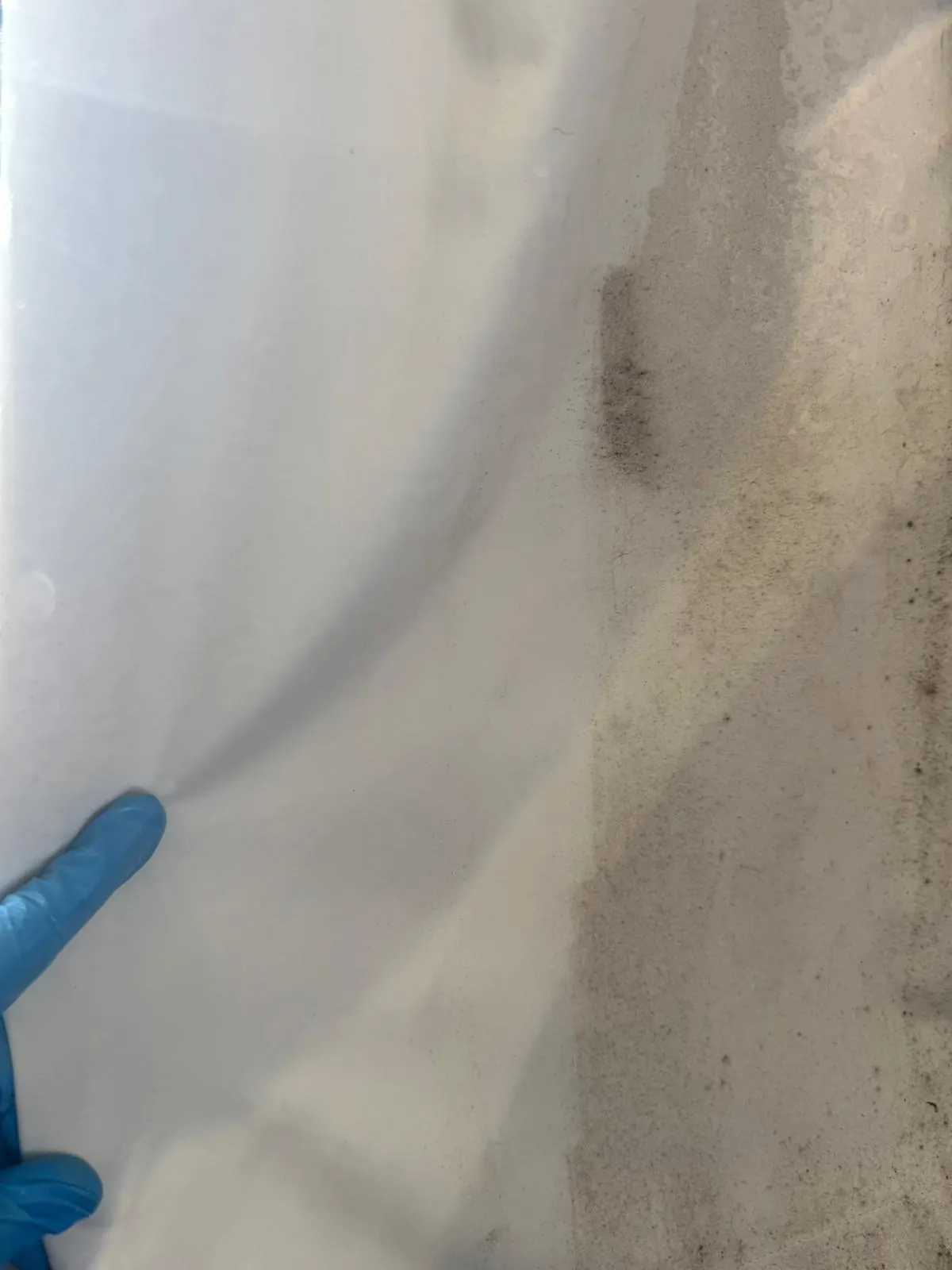
When Danny inspected one customer's mouldy curtains, he explained that the mould was coming from condensation and poor airflow, and talked through how to stop it returning. Roman blinds are no different: clean them and leave the cause, and the spots come back next winter.
- Raise the blind and wipe the glass first thing on cold mornings, before you put the kettle on. A squeegee and a towel on the sill take a minute.
- Leave a gap. On very cold nights, stopping the blind a few centimetres above the sill lets the trapped air circulate.
- Ventilate daily, even briefly in winter, and run bathroom and kitchen exhaust fans.
- Use a dehumidifier in rooms that fog up every morning.
- Check the window. Leaking seals or a blocked weep hole in an aluminium frame can keep the sill wet.
Our guide on how to stop window condensation goes much deeper, including the issues common to single-glazed Victorian and Edwardian homes. If you also have blockout curtains on cold windows, mould on blockout curtains explains why their coated backs behave in a similar way.
When to call a professional
A handful of spots on a synthetic lining that you've caught early is a reasonable DIY job. Call a professional if the mould shows through to the face, follows the rod pockets, covers more than a small patch, keeps returning, or is on linen, cotton, silk or a blind with no care label. Get advice too if the blind is motorised, very wide or mounted high. Our curtain and blind mould removal service treats the fabric carefully, and we'll tell you honestly before starting whether staining is likely to fully clear.
Found spots on the back of your roman blinds? Call (03) 7066 4644 or request a free quote, ideally with a photo of the lining side, and we'll let you know what's realistic.