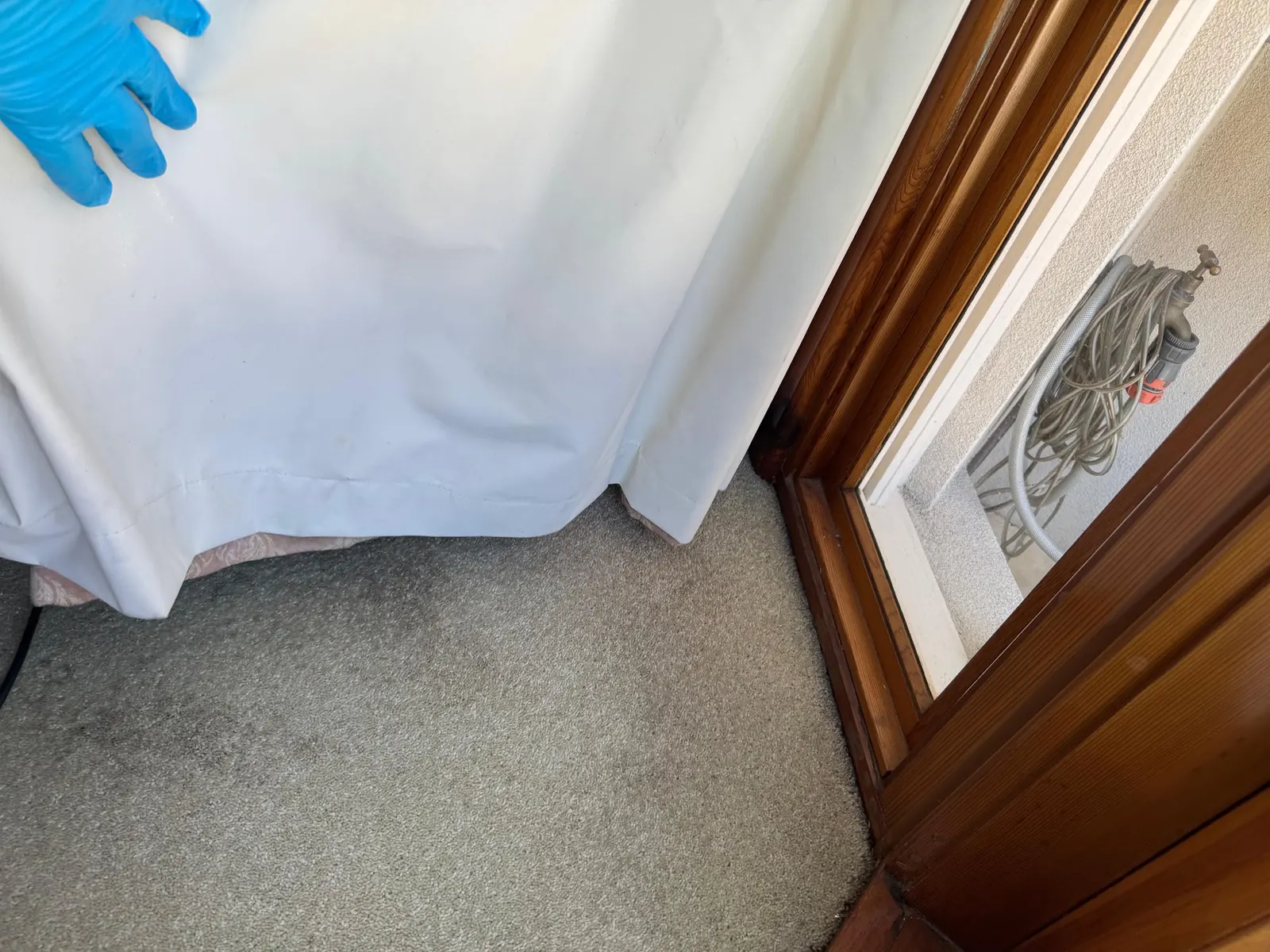
Mould & Stains
Mould on Blockout Curtains: Why It Happens and What to Do
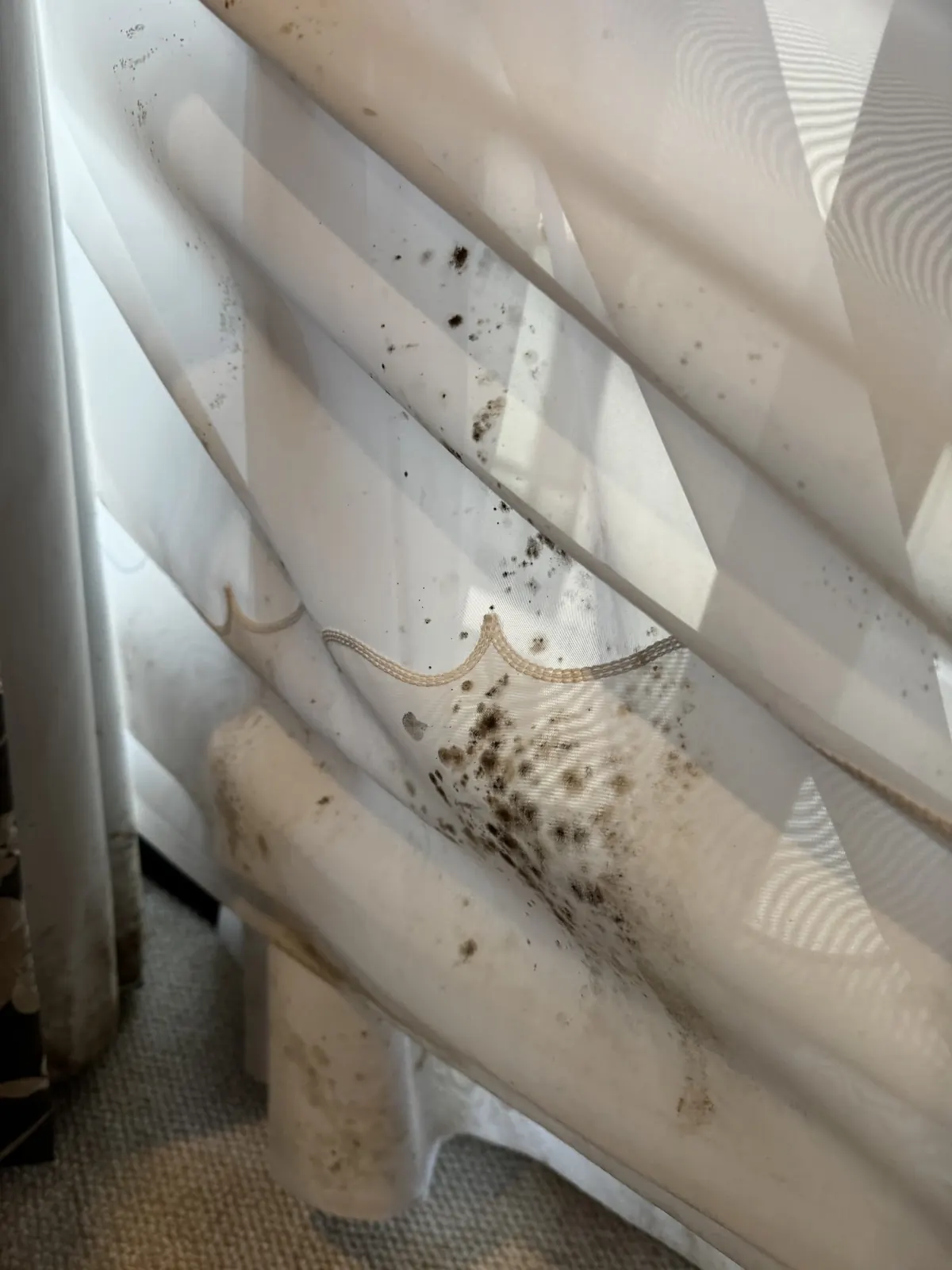
Mould on blockout curtains almost always comes from the same thing: the blockout layer stops the fabric breathing, so condensation from the window soaks into the back and stays there. Whether you can fix it depends on where the mould is growing. Spots sitting on the surface of an intact coating or a separate lining often clean up well; mould that has worked into a cracked coating or through to the face fabric usually lightens rather than disappears.
This guide is about diagnosing what you've got before you spend time or money on it. If you already know you want it handled, our blockout curtain cleaning service covers coated, triple-weave and lined blockouts, mould included.
Why blockout curtains grow mould faster than other curtains
An ordinary curtain lets some moisture pass through and dry off into the room. A blockout curtain is built to stop light, and most of the same features also stop air and water vapour. Pull one closed across a cold window and you create a sealed pocket between fabric and glass.
Three habits make it worse, and they're all common with blockouts specifically:
- They stay closed in the daytime. Shift workers, nurseries, home theatres and west-facing rooms often keep blockouts drawn for days, so the back never sees daylight or moving air.
- They're in bedrooms. A couple of people breathing in a closed bedroom overnight put a lot of moisture into the air, and the coldest surface it finds is the glass behind the blockout.
- They're fitted tight. Blockouts are often hung with returns to the wall or on ceiling-fixed tracks to stop light leaking around the edges, which also seals in damp air.
Melbourne adds its own pressure. Single-glazed weatherboards and Victorian terraces run with water on July mornings, and apartments with aluminium sliding doors and little cross-ventilation can be just as bad. The broader causes are covered in our guide on how to stop window condensation; this post focuses on what the blockout layer itself changes.
Is it mould, or is the coating breaking down?
This is the question worth answering first, because the two look surprisingly similar from across a room. Both show up as grey, brown or yellow patches on the back of the curtain, and both tend to start near the bottom. Only one of them responds to cleaning.
A quick three-part check
- Smell it. Mould has an earthy, musty smell, strongest when the room has been closed up. A failing coating usually smells of nothing, or faintly of old plastic.
- Dab it. Wearing gloves, press a damp white cotton bud on the mark. Mould usually transfers a grey or black smudge. A degraded coating doesn't transfer colour; instead it may feel tacky or chalky, or come away as tiny flakes.
- Hold it to the light. On a sunny day, look at the curtain from the room side. Pinpricks or crazed lines of light mean the coating has cracked. Mould on its own doesn't let light through.
Plenty of curtains have both: an old coating that has crazed, with mould growing in the cracks where moisture sits. That combination is the hardest to fix, because cleaning deep enough to reach the mould can lift more of the brittle coating with it.
Where the mould sits tells you what can be saved
Blockout curtains aren't all made the same way, and the construction decides how far mould can travel.
| Blockout type | Where mould usually sits | Likely outcome |
|---|---|---|
| Separate blockout lining on its own hooks or track | On the lining only; the face fabric is often untouched | Good. The lining can be cleaned separately, or replaced without replacing the curtain. |
| Sewn-in blockout lining | On the lining, sometimes bleeding into the hem of the face fabric | Fair. Surface spotting cleans up; staining at the hem may only lighten. |
| Coated back, coating intact | On the surface of the coating | Good. The coating doesn't absorb water, so spots often clean away. |
| Coated back, coating cracked | In the cracks and into the fabric behind | Poor. Staining tends to remain and the coating keeps shedding. |
| Triple-weave (no coating) | Through the weave, often visible on both sides | Fair. Behaves like a heavy fabric; old black staining may lighten rather than vanish. |
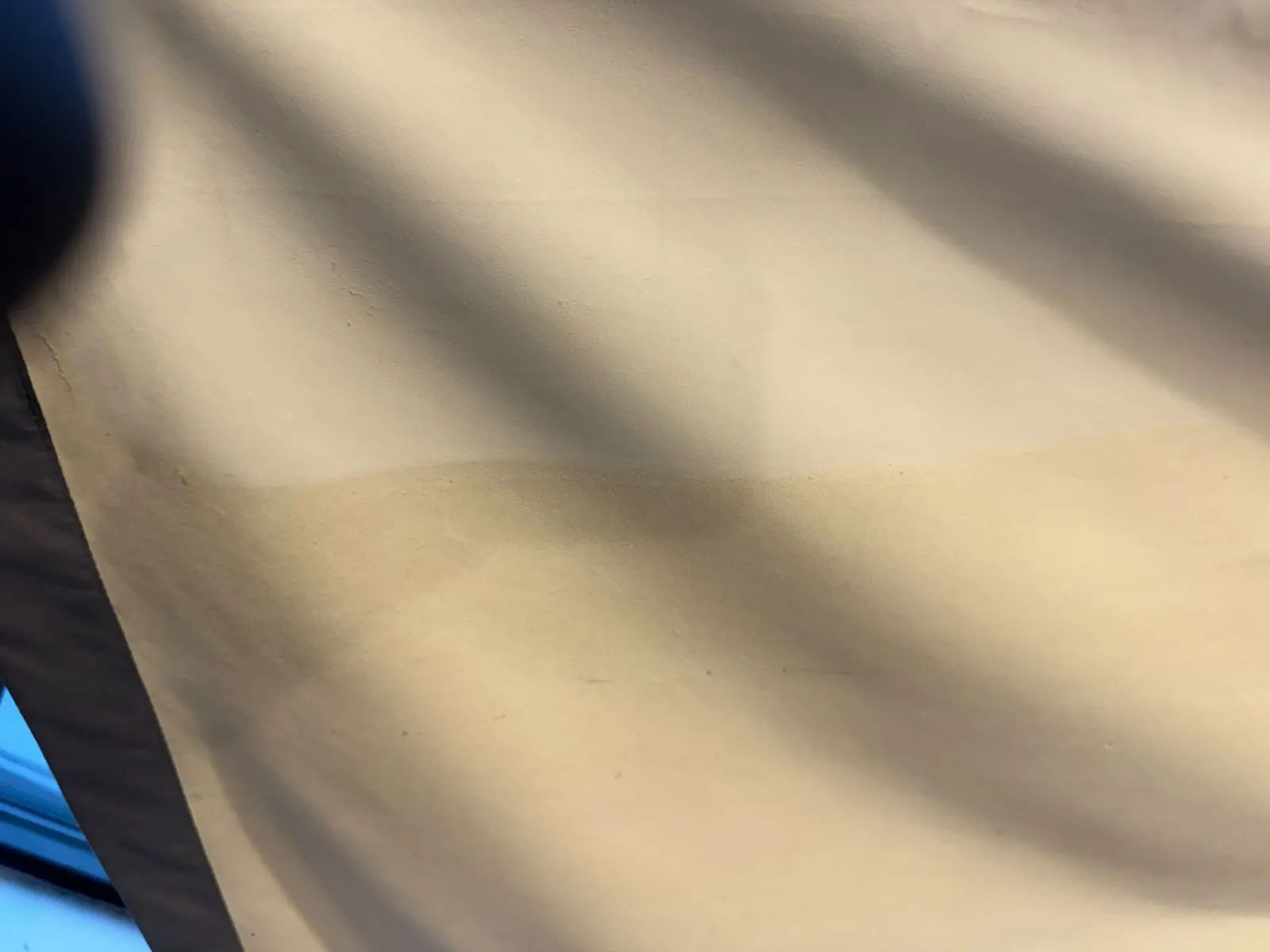
One pattern we see a lot: a horizontal line of mould sitting a hand's width or so above the hem, with cleaner fabric below it. That's usually where the curtain rests against the sill or the bottom rail of the frame, which hold water longer than the glass does. If your mould forms a tidy straight line, check what the curtain is touching at that height.

What to do this week
If you've found mould, a few steps stop it spreading while you decide what to do next.
- Open the curtains and the window. Get air behind the backing for a few hours each day, even in winter.
- Wipe the glass and sill dry. Every morning while it's cold. If a painted timber sill stays black, it needs its own clean.
- Pull the hem away from the glass. A few centimetres of gap is enough to help.
- Don't dry-brush or vacuum the mould indoors. It throws spores into the room. If you treat a small patch yourself, wear gloves and a P2 mask and keep the window open.
- Skip the bleach. It can damage acrylic coatings, it strips colour from the face fabric, and it must never be mixed with ammonia or vinegar.
- Take dated photos. Useful for a quote, and essential if you're renting.
For the cleaning itself, our general guide to cleaning blockout curtains explains why heat, folding and tumbling crack the backing, which matters even more once mould has weakened it.
Clean, replace the lining, or replace the curtain?
This is where honesty saves money. Cleaning is usually worth it when the mould is spotting on an intact coating or lining and the face fabric is in good shape. Replacing just the lining is worth asking a curtain maker about when the face fabric is fine but a separate or sewn-in lining is badly stained. Replacing the whole curtain makes more sense when the coating is cracked and flaking all over, the mould has stained through to the room side, or the fabric is sun-rotted.
Our guide on whether to clean or replace curtains goes through that decision more broadly. A good cleaner should tell you before starting if a curtain is borderline, not after.
Renting? Mould can involve both how the room is used and the condition of the property, such as leaks or a missing exhaust fan. Report it in writing with photos, and check your lease and Consumer Affairs Victoria guidance. There's more on the curtain side in who is responsible for cleaning curtains in a rental.
When to call a professional
A few spots on an intact coated back, in a room you can air out, are a reasonable DIY job. It's time for help when the mould runs the full width of the curtain, when it shows on the room side, when the curtains are heavy or floor-to-ceiling, or when someone in the house has asthma or allergies and shouldn't be disturbing it. If you think mould is affecting your health, see your GP.
When we clean mouldy blockouts on the track, we treat the backing and the face separately and keep moisture controlled so the coating isn't soaked, and we look at the window, sill and airflow while we're there. In one customer's home, Danny found the mould was being driven by condensation and poor airflow, and talked them through how to stop it coming back. Cleaning removes what's there; the room decides whether it returns.
Not sure if your blockouts are worth saving? Call (03) 7066 4644 and describe what you're seeing, or fill in our quote request. You'll get a straight answer and a free quote.