Sheers & Fabrics
How to Clean Polyester Curtains (Without Setting Creases In)
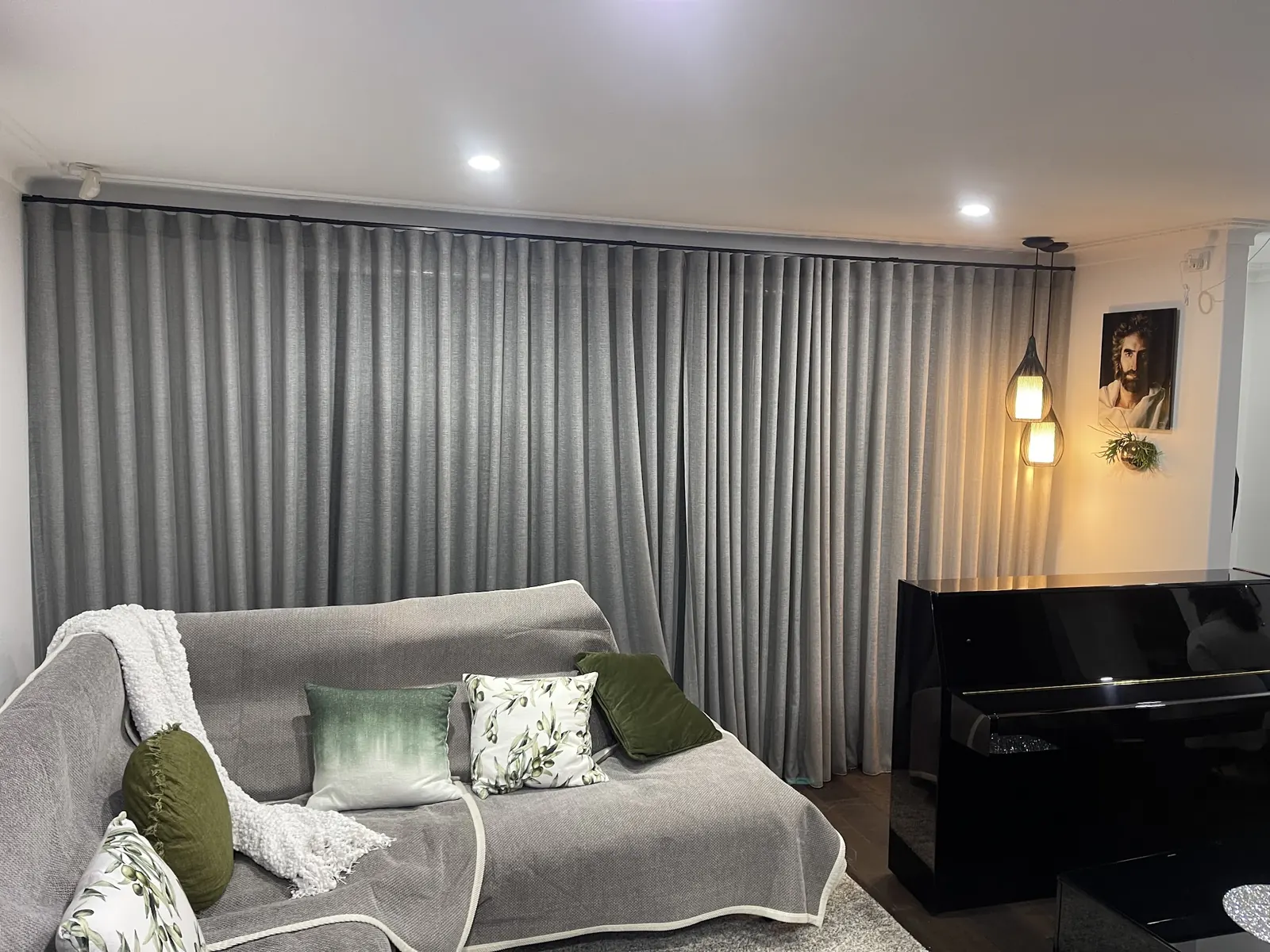
To clean polyester curtains, vacuum them on the track, then either wash them cold on a gentle cycle (if the label allows) or have them steam cleaned where they hang. The two rules that matter most are no heat and no crowding: warm water and the dryer can set creases into polyester for good, and an overloaded machine leaves the fabric greyer than it started.
Polyester is the most forgiving curtain fabric there is, which is why it hangs in so many Melbourne homes and rentals. It rarely shrinks and it holds its colour well in the sun. But it has quirks of its own, and knowing them is the difference between curtains that come up bright and curtains that come back limp, creased and dull.
What makes polyester different to clean
Polyester is a plastic fibre. That one fact explains nearly everything about how it behaves in the wash.
- Heat reshapes it. Polyester softens with heat and sets in whatever shape it cools in. That's how pleats and wave folds are heat-set at the factory, and it's also how a hot wash or a tumble dryer bakes random wrinkles in permanently.
- It loves oil. Synthetic fibres attract and hold oily soil: cooking vapour, skin oils from hands that draw the curtains, traffic grime from a main road. Water alone slides off it, so the detergent does the real work.
- It holds static. A dry, statically charged polyester curtain pulls airborne dust towards it, which is why the leading edge and hem often look dingier than the middle.
- It can pick up dirt from the wash water. In a crowded drum with too little water, loosened grime settles back onto the fibres. That's the usual cause of the flat grey cast people notice after washing white polyester sheers at home.
A quick way to tell if it's really polyester
Lots of curtains sold as "linen look" or "voile" are polyester, and plenty of labels have been cut off. Try the crush test on a side hem: squeeze a handful of fabric tightly in your fist for five seconds, then let go. Polyester springs back almost smooth. Linen and cotton stay crumpled. It isn't lab-perfect, but it's a good guide before you choose a method.
How to clean polyester curtains, step by step
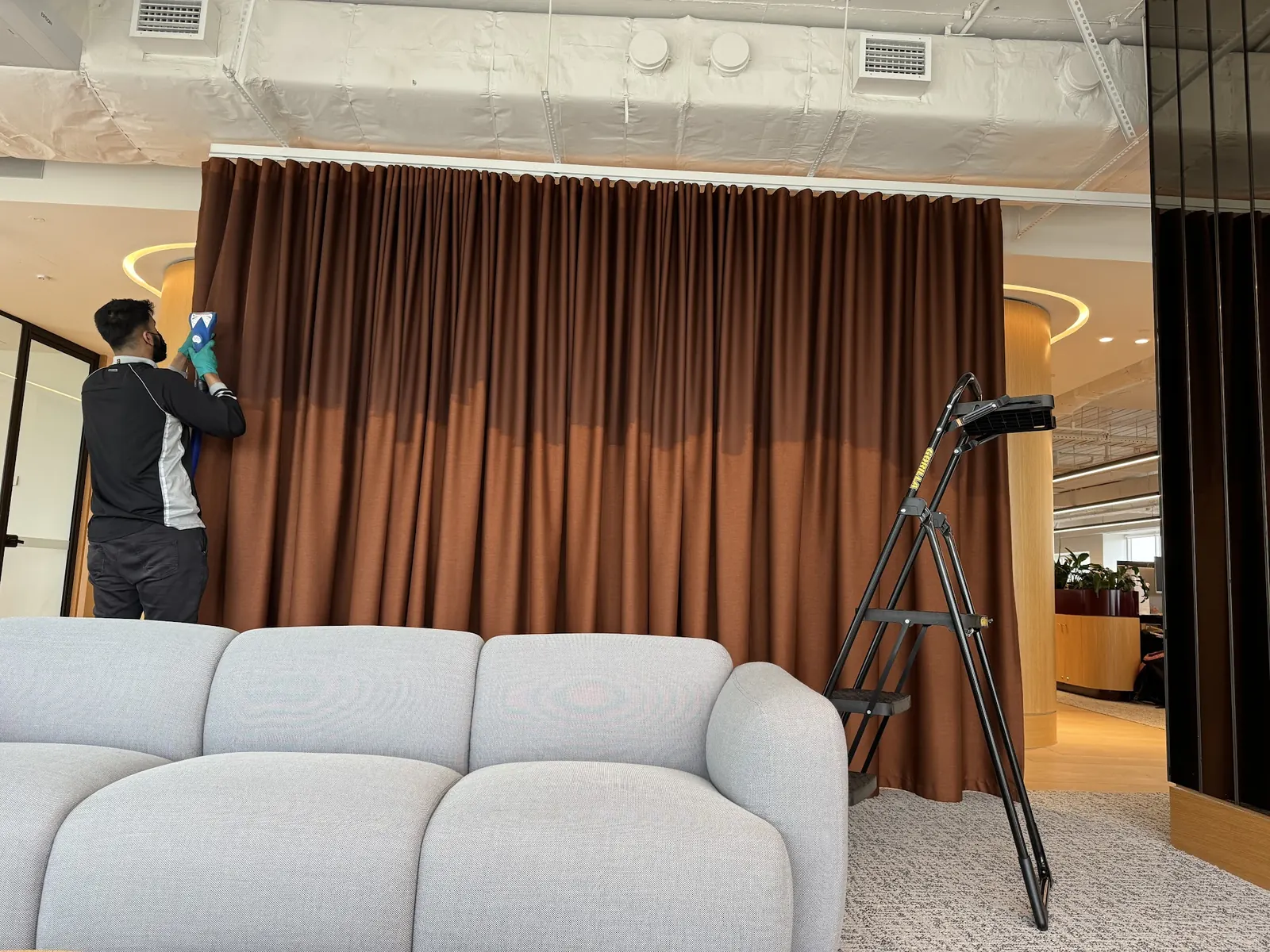
Large, lined or heavy polyester drapes are usually better cleaned in place than wrestled into a washing machine. Our on-site curtain steam cleaning keeps them on the track and lets them dry hanging straight. For unlined panels and sheers, home washing works well if you follow these steps.
- Vacuum first, top to bottom. Use the brush attachment on low suction. Removing dry dust before it gets wet stops it turning into grey sludge in the drum.
- Read the label and take the hardware out. Remove hooks, and if the heading tape has metal parts, check they won't scratch the drum or snag the fabric.
- Pre-treat the grubby zones. The leading edges where hands grab the curtain and the bottom 20 centimetres usually carry the most oily soil. Dab on a little liquid laundry detergent and leave it for ten minutes.
- Wash one or two panels at a time. Cold or lukewarm water, a delicate or synthetics cycle, and a full drum of water, not a full drum of fabric. Sheers go in a mesh bag or an old pillowcase.
- Go easy on softener. It can leave a coating on synthetic fibres that grabs dust again quickly. If you want a softer feel, half a cup of white vinegar in the rinse compartment is an option on most polyester. Never add it alongside bleach.
- Short, slow spin. Long fast spins press hard creases into polyester while it's warm from the drum.
- Rehang damp. The weight of the wet fabric pulls the folds out as it dries. Our guide to how long curtains take to dry covers what to expect in a Melbourne winter versus summer.
If you're unsure whether your panels can go in the machine at all, can you put curtains in the washing machine walks through the label symbols and the risks.
Polyester curtain types and what each needs
| Type | Best approach | Watch out for |
|---|---|---|
| Polyester voile and sheers | Cold delicate wash in a mesh bag, or steam on the track | Old sun-weakened panels that split; greying in a crowded drum |
| Wave-fold polyester | Clean on the track where possible | Losing the factory-set wave if washed warm |
| Heavy woven or jacquard polyester | Vacuum often; steam clean on the track | Too heavy for most home machines when wet |
| Polyester with a coated blockout back | Dust and wipe at home; professional clean on the track | Coating that cracks when folded or heated |
| Polyester-linen or poly-cotton blends | Follow the label; cold only | The natural-fibre share can still shrink |
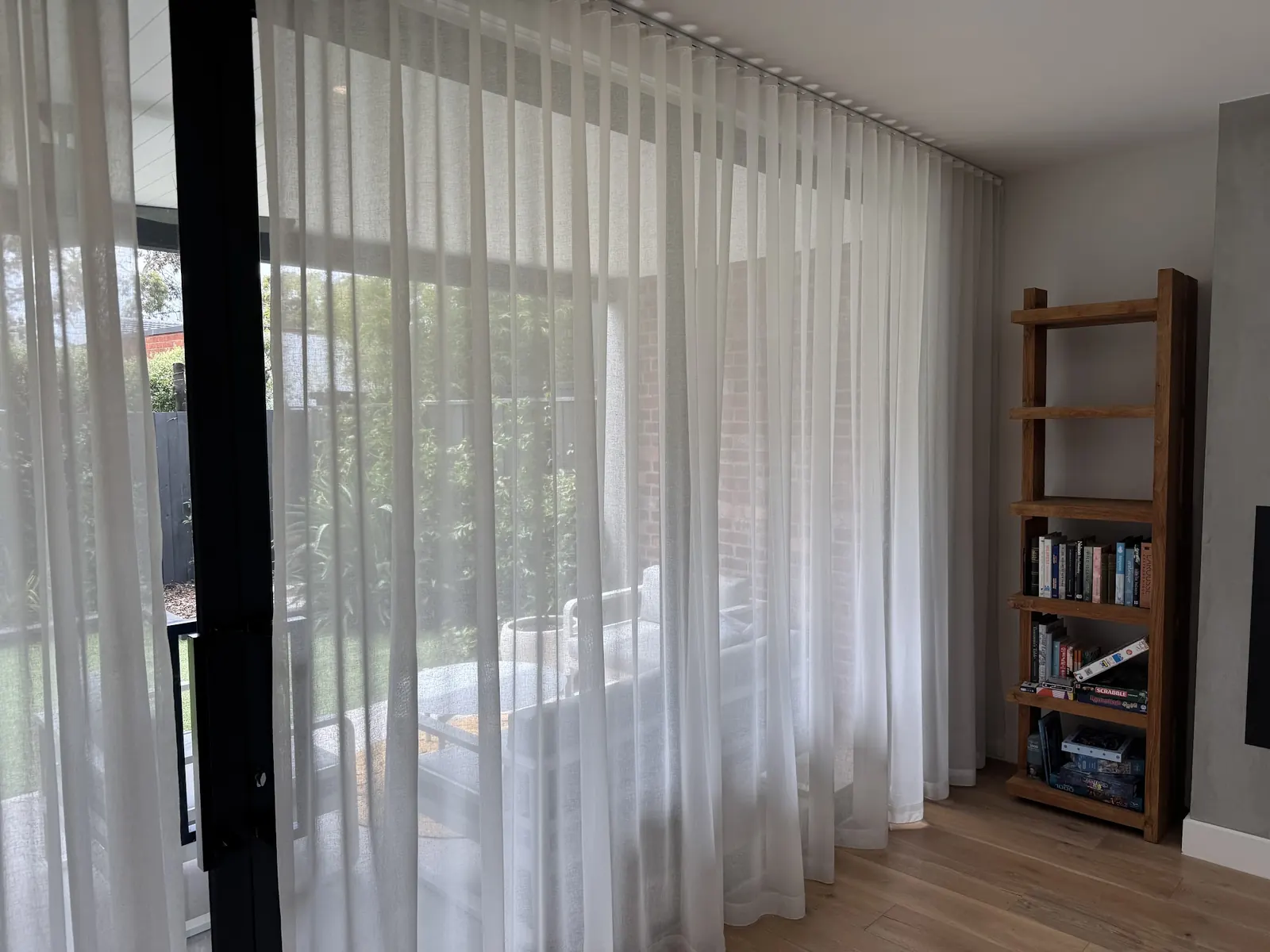
Wave-fold polyester deserves a special mention because it's so common in newer apartments. The ripple is heat-set, so a warm wash can relax it and leave panels that hang flat or flare. Cleaning wave fold curtains has more on keeping the shape.
Mistakes we see with polyester curtains
Using hot water to "really get them clean"
It's the most common one. Hot water does very little extra for the oily soil polyester holds, but it does relax heat-set pleats and lock in creases. Detergent and agitation clean polyester. Temperature mostly damages it.
Ironing on a cotton setting
Polyester melts at temperatures a cotton setting reaches easily. You'll see a shiny patch first, then a hole. If you must iron, use the synthetic setting with a pressing cloth, or let a handheld steamer do it from a few centimetres away. Getting wrinkles out of curtains covers the gentler options.
Blaming the fabric for greyness
When white polyester sheers come out greyer, people assume they're worn out. Usually they've just reabsorbed dirt. Rewash one panel on its own in plenty of water with fresh detergent before you give up on them.
Trusting "polyester can't be damaged"
Polyester sheers on north- and west-facing glass still break down after years of sun. They go papery, lose strength and can tear along the hem. Pinch and gently pull a section near the window before washing. If it feels crisp or threads part, don't put it in a machine.
When to call a professional
For unlined polyester panels and sheers in decent condition, home cleaning is genuinely fine. Hand it over when:
- the curtains are lined, interlined or have a blockout coating;
- they're floor-to-ceiling or on a high track you can't safely reach;
- there's mould along the hem from window condensation;
- they're wave-fold or pinch-pleat and you want the folds kept;
- the sheers feel brittle from the sun.
Steam cleaning suits polyester well because we control the moisture and there's no drum heat and no folding. We work from the heading down, and the panels dry hanging at their full drop. On one job, a customer's heavy curtains hadn't been cleaned in many years and the final bill matched the quote they'd been given, which is how pricing should work. Quotes are based on the size, fabric, condition and method, and you can read how curtain cleaning is priced before you ask.
Polyester curtains looking tired or grey? Call Danny on (03) 7066 4644 or request a free quote online. Tell us the rooms and roughly how long the drops are, and we'll take it from there.