Sheers & Fabrics
How to Clean Thermal and Insulated Curtains (and Keep Them Working)
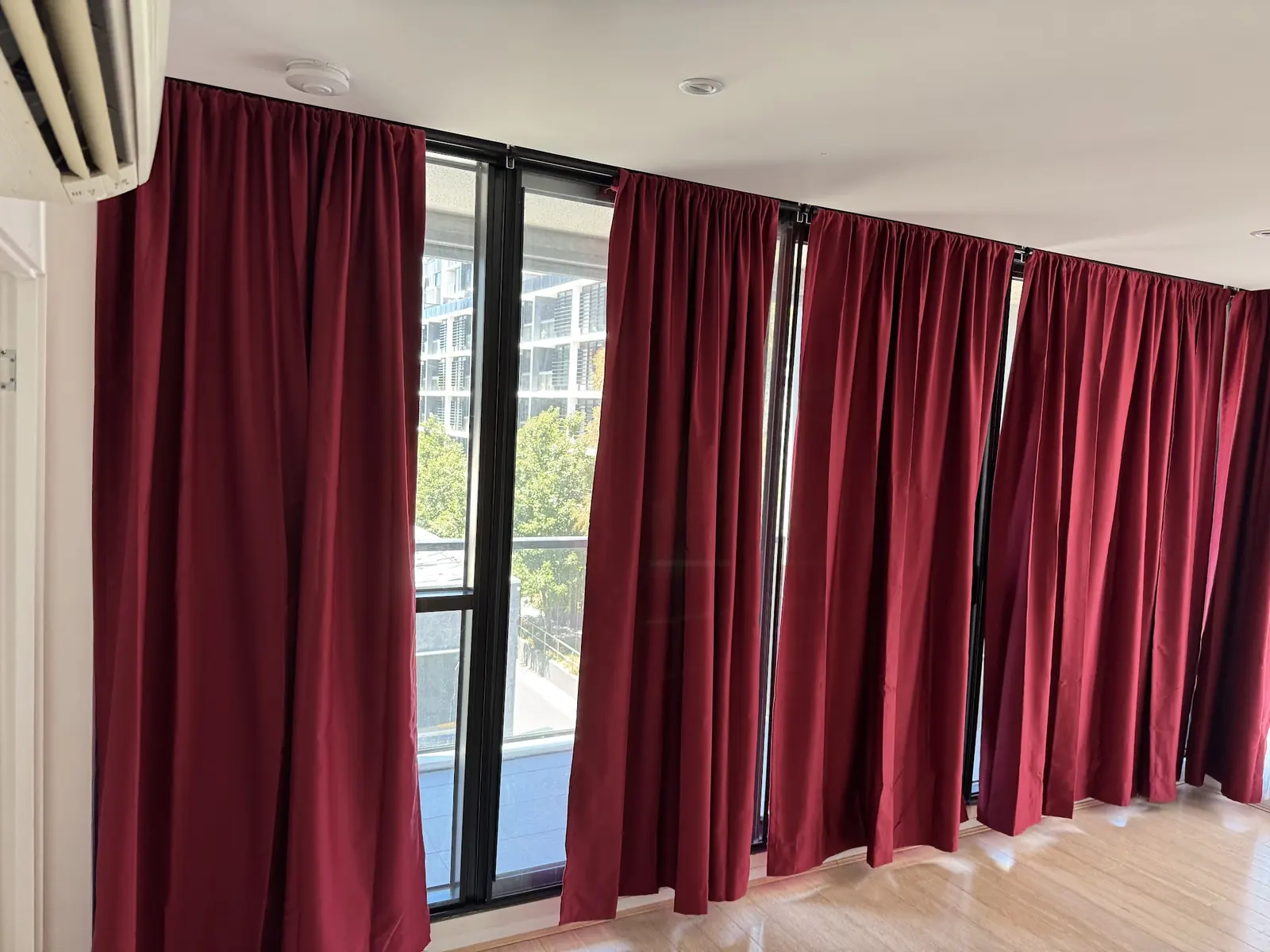
Clean thermal curtains gently and with their insulating job in mind: vacuum both layers on the track, deal with any damp or mould at the hem, and only wet-clean them by a method that won't shrink the layers unevenly. The real risk isn't just a damaged curtain. A thermal curtain that comes back even a few centimetres shorter leaves a gap at the floor, and that gap lets cold air spill into the room all winter.
So the question isn't only "how do I get them clean?" but "how do I get them clean and still have them work?" That's the angle this guide takes. If yours are heavy, lined or sewn together in layers, our blockout and thermal curtain cleaning is done on the track so the drop stays exactly where it was.
How thermal curtains actually keep the heat in
A thermal curtain doesn't generate warmth. It traps a layer of still air between the fabric and the glass, and slows the heat in your room from reaching a cold window. Three things make that work:
- Layers. A face fabric plus a thermal lining, a foam or acrylic backing, or a soft interlining sewn in between.
- Fullness. Generous folds create pockets of trapped air. A curtain stretched flat insulates less.
- The seal at top and bottom. When curtains stop short of the floor and have no pelmet, warm air rises behind the top, cools on the glass, and pours out under the hem. You can feel that draught at your ankles in many older Melbourne homes.
Cleaning affects the first and third points directly. Shrink the lining and the face puckers. Shrink the whole curtain and the hem lifts. That's why method matters more for thermals than for almost any other curtain.
Work out how yours are built
Look at the back of the curtain and run your fingers along a side hem. You'll usually find one of these.
| Construction | How to tell | What it means for cleaning |
|---|---|---|
| Detachable thermal lining | A separate lining hooked onto the same track or onto the curtain's heading tape | Unhook and treat each layer separately; linings are often the easier part |
| Sewn-in thermal lining | Lining stitched to the face along the sides and top, hem often loose | Layers can shrink at different rates; keep water use low |
| Interlined drapes | Noticeably thick and soft, a third fluffy layer inside when you pinch the side hem | Professional only; cotton interlining can shrink badly if soaked |
| Foam or acrylic backed | Rubbery or chalky coating on the back | No heat, no folding; see our separate blockout guide |
The coated kind is covered in detail in how to clean blockout curtains, including why the coating cracks. This guide focuses on the lined and layered thermal curtains that guide doesn't dwell on.
Measure before anything gets wet
This is the single most useful thing you can do, and almost nobody does it. Before cleaning, measure the drop of each curtain from the top of the heading to the hem, and note how far the hem sits from the floor. Write it down or take a photo with the tape measure in shot.
If the curtains come back from any cleaning with a different measurement, you'll know straight away rather than noticing a draught in July. Our guide to measuring curtains for a cleaning quote shows exactly where to put the tape.
How to clean thermal curtains at home
- Vacuum the face, then the lining. Use the upholstery brush on low. Thermal linings are often a brushed or napped fabric that holds dust in the fibres.
- Check the bottom 30 centimetres of the lining. This is the part that sits closest to cold glass and wet sills. Grey spotting or a musty smell means mould, which needs a different approach (below).
- Unhook detachable linings. If the care label allows it, these can often be washed cold and gentle, one at a time, and rehung damp. Don't put them in the dryer.
- Spot clean sewn-in curtains only. Use a cloth barely damp with water and a drop of wool wash, and blot. Soaking one area of a layered curtain can leave a ring and uneven shrinkage.
- Air them on a dry, breezy day. Open the windows and leave the curtains drawn back so both layers dry out fully.
Skip the iron on any thermal lining. Many have a finish or brushed backing that flattens or marks under heat, and ironing does nothing to help them insulate.
Damp, mould and the winter trap
A good thermal curtain makes the glass behind it colder, because it's stopping room heat from reaching the window. Colder glass means more condensation, and that water has nowhere to go but the sill and the curtain hem. It's a trade-off people rarely hear about when they buy thermals.
A few habits keep it in check:
- Open thermal curtains for at least part of every day, even in winter, so the window can dry.
- Wipe the glass and sill on cold mornings before the water wicks into the lining.
- Leave the hem just clear of a window sill rather than resting on it.
- Run exhaust fans and air bedrooms, where breathing overnight adds a lot of moisture.
If mould has already started, wear gloves and a P2 mask, ventilate the room and don't dry-brush it indoors. Mould on blockout curtains explains why heavy curtains are so prone to it, and how to stop window condensation tackles the cause at the window.

When to clean them, and when to call a professional
The best time to clean thermal curtains is late winter or early spring, once the condensation season eases. You remove a winter's worth of dust and catch any mould at the hem before it has a warm season to grow, and they go into the next winter fresh.
Home care is enough when the curtains are dusty but dry, and the linings are detachable. Call a professional when:
- the curtains are interlined or have a sewn-in lining;
- there's mould on the lining or the hem;
- they're full-height, very heavy or hard to reach;
- the label says dry clean only or is missing.
On the track, we clean from the top down with controlled steam and extraction, so the layers stay together and the curtain dries hanging at its full length. Deep mould staining in a lining may lighten rather than vanish completely, and we'll tell you that before we start. One customer's mould turned out to be driven by condensation and poor airflow, and Danny talked through how to stop it coming back, which is as important as the clean itself. For a sense of what affects the price, see how curtain cleaning is priced.
Want your thermal curtains cleaned before next winter, without losing a centimetre? Phone (03) 7066 4644 or book a free quote, and mention whether the linings are sewn in or separate.